Architecture of Terroir: Wineries That Shape the Landscape
Date
Reading time
4 min


Winery architecture no longer follows the landscape; it interprets it, transforming vineyards into spatial narratives where wine, nature, and contemporary design converge
In recent years, the silence of the vineyards has increasingly been expressed through architecture, as wineries evolve into spatial narratives where production, landscape, and experience intersect.
This new generation of buildings is no longer designed solely around wine; they act as instruments that interpret it. For visitors, these are no longer just places for tasting wine, but carefully designed spaces for staying, where views, light, and materials become just as important as the wine itself.
Le Mortelle Winery, Tuscany
In the coastal landscape of Maremma, near Castiglione della Pescaia, Le Mortelle Winery reflects the Antinori family’s long-standing connection to this part of Tuscany, where vineyards unfold within a naturally protected amphitheatre facing the sea.
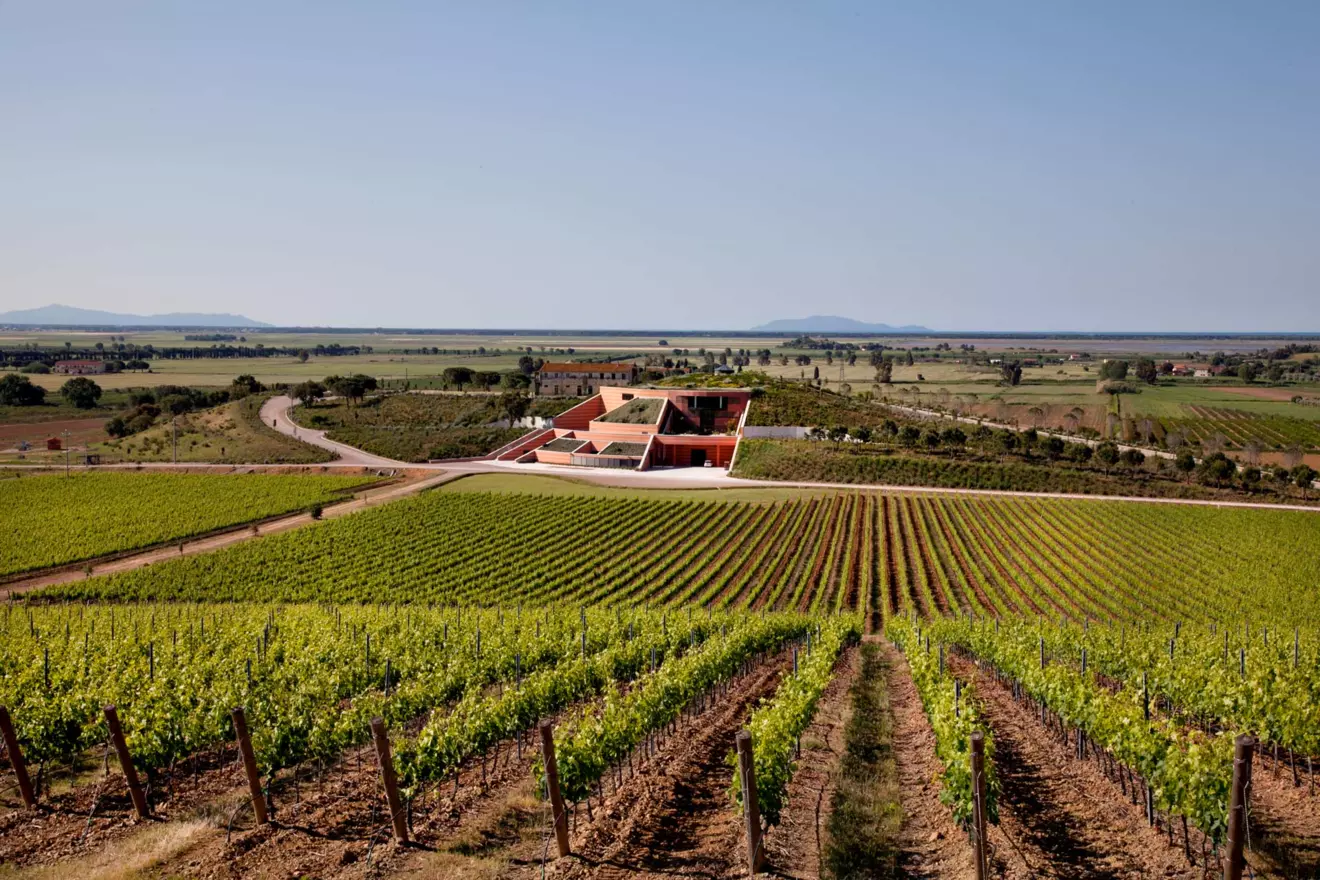
Here, winery architecture does not seek to dominate, but rather to blend into the surrounding terrain. The cellar is built largely underground, designed to blend seamlessly with the surrounding landscape and minimise its visual impact, appearing to emerge almost imperceptibly from a gentle hill.
Only through its understated entrance does the structure begin to reveal its interior, defined by a restrained interplay of rock, glass, and wood. Organised as a vertical sequence, the space follows the movement of the grape through each stage of production, from reception to fermentation, ageing, and bottling.
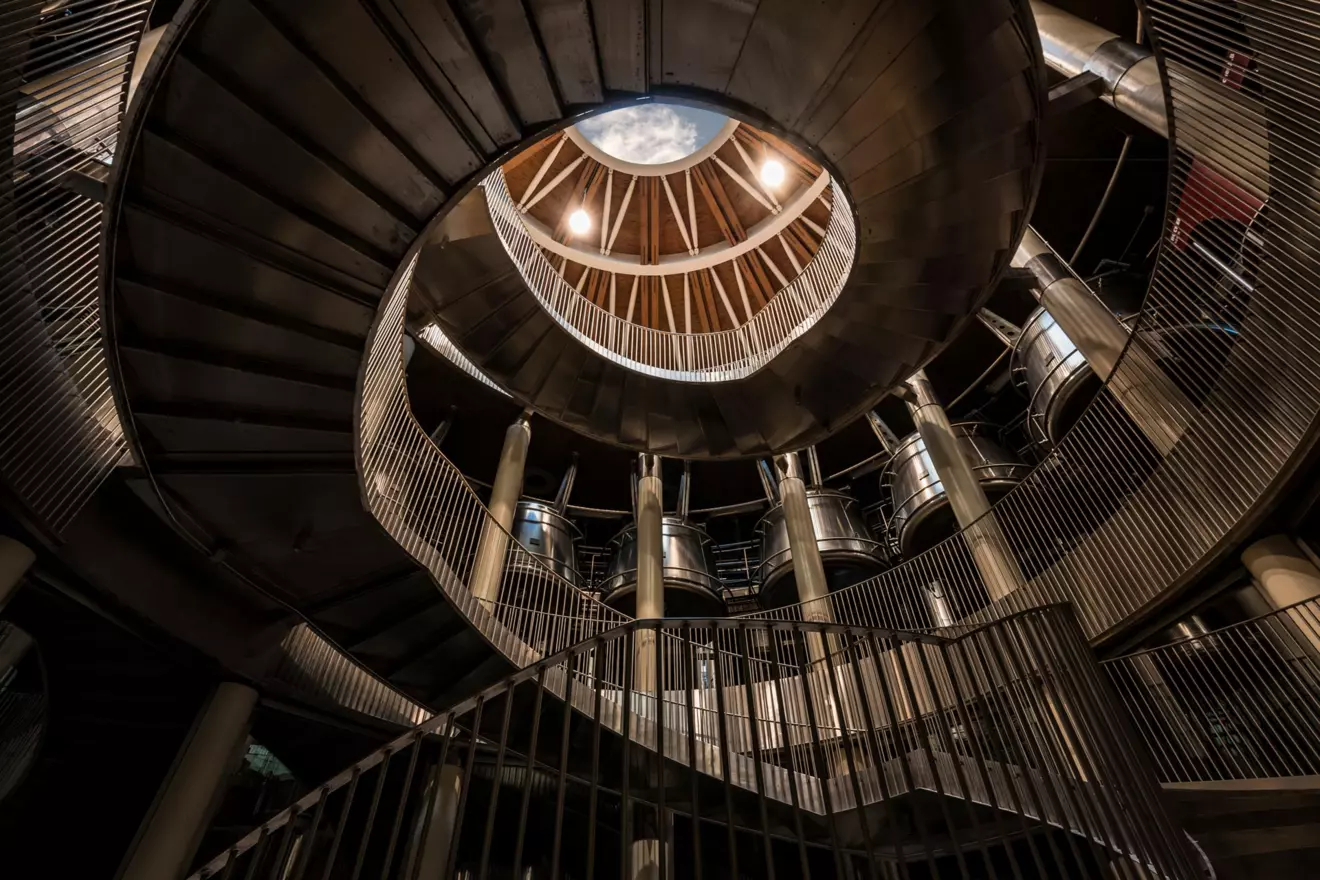
Its cylindrical, subterranean structure unfolds across three levels, integrating all phases of winemaking while enabling a gravity-flow system that allows the wine to move naturally between levels, without mechanical intervention.
Set within a landscape shaped by sandy and clay-rich soils and moderated by sea breezes, Le Mortelle extends beyond production into experience.
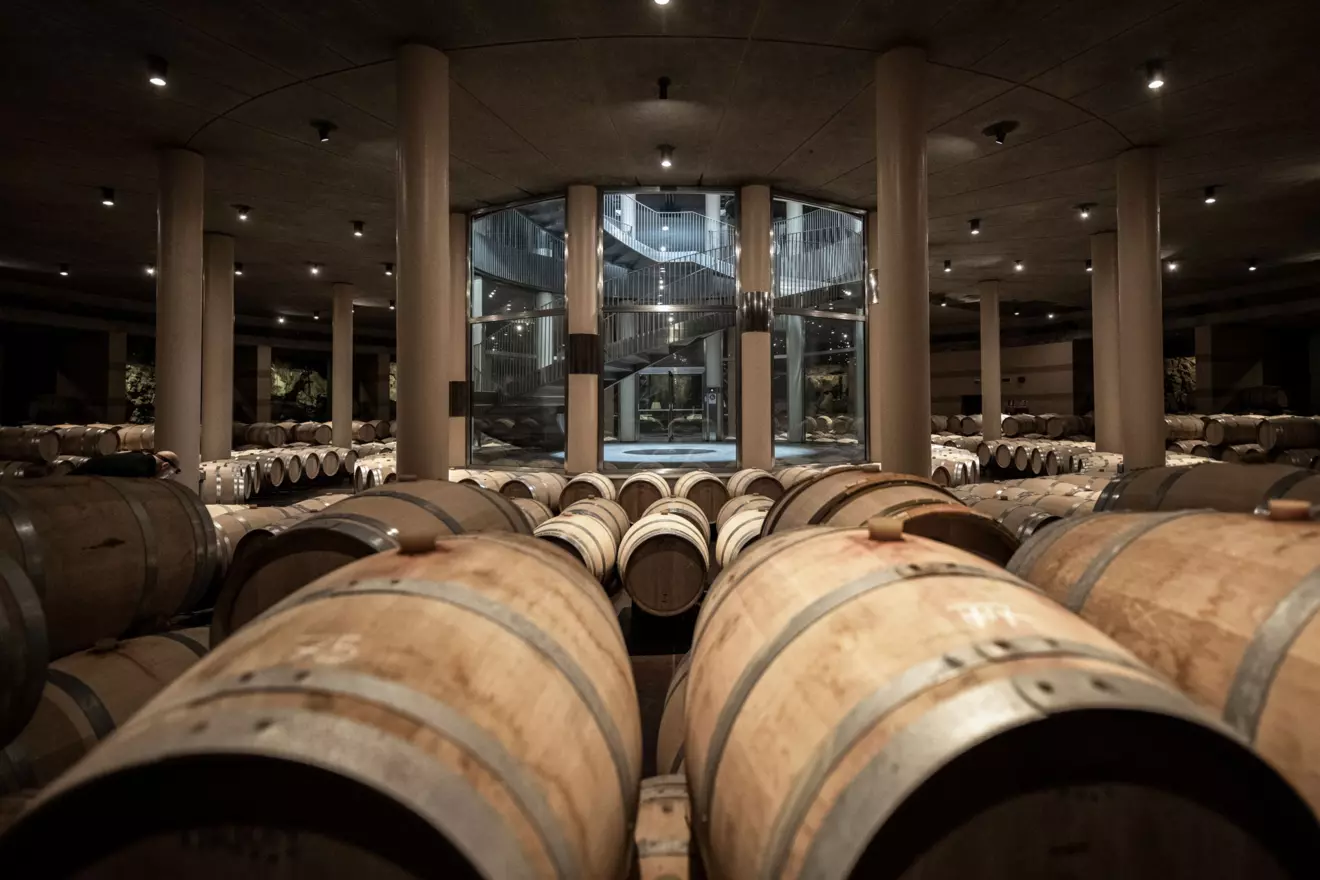
The transition from vineyard to cellar becomes a continuous spatial narrative, where the rhythm of the land and the passage of time are brought into quiet alignment.
Sauska Tokaj Winery, Hungary
In the UNESCO-protected Tokaj-Hegyalja region, Sauska Tokaj Winery explores the relationship with the land through contrast and illusion. Set on the slopes of Padi Hill, the building appears to float above the vineyards, with two lens-shaped volumes supported by slender columns.
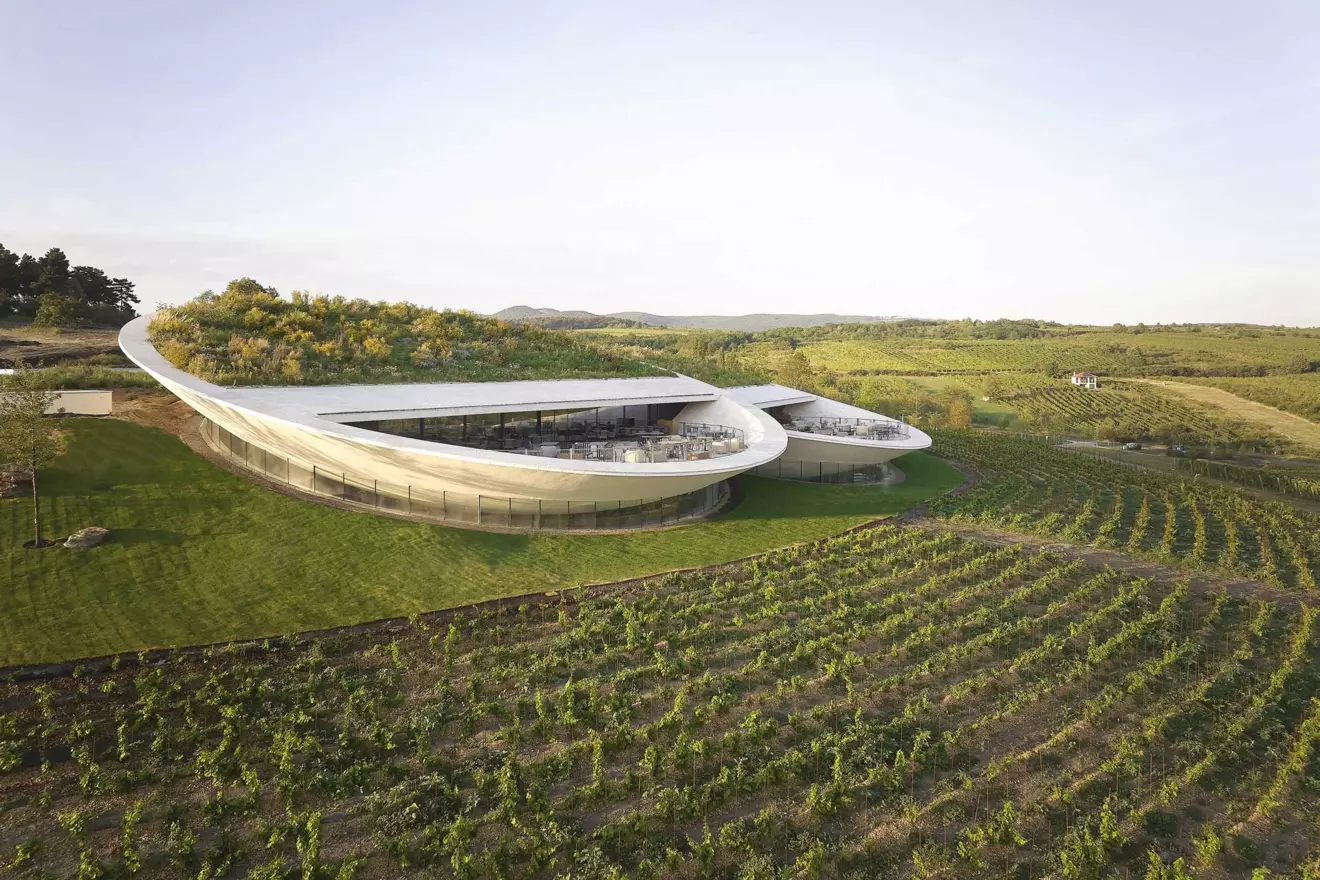
While the elevated sections are designed for visitors, functional spaces such as fermentation and ageing are embedded into the volcanic terrain to ensure stable conditions. The underground level unfolds as a sequence of dramatic halls, while the above-ground spaces open towards panoramic views, dissolving the boundary between interior and landscape.
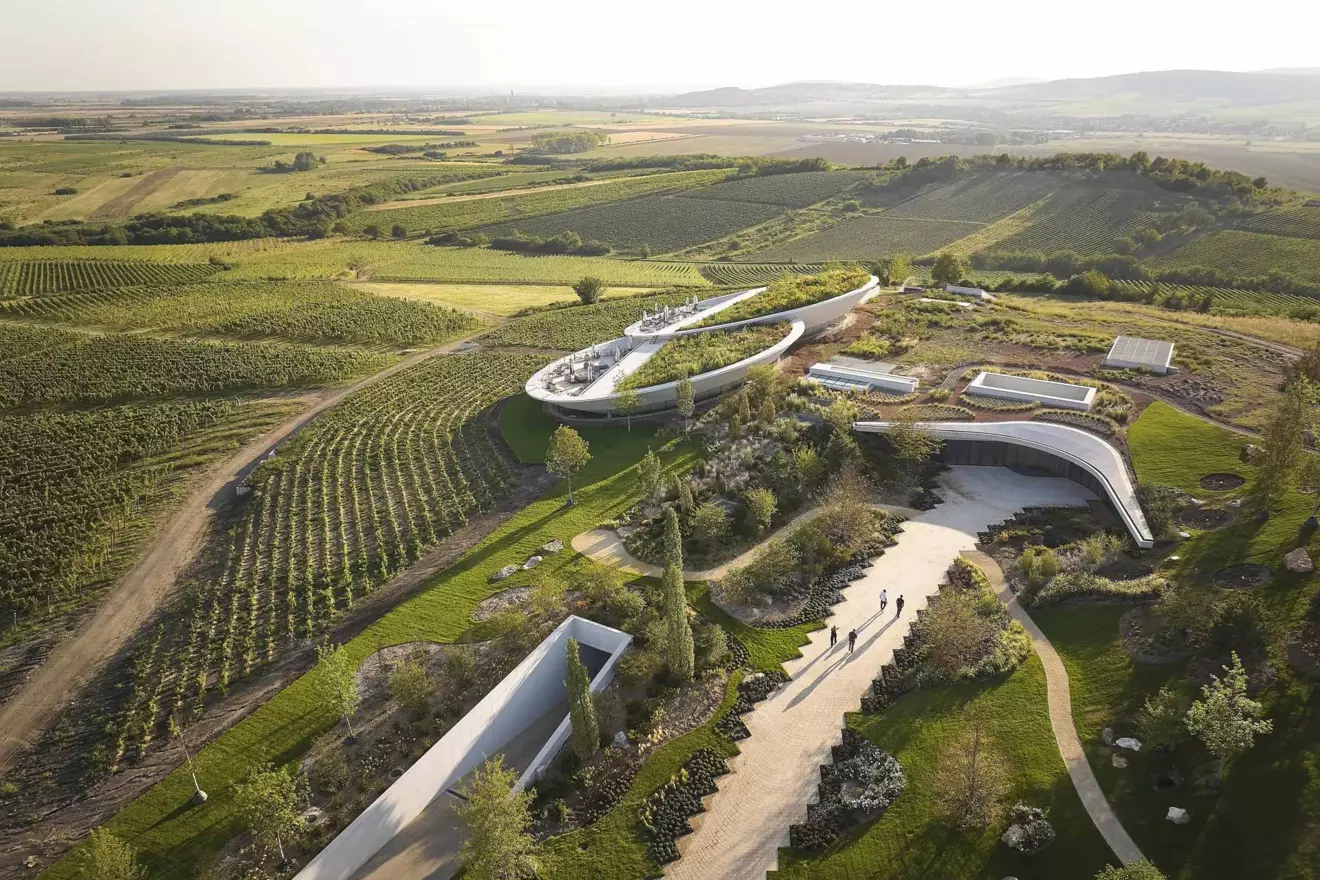
This duality, between grounded production and elevated experience, reflects the contemporary transformation of the region, where centuries-old traditions are reinterpreted through modern design.
Los Milics Vineyards, Arizona
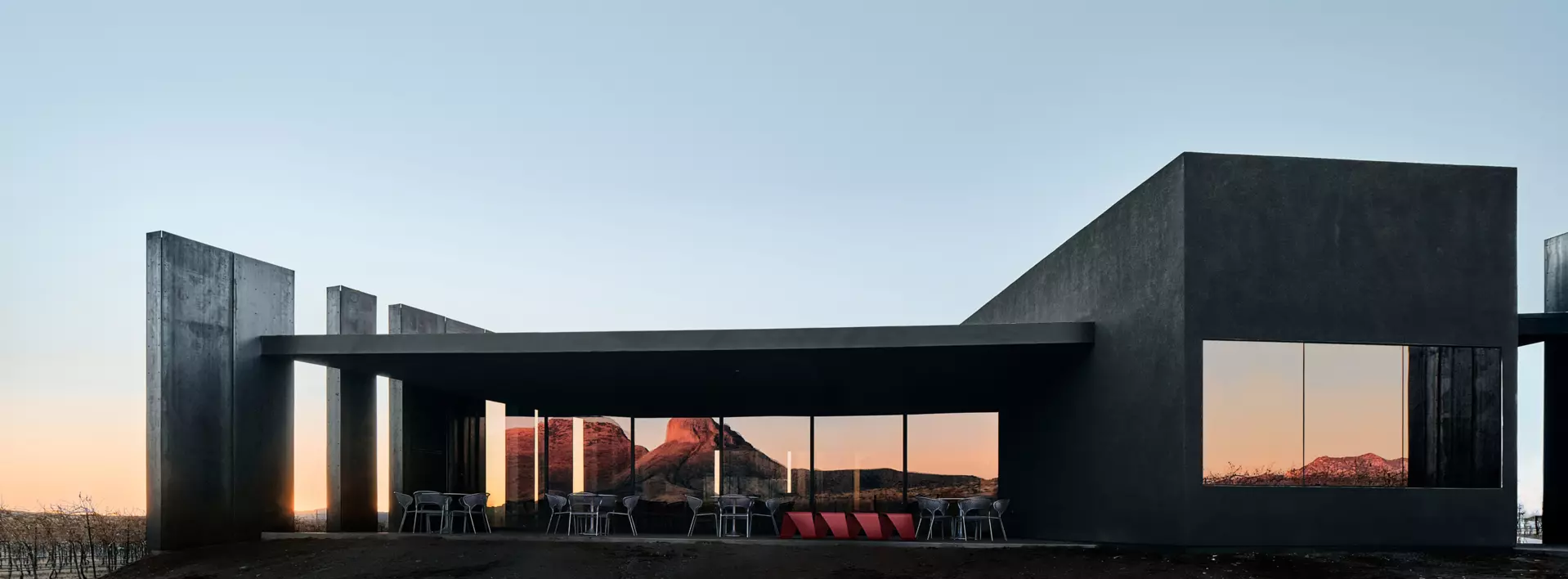
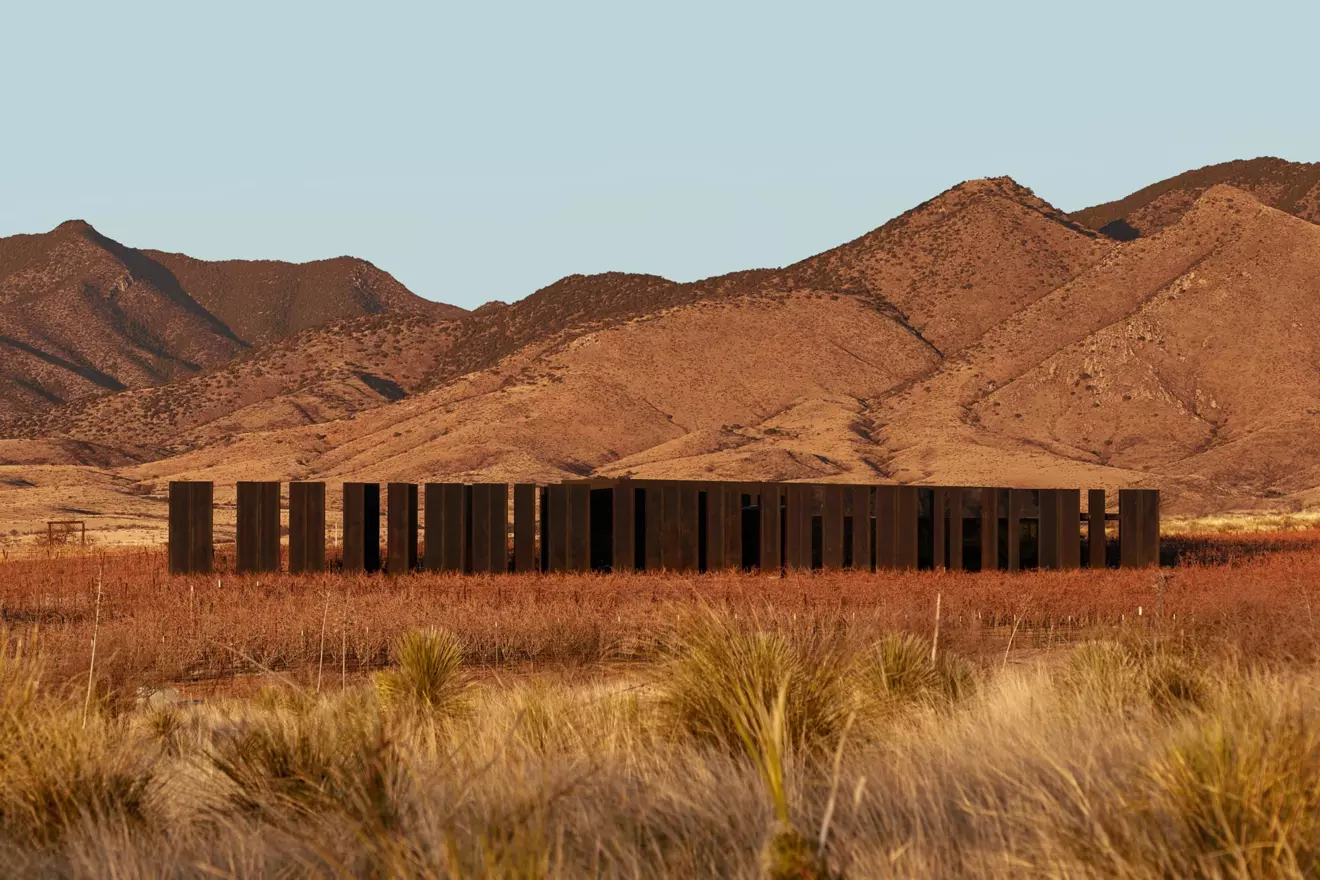
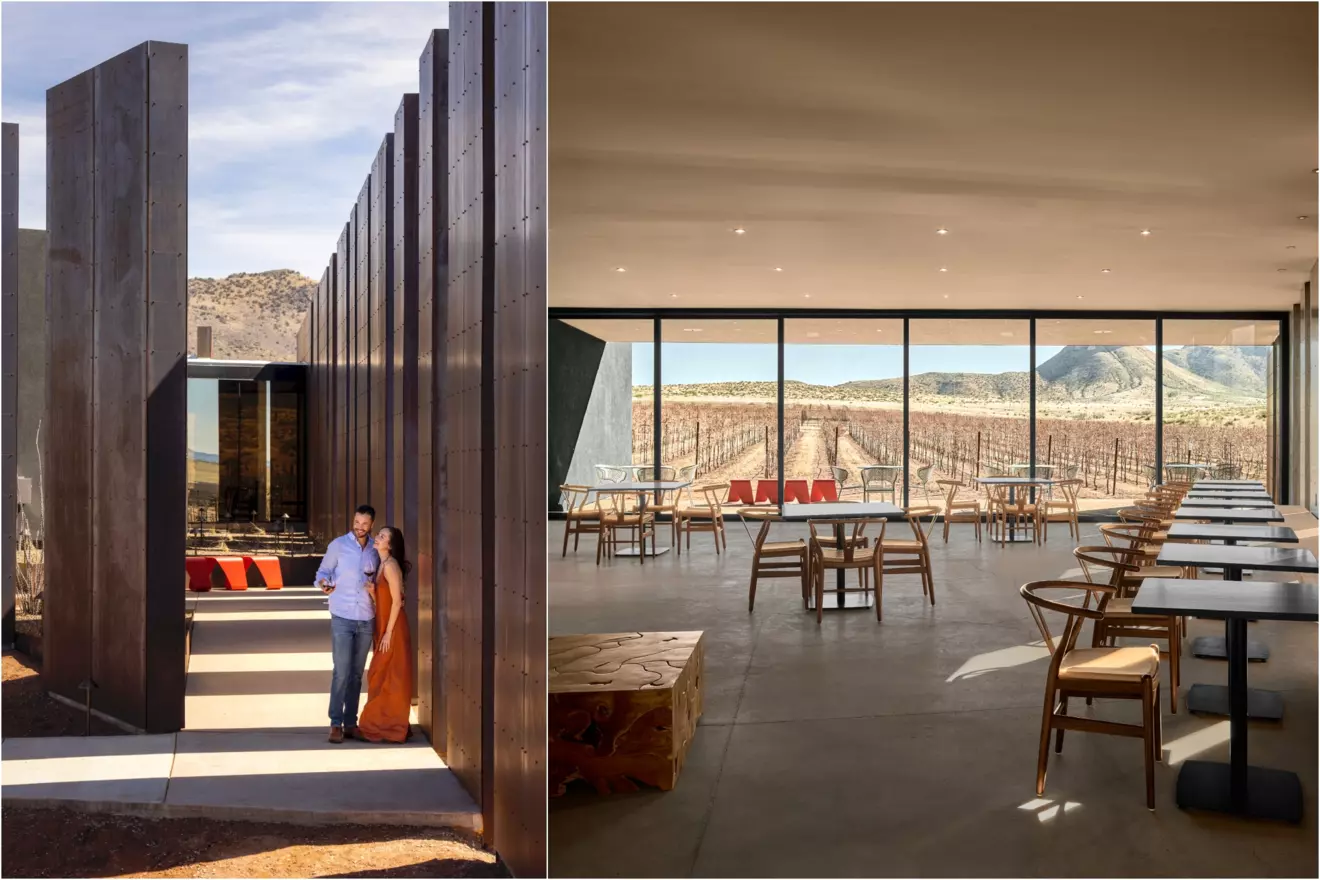
On the other side of the Atlantic, Los Milics Vineyards in Arizona translates this relationship into a desert context, at the foot of the Mustang Mountains. Designed by Chen + Suchart Studio, the project is conceived as a dialogue between interior and exterior, with the tasting room opening onto a spacious terrace.
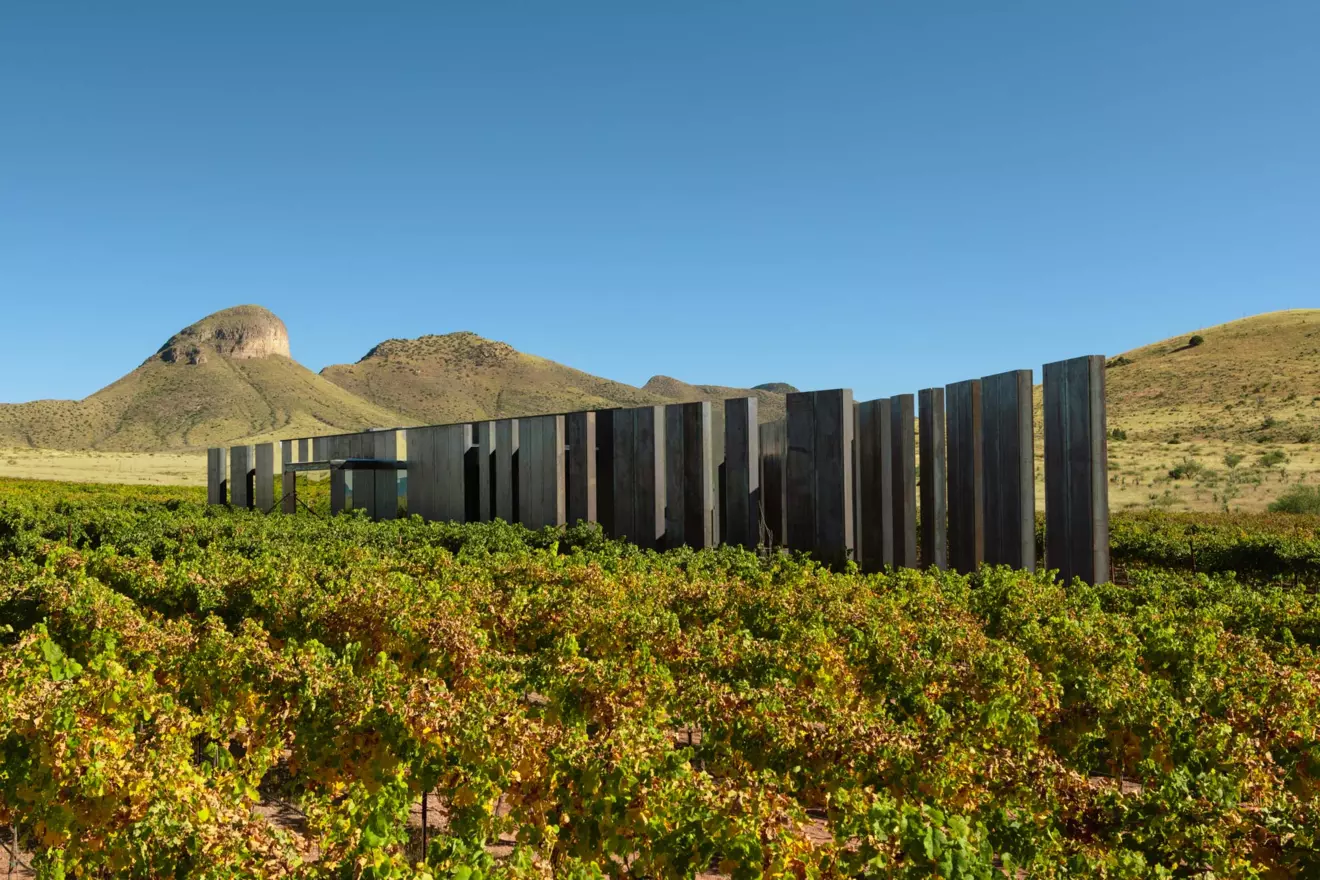
Set in an elevated position where the view defines the entire concept, the winery utilizes light and horizon to create a distinct identity that appeals to both wine and architecture enthusiasts.
VIK Winery, Chile
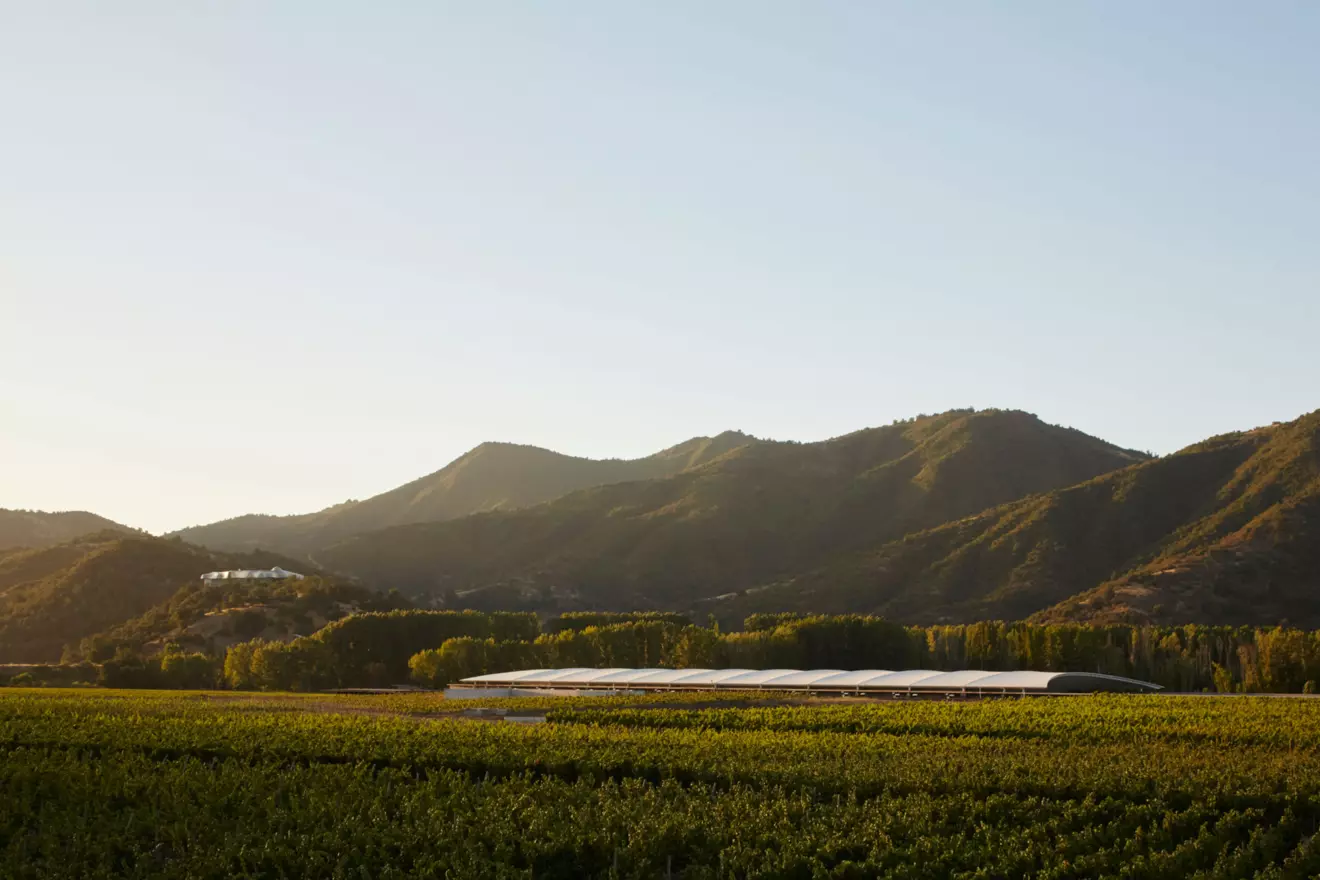
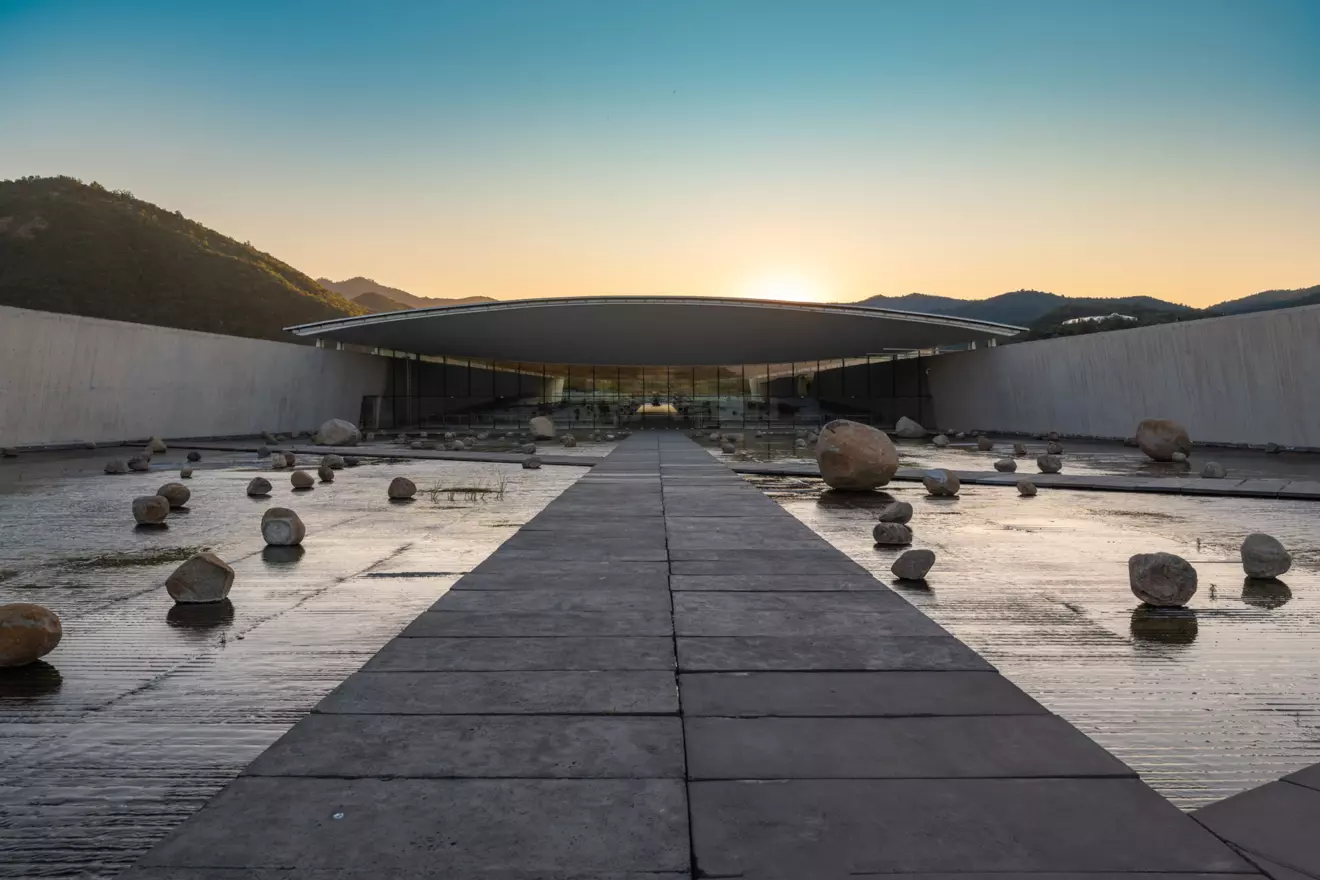
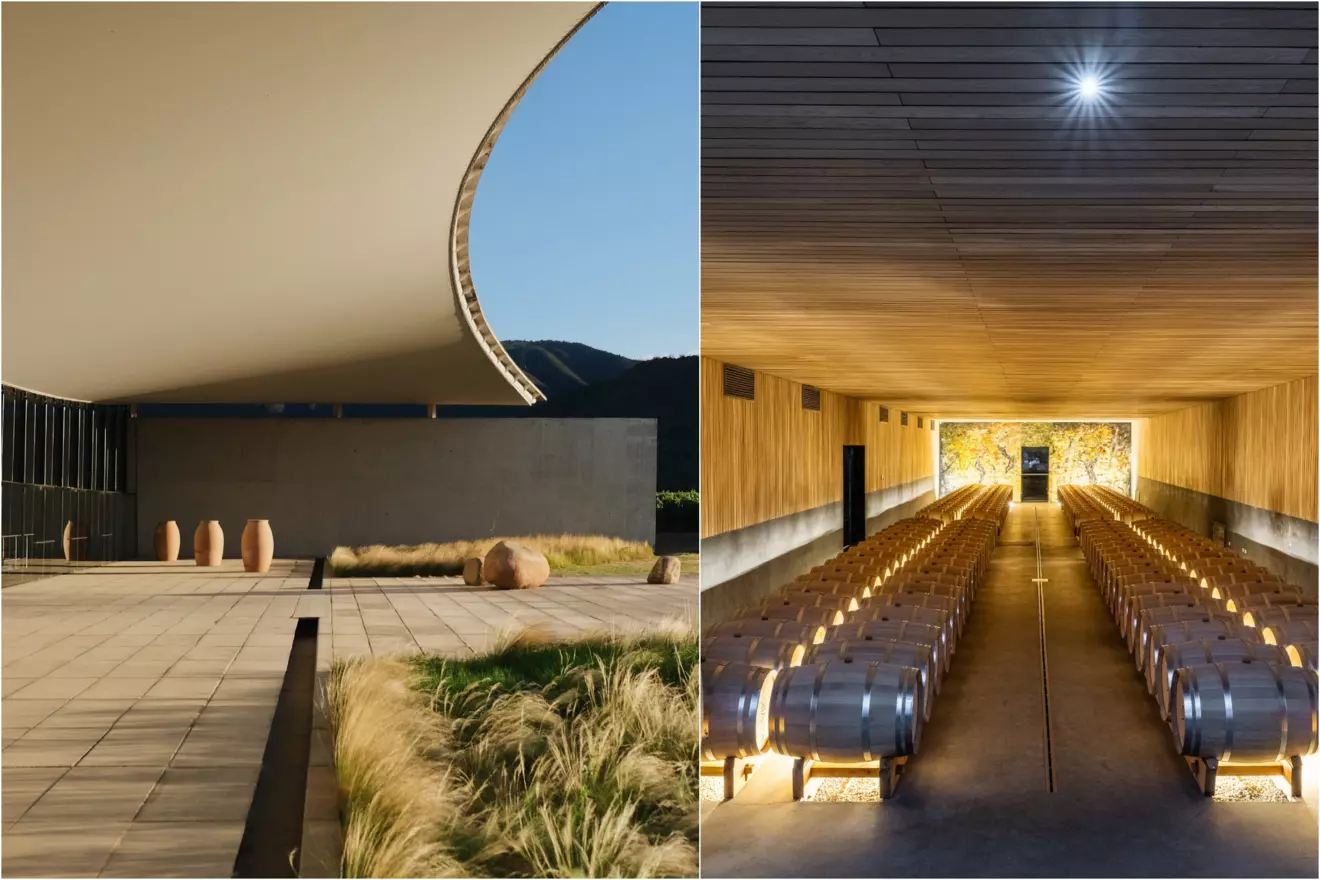
Further south, in Chile’s Millahue Valley, VIK presents an architectural vision that completely dissolves the boundary between design and environment. Set among vineyards on an 11,000-hectare estate, the winery is designed with minimal impact on the landscape, while its iconic floating roof, a white, tensioned structure, appears like an abstract wing gently touching the terrain.
The approach to the building leads across a reflective water plateau, while the interior follows a linear sequence of production, turning oenology into a scenographic experience. The experience does not end with the winery itself; the estate also includes accommodation pavilions set among the vineyards, where the stay naturally extends the spatial narrative of wine.
These projects clearly demonstrate a shift in architectural language; wineries are no longer industrial facilities with an added layer of tourism, but hybrid landscapes where production, research, and experience coexist.
In this context, wine hotels are no longer an exception but a natural continuation of the same idea, spaces where hospitality, gastronomy, and wine merge into a single, immersive experience. A similar approach can also be found closer to home, where estates such as Meneghetti in Istria combine vineyards, architecture, and hospitality into a cohesive whole.
The winery thus ceases to be merely a place of production and becomes a destination that unites lifestyle, design, and nature, shaping contemporary wine tourism. In this new order, the vineyard is no longer a backdrop but the very starting point of architecture.
Photos VIK Winery, Los Milics Vineyards & Sauska Tokaj Winery