In-Depth Interview with Marijana Radović: Defining Sustainable Minimalism
Date
Reading time
7 min

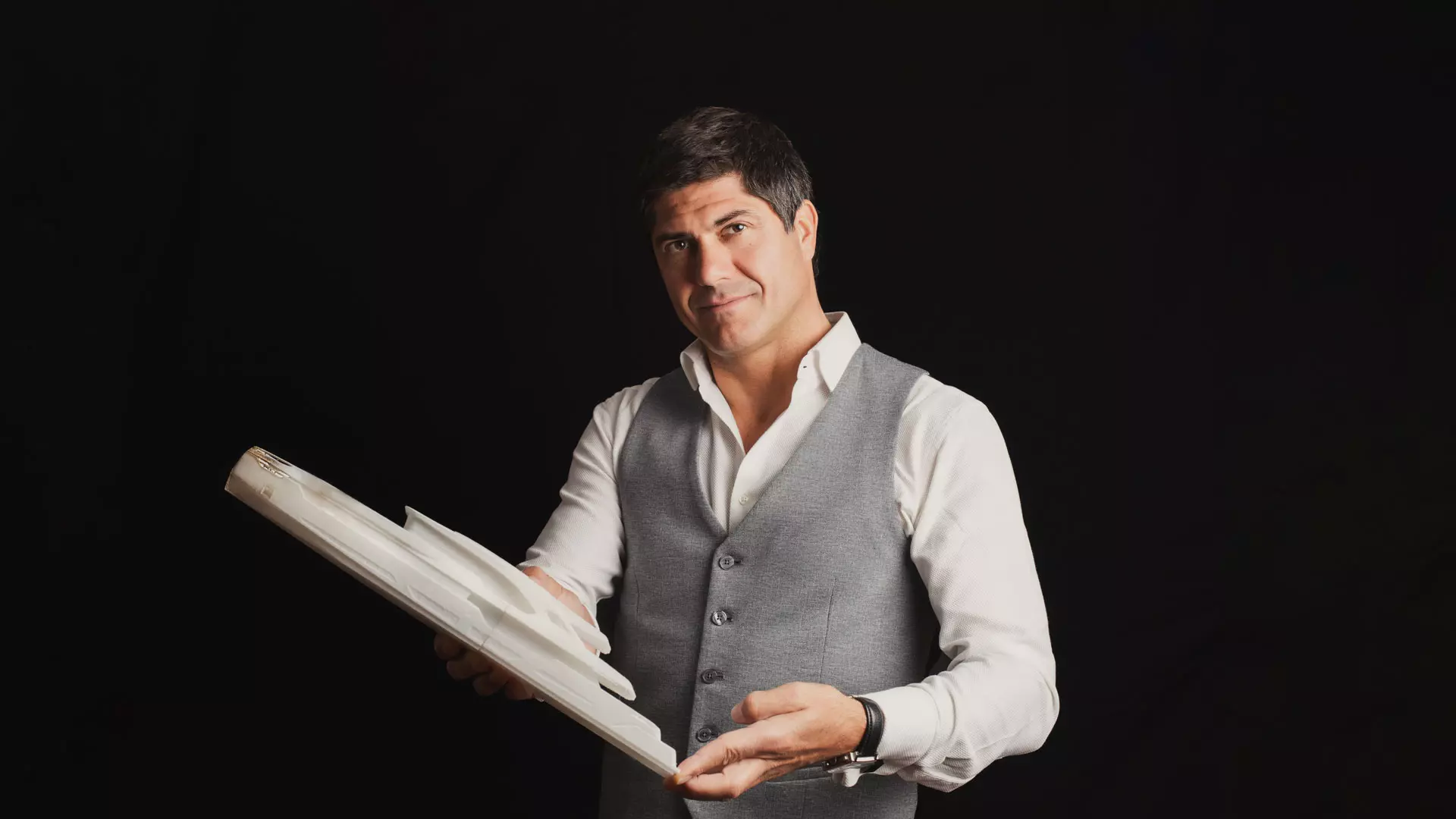
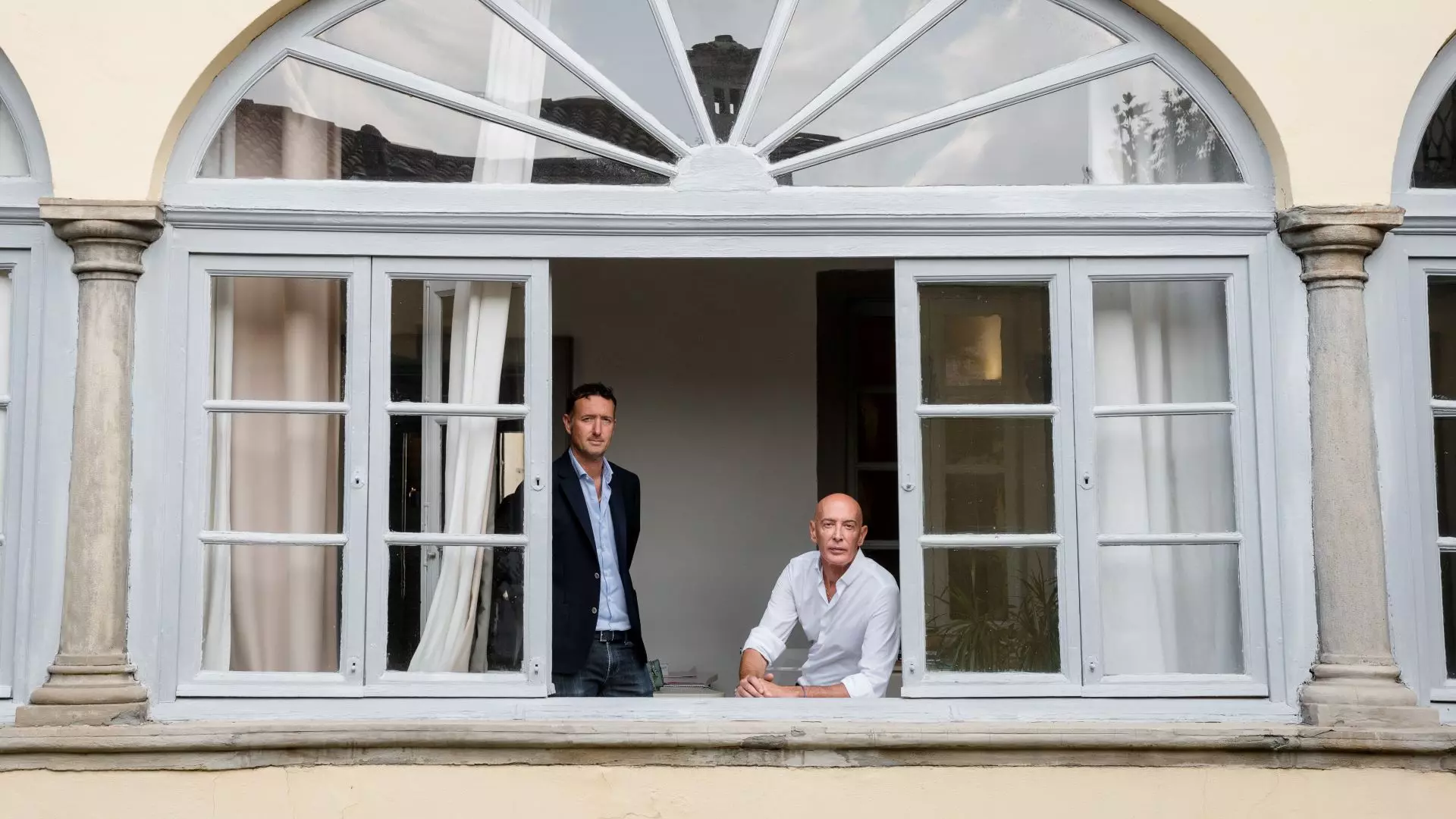
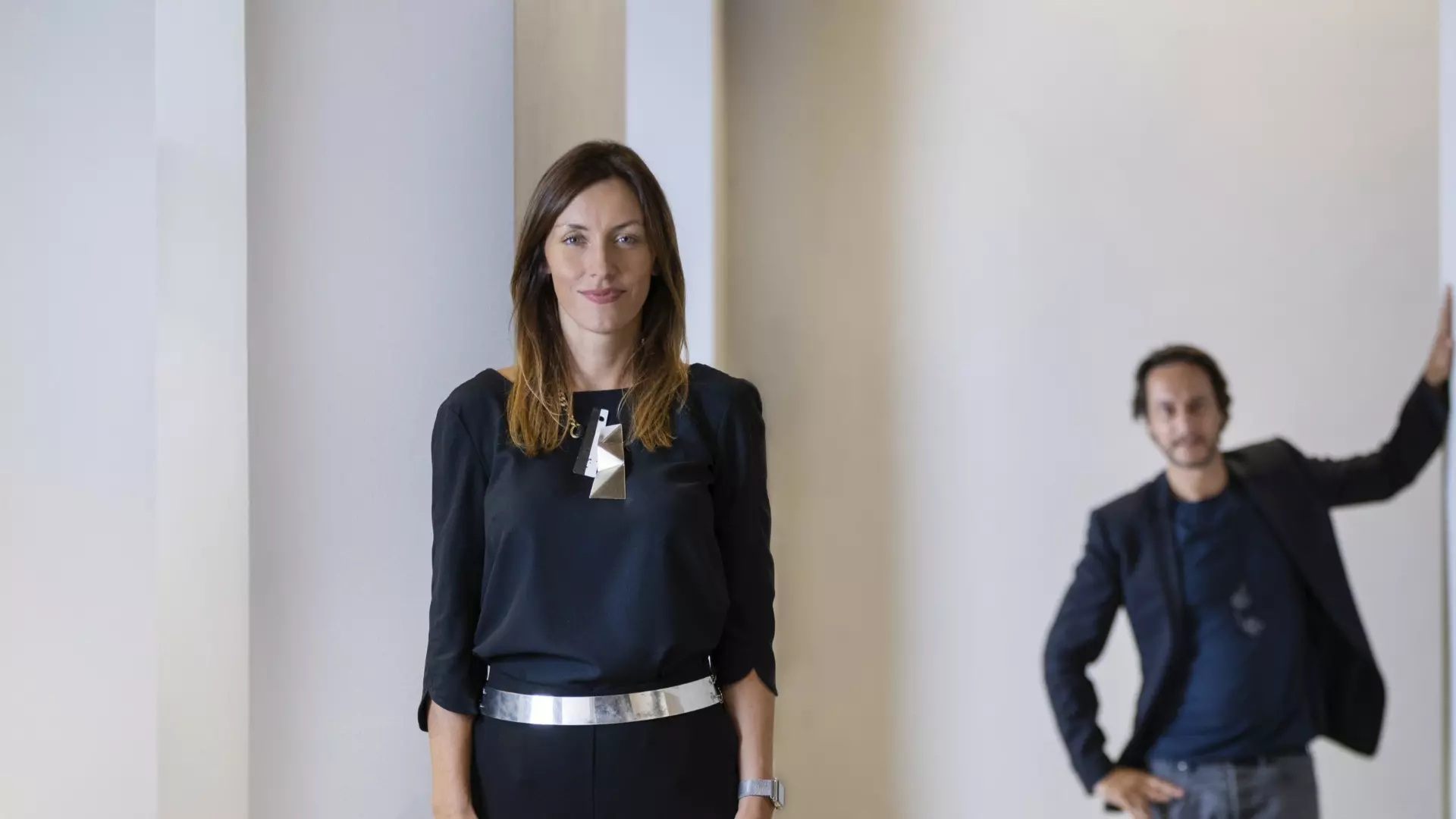
From designing yachts to private homes and architectural interiors, one thing is in common for Marijana Radović, she is heartly included in every project of the studio m2atelier, founded together with her husband Marco more than fifteen years ago
It is always a privilege to sit down with the people shaping and designing the yachts we so often admire from afar. These are the minds behind the forms that define contemporary elegance, performance, and beauty on the water.
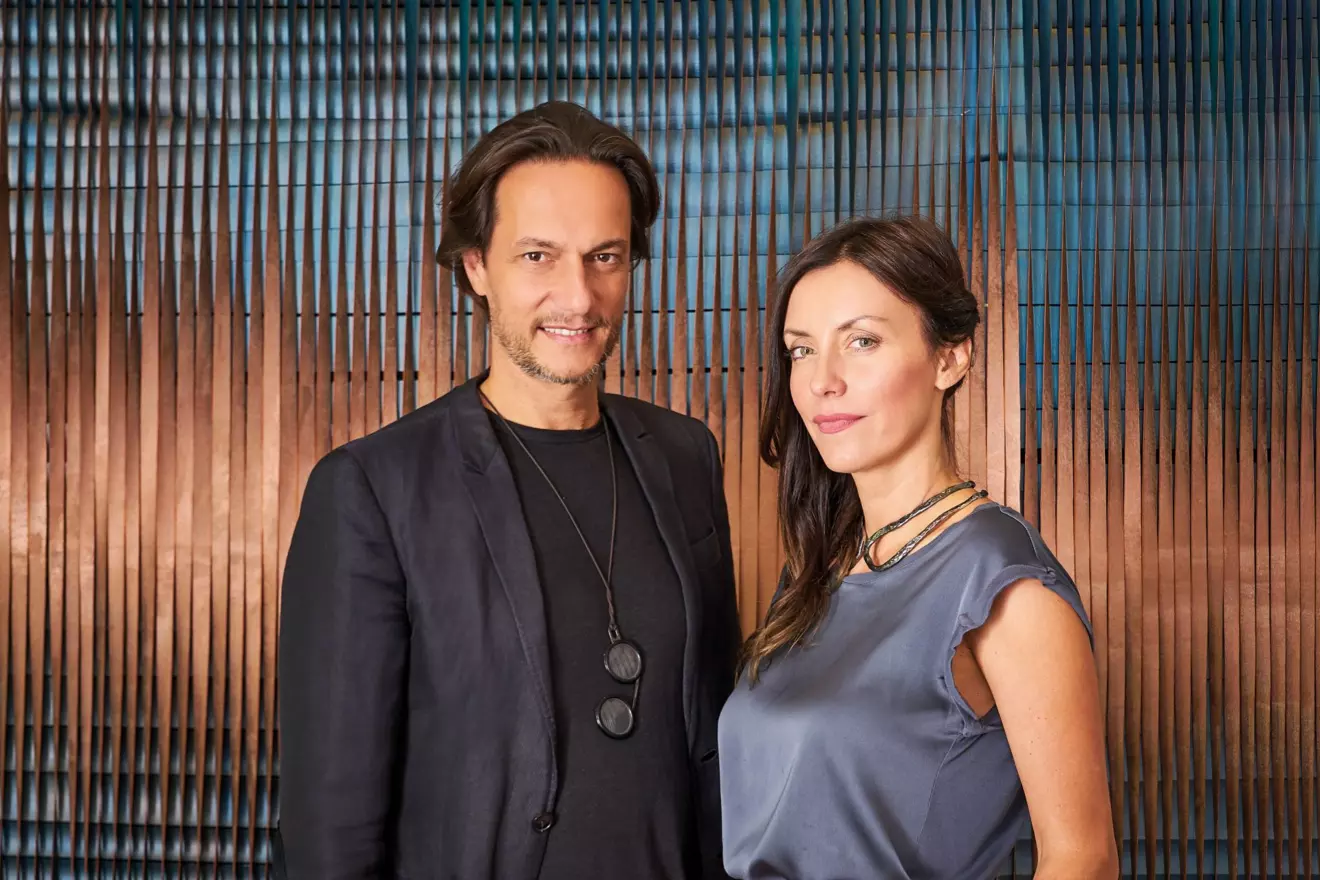
It is even more meaningful when the story begins in our region. Such is the case with Serbian-born designer Marijana Radović, who, together with her husband and co-founder of m2atelier, Marco Bonelli, founded the studio fifteen years ago in Milan, as a fusion of their two previous studios. What distinguishes m2atelier is not only the calibre of their nautical work, but the fluidity with which they move between worlds.
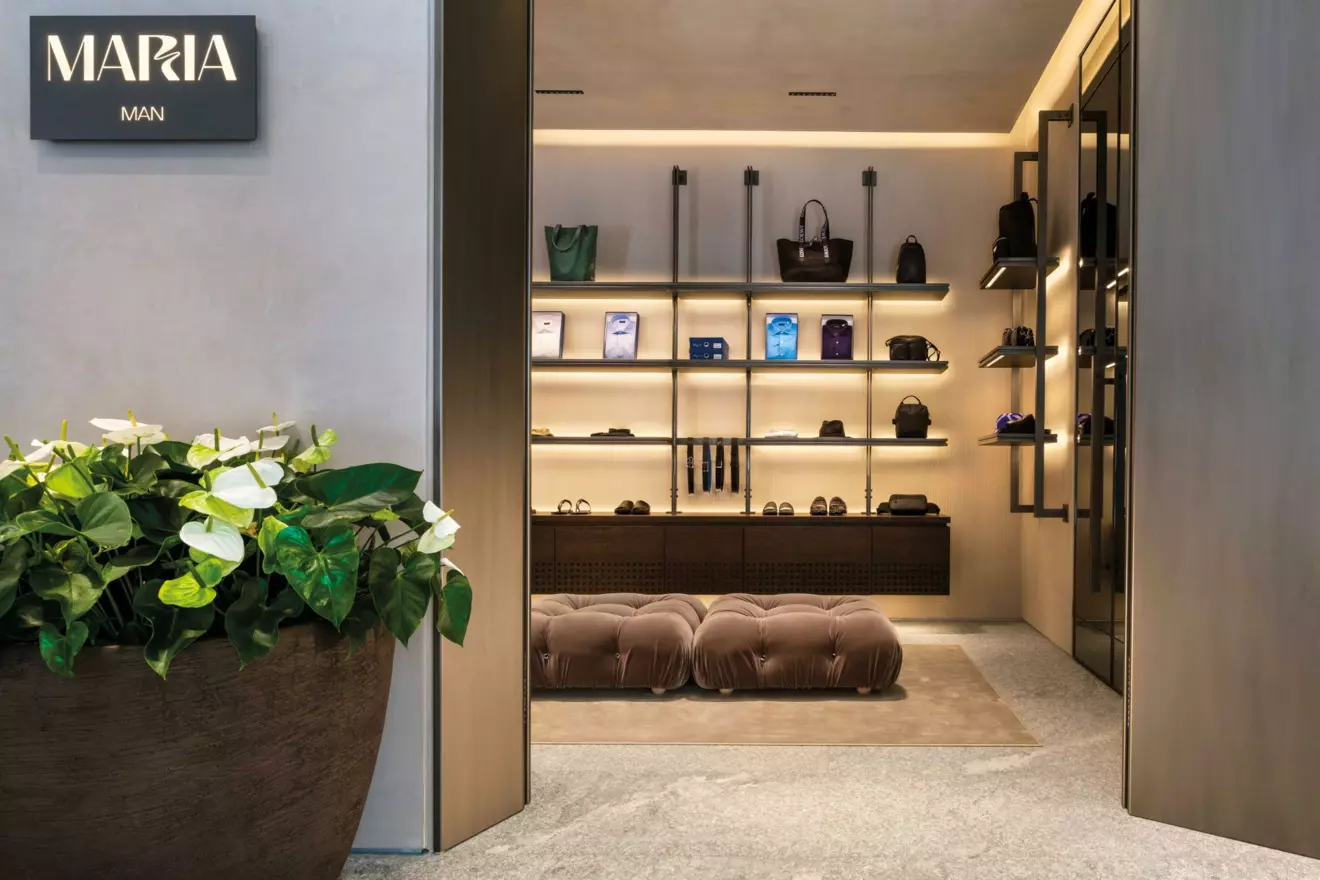
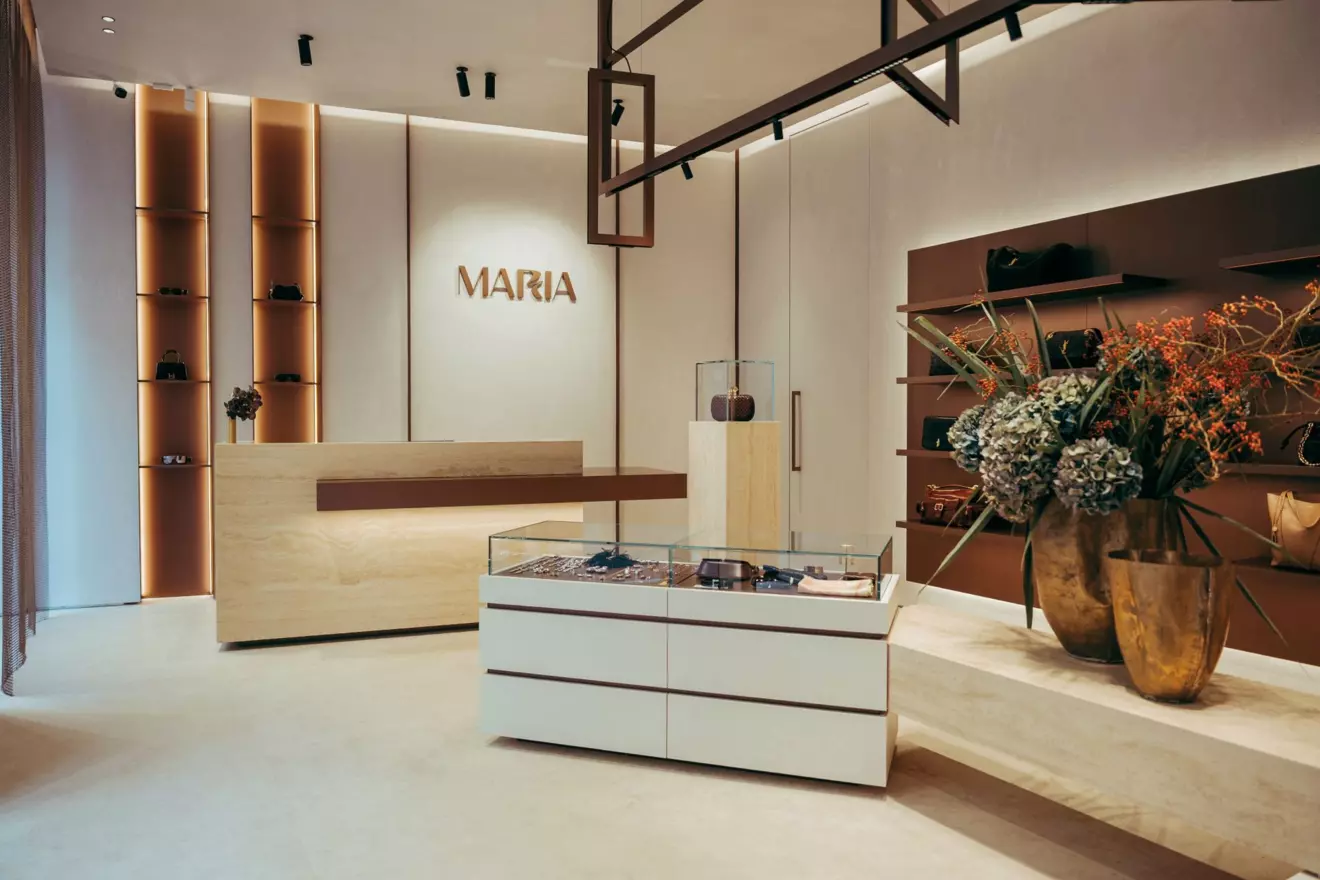
Residential architecture, hospitality, retail, and maritime design sit comfortably side by side in their portfolio, each discipline informing the other with a quiet sophistication. This cross-pollination is perhaps best illustrated in their recent work in Croatia, where the studio reimagined the beloved luxury boutique retail space Maria Man and new design of Maria women store in Zagreb, bringing the same precision and warmth found in their yachts to a retail environment cherished by the region.
WHAT PERCENTAGE OF YOUR WORK IS NOW DEDICATED TO YACHTS?
At the moment, yacht design represents roughly 35 percent of our practice, and we have an exceptional number of projects underway. These include two Feadships – an 80-metre delivering in December 2025, and an 89-metre scheduled for 2029 – as well as a 63-metre sloop with Vitters launching in about three years. We are also working on a 58-metre Codecasa, the sister ship to one we delivered two years ago; a 50-metre Explorer with JFA; a 47-metre Rossinavi; and a 39-metre Mangusta. And, of course, our ongoing trilogy with Azimut – the Grande Trideck, the 36M, the 30M, and a 44-metre currently in progress – a series of luxury yachts we are particularly proud of. And there is even more on the horizon.

HOW MUCH OF YOUR WORK TODAY LIVES OUTSIDE THE WORLD OF YACHT DESIGN?
It shifts constantly. A decade ago, retail was a significant part of our workload – around thirty percent. We designed hundreds of boutiques: Australia, China, the U.S., everywhere. Today we still oversee stores, including Dolce & Gabbana, but retail occupies a smaller percentage. We take on select multi-brand and niche labels and focus on elevating or revamping their identity. Alongside that, we continue to work on private residences, yachts, and a wide spectrum of architectural, hospitality projects and product design.
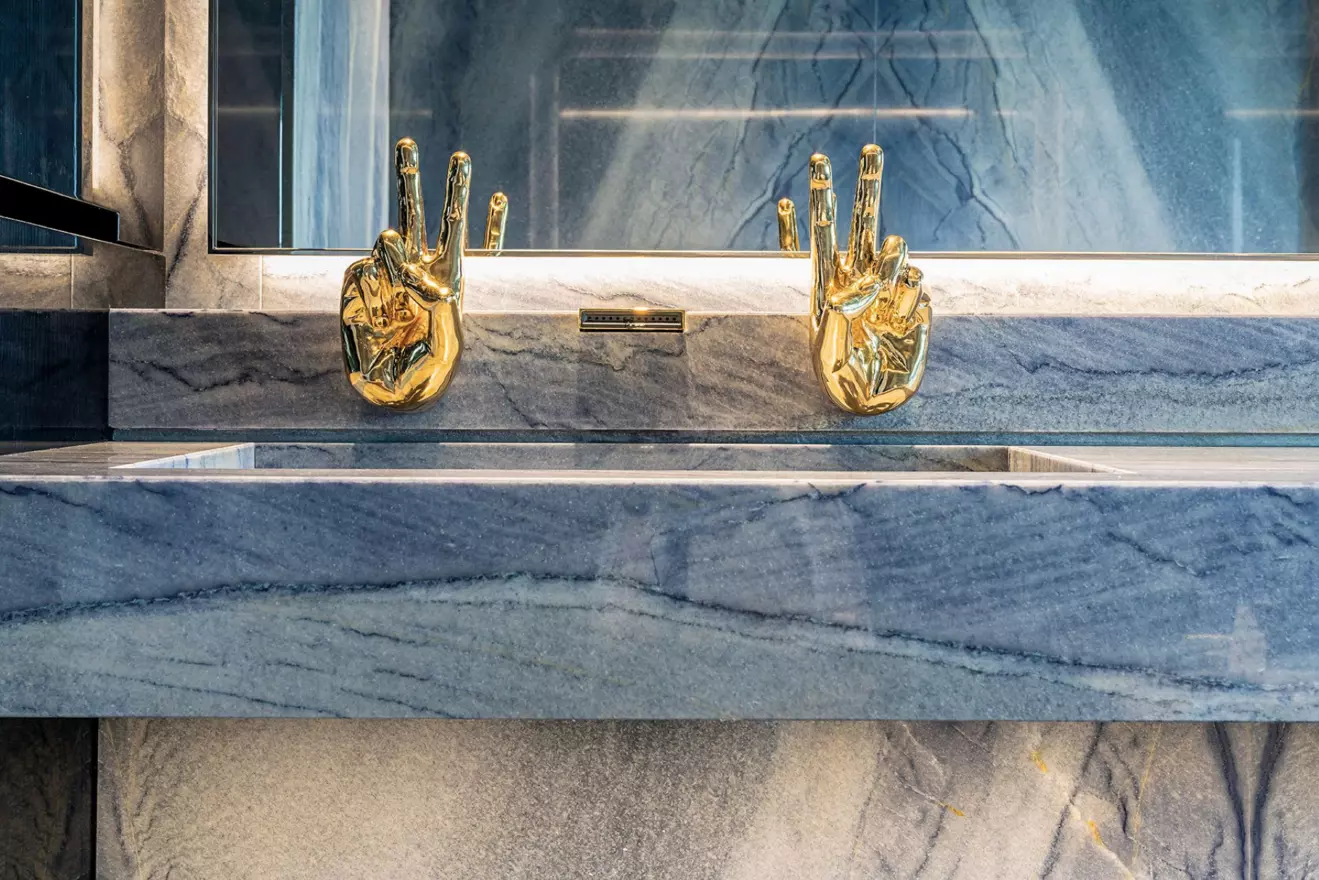
HOW DID THIS COLLABORATION WITH MARIA STORE BEGIN?
Maria Store actually predates m2atelier. Marco and I joined forces about fifteen years ago, but his relationship with Maria started long before that – so far back I’ve lost count, in Dubrovnik. The boutiques we’re refreshing now are really a continuation of a long creative dialogue. The first two stores were done more than fifteen years ago, and this new update for Maria Man and new design of Maria Woman is part of bringing that relationship to the next level.
AND THE REST OF YOUR PORTFOLIO?
Residential architecture and private homes remain a substantial part of our world – from major developments like ORA by Casa Tua and the Dolce & Gabbana tower in Brickell, Miami, to a wide array of projects around the world. Many of our Milan-based commissions involve merging multiple apartments into expansive, cohesive residences for international clients who are making the city their base. We also create custom furniture pieces for these homes, alongside ongoing collaborations with Giorgetti, which allow us to explore craftsmanship and bespoke design at a very high level. Retail continues to play an important role as well. We are also increasingly active in education and workplace design – creating thoughtful learning environments for universities, as well as offices for tech companies in Italy and London, where spatial clarity, flexibility, and well-being are essential. Hospitality remains a key pillar. We are currently working on a boutique hotel in St. Barth; CORE: Club, which we helped launch first in New York City and are now bringing to life in Milan; and a new longevity centre opening soon in Milan. We also continue our longstanding relationship with one of the world’s leading gym equipment manufacturers, developing new concepts and environments that we’ll reveal when the moment is right.

HOW MANY PEOPLE ARE PART OF M2ATELIER TODAY, AND WHAT IS YOUR ROLE?
We are now a team of more than forty-five. Marco and I as co-founders and principals of the firm remain deeply involved in every project – that’s why we named it m2atelier. It’s truly an atelier: hands-on, crafted, personal. We have incredible architects and project managers, but the two of us oversee all creative direction and key decisions.
HOW DOES YOUR OVERALL DESIGN AND ARCHITECTURAL WORK INFLUENCE YOUR YACHT PROJECTS?
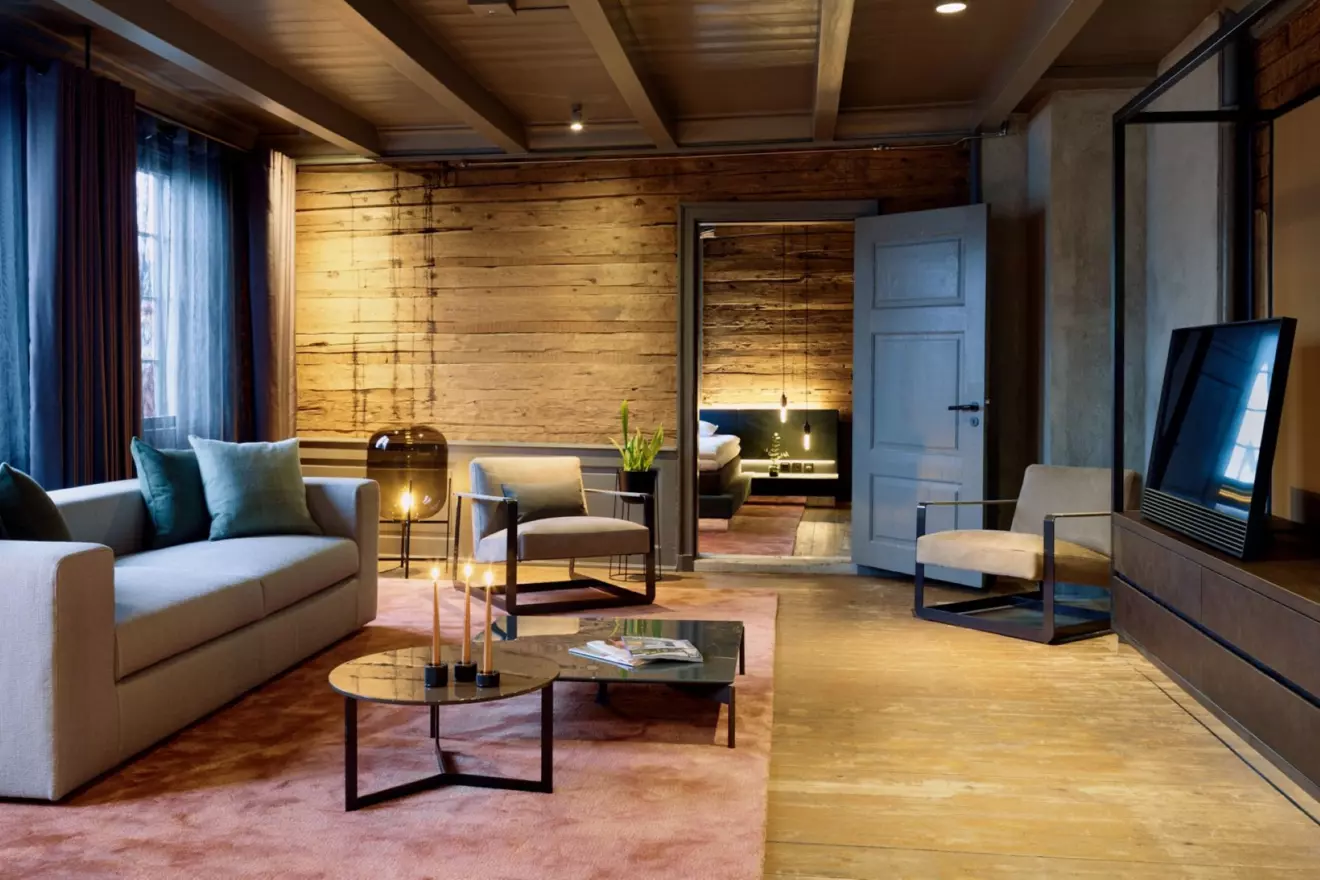
Everything is interconnected. Many commissions grow organically – a house leads to a yacht, or a yacht leads to a hotel. Clients see how we think and how we listen. For example, a client saw a yacht we were working on and then asked us to design two houses in Norway, a hotel in Norway, and a hotel in Cannes – even before his yacht. Another client commissioned a sailing yacht and then his house and office. We aren’t loud, and that attracts people who value discretion. Many of our projects are never seen publicly. That’s okay with us – it feels intimate, safe, and aligned with how we work: guiding clients gently, without imposing ourselves.
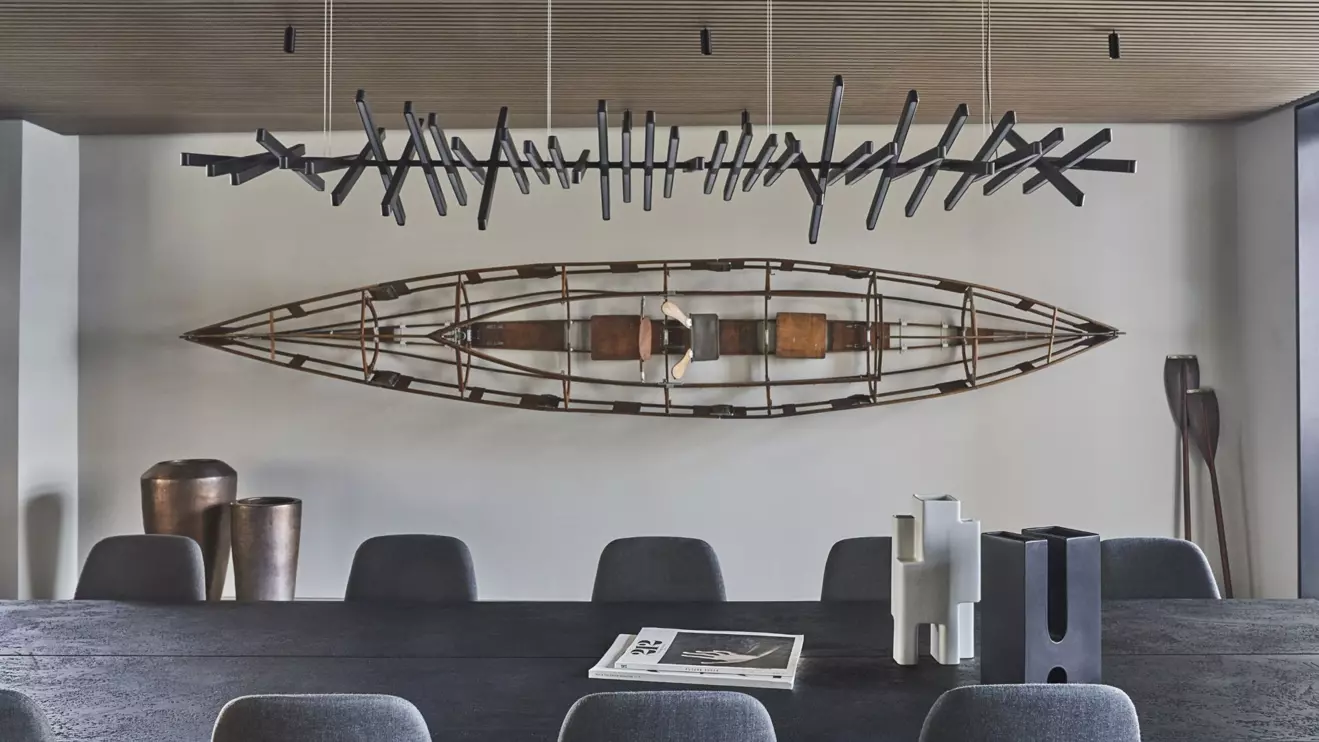
ONE OF YOUR MOST PROMINENT COLLABORATIONS IS WITH AZIMUT. WHAT MAKES SERIES PRODUCTION SO COMPLEX?
Designing for a series is a very different challenge from designing for a single client. It’s where our retail and residential experience was invaluable. In retail, you create a concept that must translate across multiple locations, budgets, and timelines – this discipline helps tremendously. Azimut, especially, requires thinking for a broad global audience. Their previous series by Achille Salvagni was excellent – we admire his work – so raising the bar was not simple. We began with the Trideck, then the Grande 30m, 36m, and now 44m, all connected by a clear fil rouge. We spent a lot of time with clients and dealers to really understand desires and habits. Giovanna Vitelli once asked me: ‘Where would you invest more – architecture or furniture?’ And my answer was immediate: architecture. Because good architecture gives clients freedom – to personalise, to move, to live on board as they wish. For us, yacht interiors must be elegant and informal, beautiful yet deeply liveable, always acknowledging that you are on the water.
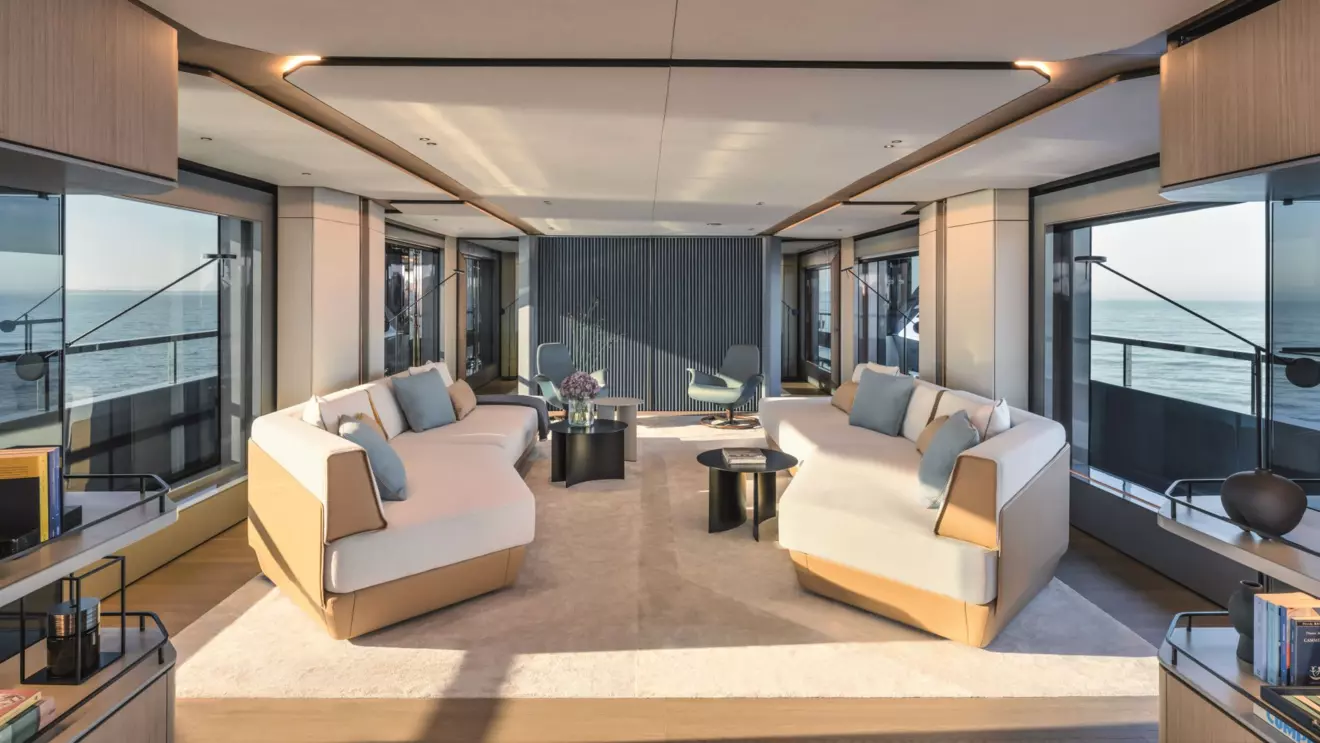
LIGHTING PLAYS A MAJOR ROLE IN YOUR WORK?
Lighting is everything. You can have a modest design elevated by excellent lighting, or a beautiful design ruined by poor lighting. Technology has evolved so much, and we use it to accentuate architecture. Light must highlight textures, materials, rhythms. We sometimes collaborate with lighting designers, but most projects we handle directly. Indirect light is essential, and dynamic light – changing temperature throughout the day – is transformative. Retail especially shows how bad lighting can make even the best product disappear.
HOW WOULD YOU DESCRIBE YOUR DESIGN DIRECTION TODAY?
We are fortunate to work with visionary clients, and together we see how life on board is shifting. People live differently – they travel for long periods, work remotely, homeschool their children. Yachts must feel like real, functional homes. Our approach is sustainable minimalism: reducing materials, simplifying movement, creating warm minimal spaces that support well-being. Many yachts today feel like showrooms – too much visual noise. We want to create clarity, calm, and purpose. Fewer salons, fewer repetitive spaces; more intelligent, fully used environments. It takes a lot of dialogue to bring everyone to the same vision, but the result is worth it.
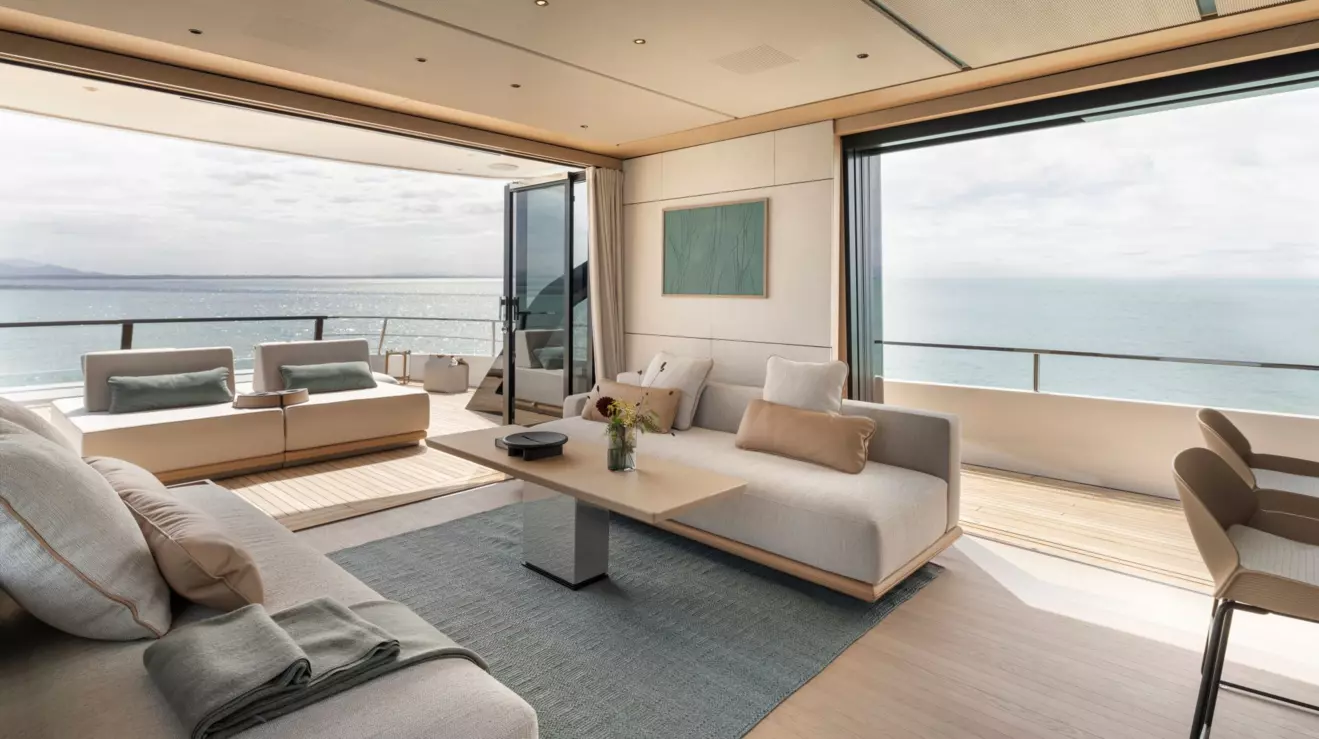
AND WHERE DOES SUSTAINABILITY FIT IN?
True sustainability is not just about selecting recycled fabrics. It is every decision: how the yacht is built, how it will be refitted, how materials are sourced, how technology will age. With so many yachts in construction today, thinking ahead is essential. We design with fewer materials, cleaner logistics, and systems that will remain relevant. Because the real impact is long-term, not just what launches today.
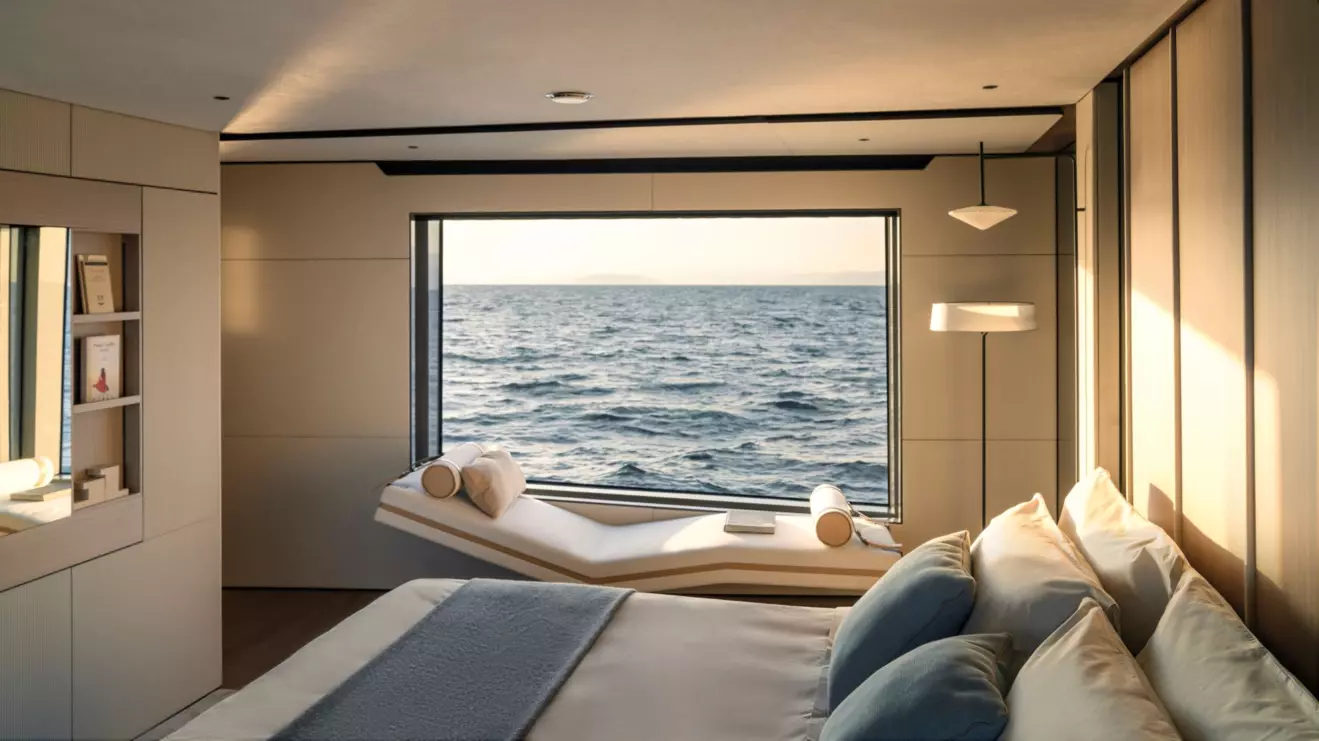
IT SOUNDS LIKE YOU TRULY LOVE YOUR WORK.
Absolutely. Clients are energising – some meetings leave you so inspired that you feel you could redesign the world. Whether it’s a yacht, a home, or a hotel, these projects give us life. There are days when I’m at a shipyard in Amsterdam from four in the morning until one at night. When our vision comes to fruition in material form, I know that I am exactly where I am meant to be, and I wouldn’t have it any other way.
Photos m2atelier