Kornati Yacht Charter Guide: Explore Croatia's Stunning Archipelago
Date
Reading time
15 min

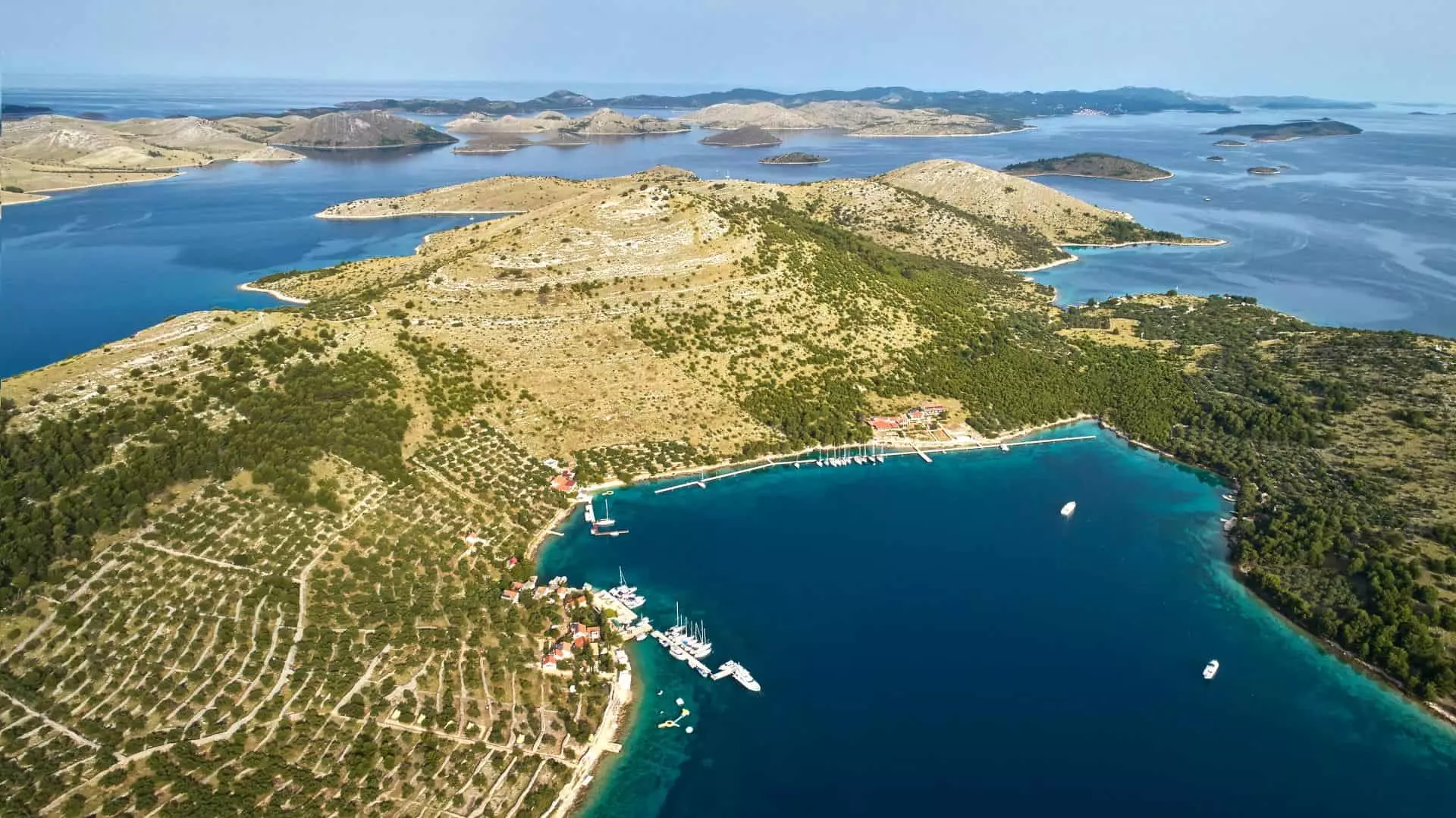
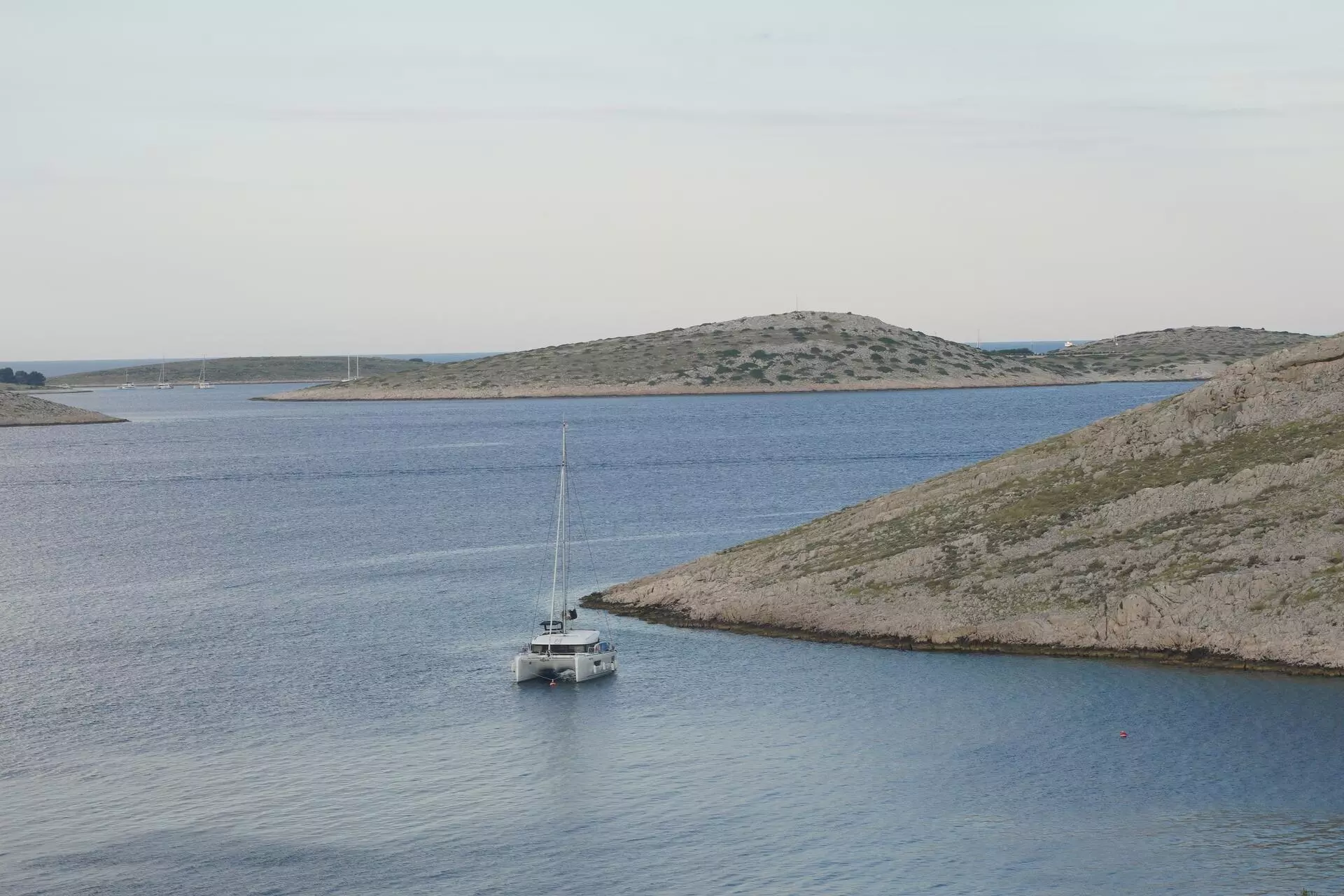
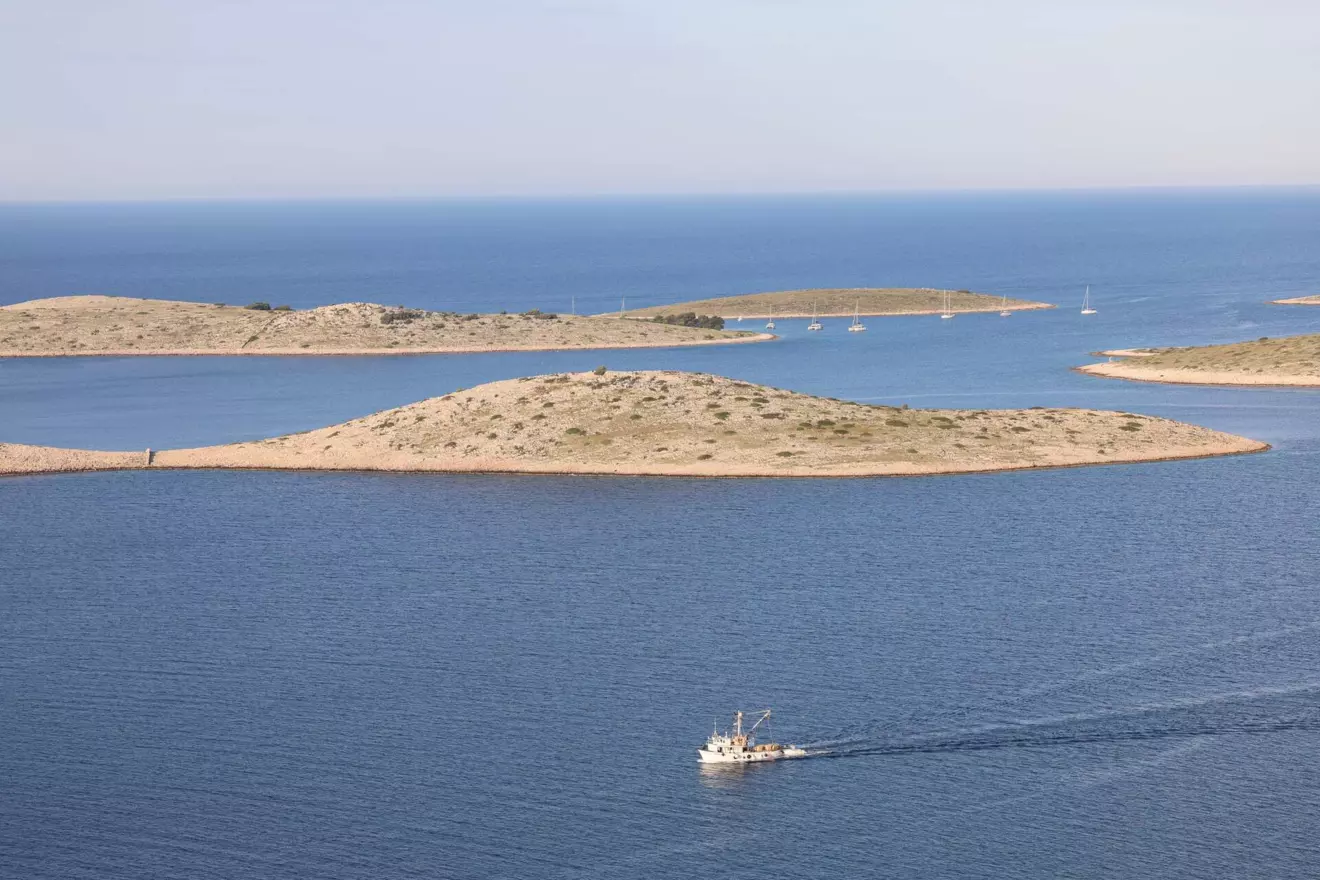
Kornati National Park is one of those places best understood from the sea. This small archipelago of 89 islands, islets and reefs makes a powerful impression from the moment you begin cruising among them, particularly because of its distinctive scenery
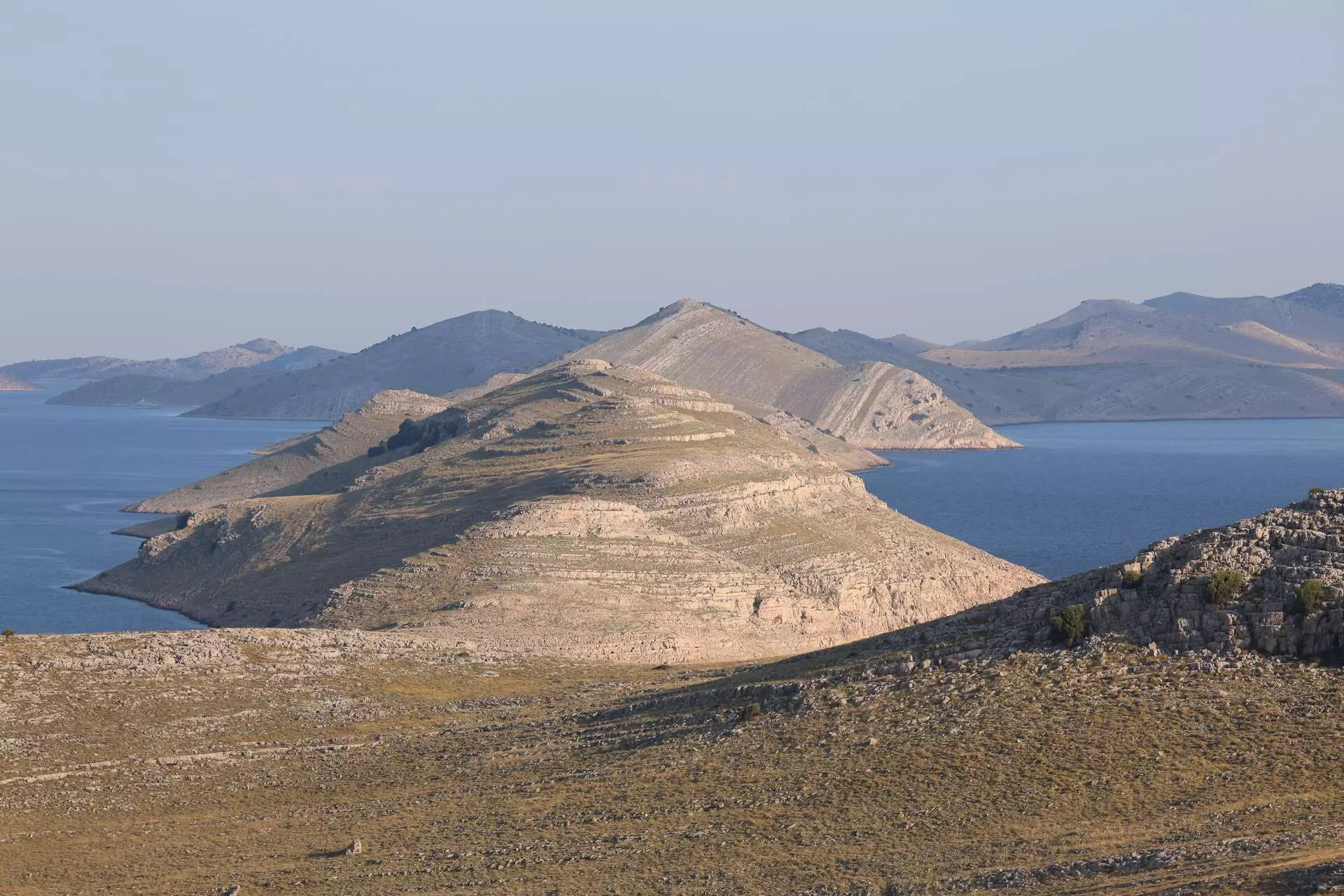
Dramatic cliffs, known as the Kornati crowns, alternate with dry-stone walls, bare rock, patches of greenery and seasonally inhabited oases. For sailors, this is a place to explore slowly, almost in a slalom, weaving between islands and bays that reveal a different perspective with every passing hour.
This guide offers an overview of what you can see and experience while sailing through Kornati National Park. It highlights natural phenomena, cultural landmarks, viewpoints, bays, diving and snorkelling opportunities, ACI Piškera, as well as the restaurants and anchorages most frequently included in yacht charter itineraries. Kornati, of course, offer much more than this, so the best advice is to leave enough time to discover the archipelago at your own pace.
Why Kornati National Park is a unique charter destination
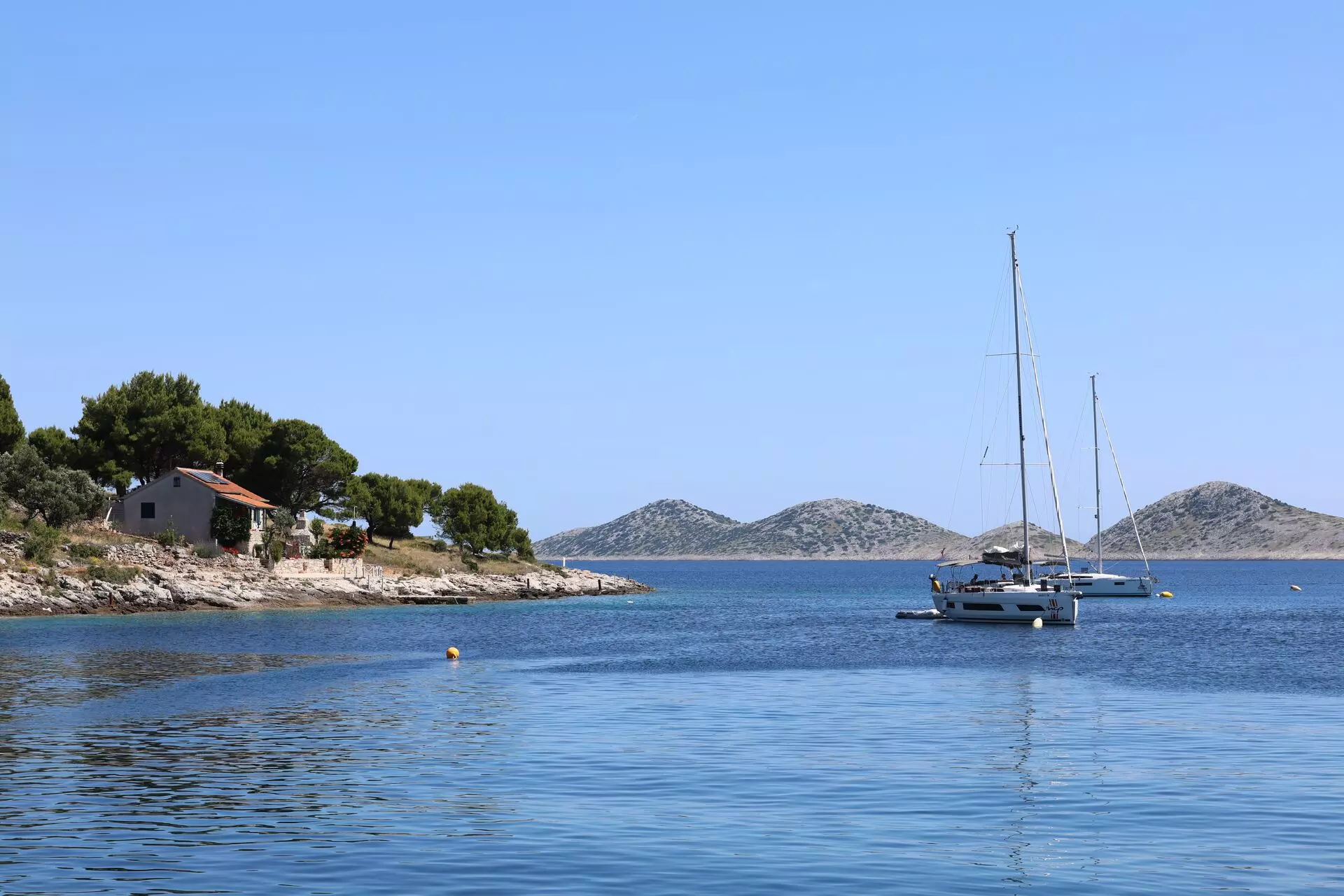
Kornati National Park is often described as a Mediterranean yachting paradise, although its appeal does not lie in luxury in the conventional sense. Kornati are powerful precisely because of their restraint. The landscape is open, rocky and stripped bare, but never empty. Traces of life, work and adaptation to the environment are visible everywhere, from the dry-stone walls crossing the islands to the seasonally inhabited bays where a slower rhythm of life can still be felt.
For sailors and charter yacht guests, the experience of moving through the archipelago is particularly fascinating. Cruising between the islands is never simply a journey from one point to another. It is an essential part of the experience. Cliffs open towards the open sea, hidden bays appear unexpectedly, and dry-stone walls climb across the slopes as reminders of the islands’ former pastoral landscape.
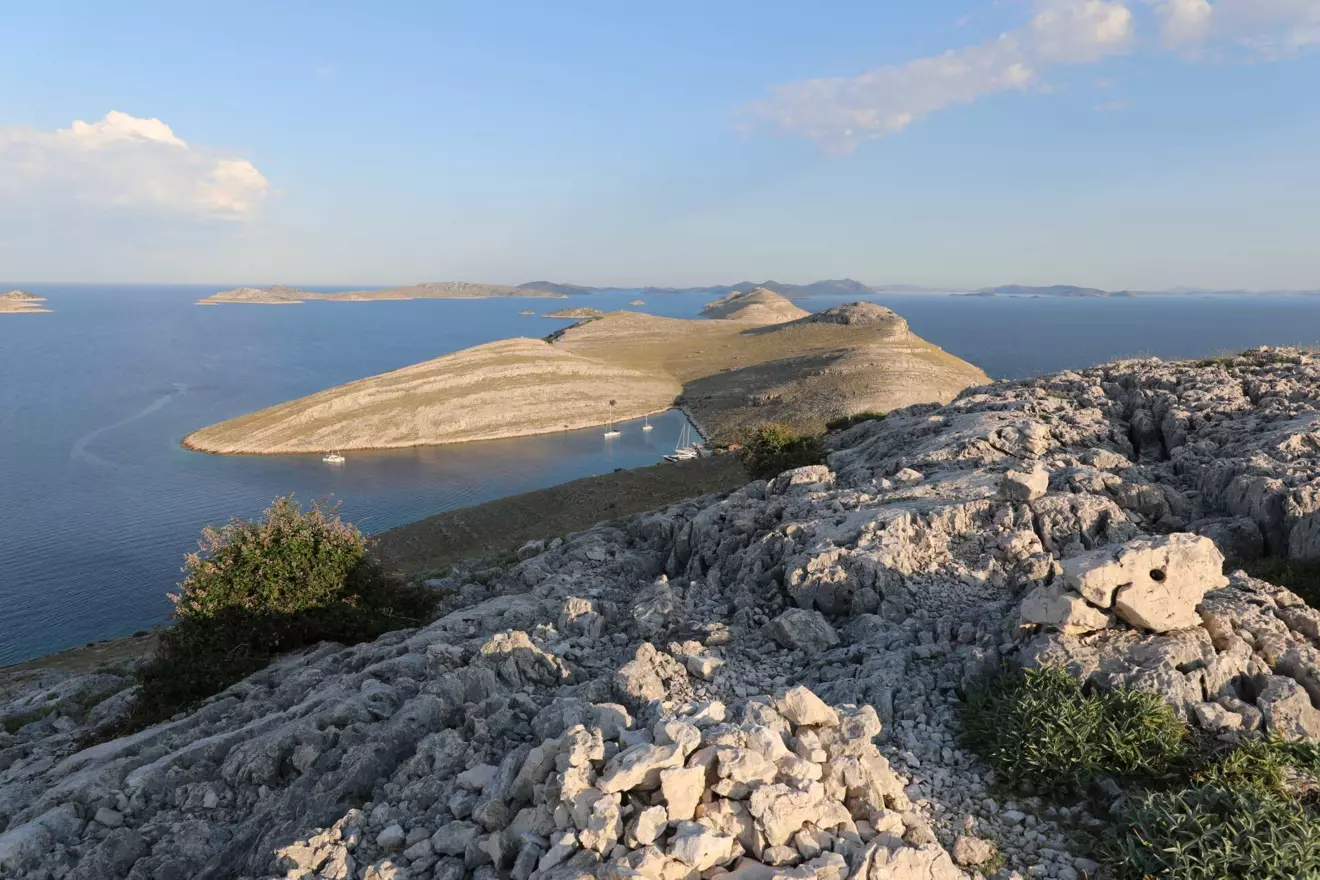
Kornati can impress even the most experienced travellers precisely because they make no attempt to offer conventional beauty. There is little shade, few permanently inhabited settlements and none of the usual tourist scenery. Instead, the islands offer raw beauty, silence, sea, stone and a sense of isolation that is becoming increasingly rare along the Adriatic.
What to see in Kornati National Park
Kornati are rich in natural beauty and cultural heritage. Yacht charter itineraries usually include the best-known and most frequently visited locations, but the archipelago is sufficiently extensive and indented to always leave room for personal exploration. Some places require more time and attention, others are best experienced from the sea, while certain locations are worth visiting on foot, always with respect for the landscape and private property.
Magazinova Škrila on Kornat island
Magazinova Škrila is located on the island of Kornat. It is a natural limestone plateau or fault that descends towards the sea. It is believed to have formed during or following an earthquake. This is one of the natural phenomena that reveal both the geological power of Kornati and the fragility of their landscape.
The bays of Kravljačica, Strižnja and Vrulje can serve as convenient starting points for visiting Magazinova Škrila. However, exploring this area requires consideration and respect. The site is located on private property and must not be damaged or disturbed in any way. Visitors must not climb over or dismantle dry-stone walls, pick fruit or disturb animals.
These rules are not merely a formality. They reflect the basic respect owed to a landscape shaped by both nature and generations of human labour. Kornati are not simply a backdrop for sailing, but a living landscape in which the relationship between people, land and sea remains clearly visible.
The Kornati crowns and cliff landscape
The most famous natural phenomenon in Kornati National Park is the series of vertical cliffs known as the Kornati crowns. Facing the open sea, they were formed long ago as a result of geological events and have become one of the most recognisable features of the archipelago.
The longest crown above sea level is located on the island of Mana, while the highest rises to 82 metres on the island of Klobučar. What makes these cliffs particularly remarkable is that they do not end at the surface of the sea. They continue underwater, with the crown on the island of Piškera descending to a depth of 90 metres below the surface.
For this reason, Kornati are not only attractive to sailors observing them from the deck. They also appeal to divers eager to discover the underwater continuation of the same dramatic landscape. What appears above the sea as a striking rock face continues beneath the surface in an equally impressive form.
Climbing the crowns is prohibited. The only exceptions are the birds for which these cliffs provide a natural habitat, including falcons, cormorants, terns and other species. Visitors should admire them from the sea or from authorised viewpoints, as their scale and power are best appreciated from a distance.
Dry-stone walls as traces of island life
Dry-stone walls are among the most important cultural features of the Kornati landscape. They were constructed towards the end of the 19th century, during a period when the pastoral landscape was changing and the islands were being shaped according to the needs of everyday life and work.
In Kornati, dry-stone walls are far more than picturesque details. They divide the land, reflect traditional methods of land use and represent one of the archipelago’s most recognisable visual features. They stretch across slopes and rocky terrain, often in places that seem almost inaccessible from a modern perspective.
Their presence gives Kornati a distinctive texture. While cruising along the islands, you can see the lines of the walls following the terrain, disappearing behind hills and reappearing above the bays. They may be the quietest, yet clearest evidence that Kornati, despite appearing deserted at first sight, have been a place of human life and activity for centuries.
The cultural heritage of Kornati
Although Kornati are most often experienced through their natural landscape, their cultural heritage forms an important part of the national park’s identity. Traces of settlement date back to prehistoric times, while individual locations testify to periods when the islands played strategic, religious and economic roles.
Tureta and the History of Safer Navigation
The remains of Illyrian hillforts confirm that the Kornati islands were inhabited in prehistoric times. One of the most important cultural landmarks is the Tureta fortress on Kornat Island, a remnant of the Byzantine period.
Tureta was built to make navigation along the Adriatic safer at a time when sailing these waters was far from secure. Its position and purpose reveal the importance of this maritime area. Kornati were not merely remote islands on the fringes of navigation routes, but part of a much broader story involving movement, surveillance and safety across the Adriatic.
Today, Tureta adds a historical dimension that naturally complements the surrounding landscape. Looking out towards the sea from the area around the fortress makes it easy to understand why this location once held such strategic significance.
Our Lady of Tarac and Lavsa Bay
At the foot of Tureta lie the remains of an old three-nave basilica. Nearby stands the newer Church of Our Lady of Tarac, an important site within the sacred heritage of Kornati. Holy Mass is celebrated there on the first Sunday of July, giving the location particular significance within the archipelago’s seasonal rhythm.
On Lavsa Island, in the bay of the same name, visitors can find the submerged remains of salt pans and former salt warehouses. These details reveal that life in Kornati was connected not only to the sea and livestock farming, but also to specific economic activities.
When these locations are included in a sailing itinerary, Kornati cease to be experienced merely as a succession of bays and cliffs. They become a place of historical depth, where nature and traces of human labour constantly overlap.
Vela Panitula and the Kornati Crosses
In the 16th century, the Venetians built a small castle on the island of Vela Panitula, which was used to collect taxes on fish caught by Kornati fishermen. This location is another important reminder of a period when fishing was a central part of life in the archipelago.
From Šipnata Bay, visitors can take a walk of approximately 30 minutes to a memorial dedicated to the local firefighters who lost their lives in the Kornati tragedy of 2007. The impressive Kornati Crosses are located there, forming one of the most powerful memorial sites within the national park.
This part of Kornati calls for a quieter and more reflective visit. As elsewhere in the archipelago, the purpose is not simply to see another attraction, but to understand what the place represents.
Activities in Kornati National Park
Sailing is the main way to experience Kornati, but it is not the only one. The archipelago can also be explored through its viewpoints, walking trails, snorkelling and diving locations, as well as simple island activities that reveal its slower rhythm of life. It is precisely this combination of sea, land and silence that makes a stay in Kornati National Park so distinctive.
Diving and snorkelling
No special permit is required for snorkelling, making it the easiest way to experience the underwater side of Kornati. The clear sea, cliffs that continue beneath the surface and the highly indented coastline make the archipelago fascinating even for visitors who do not dive with specialist equipment.
Scuba diving is permitted in organised groups with a permit issued by authorised diving centres. These centres also recommend one of the seven designated diving areas within the archipelago.
Each area offers something different, allowing certified divers to experience Kornati National Park from a perspective unavailable to those who remain on the shore or aboard a yacht. The underwater continuation of the Kornati crowns is particularly fascinating, revealing that the landscape extends far beyond what can be seen above the surface.
Viewpoints and hiking in Kornati National Park
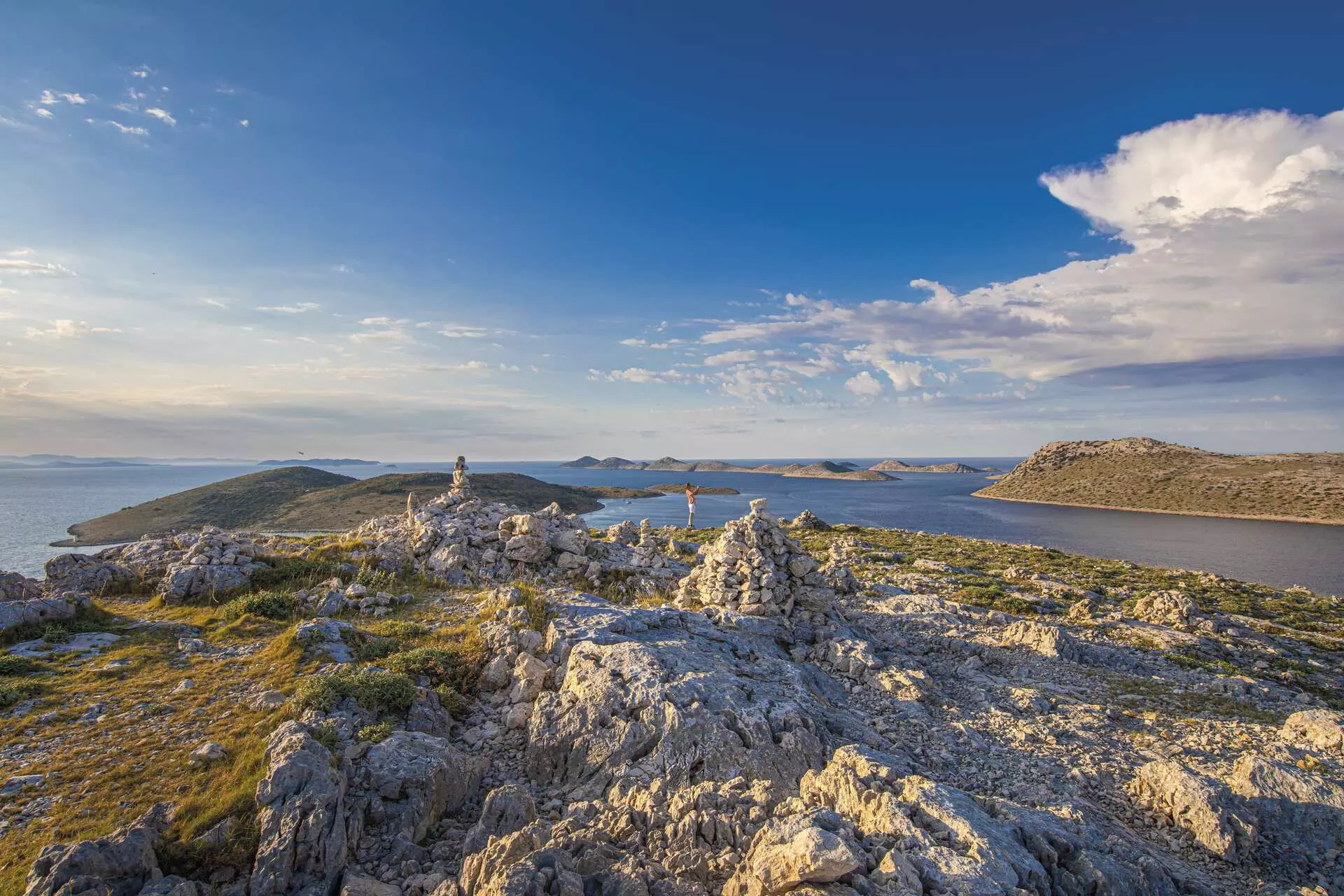
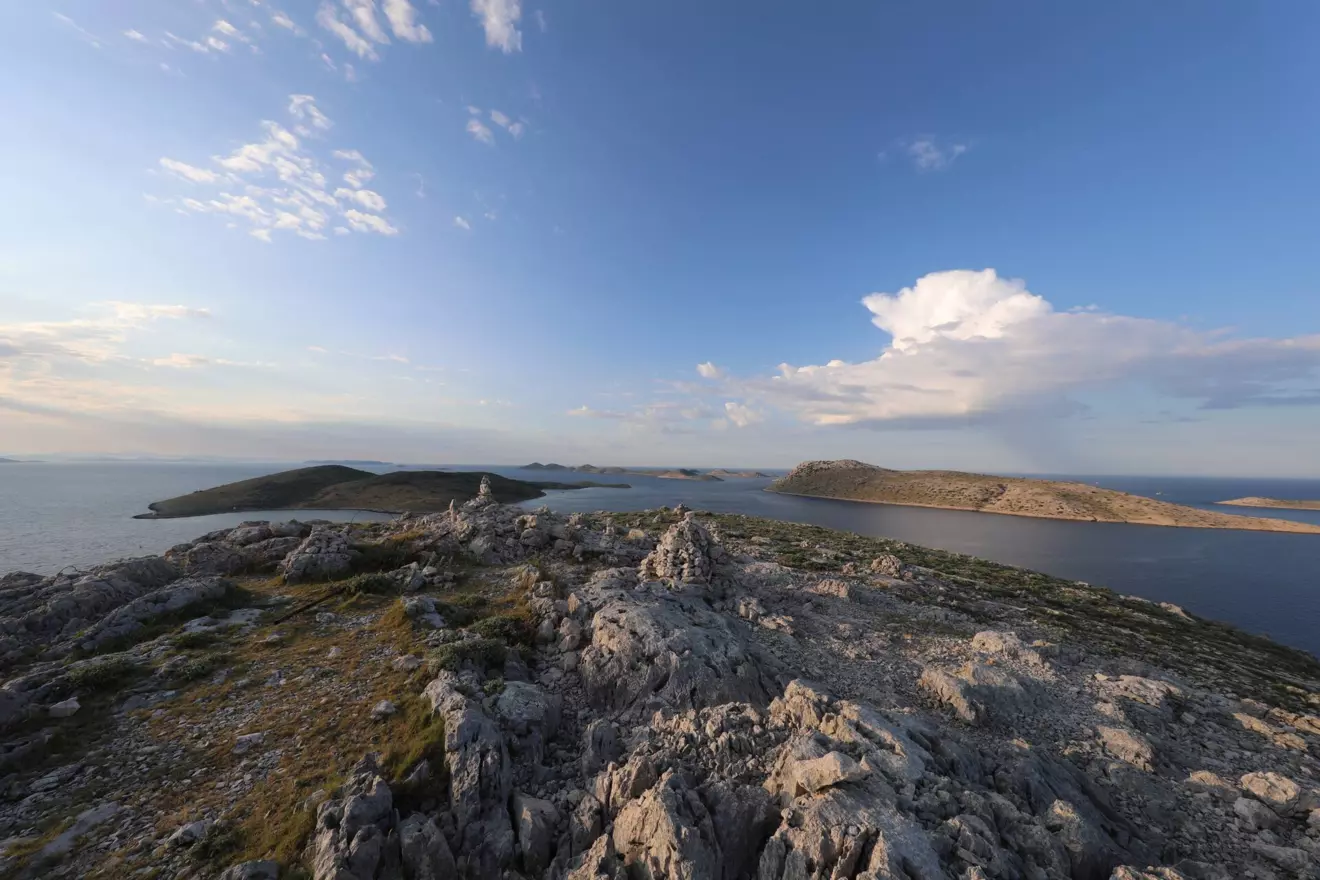
It is almost impossible to select a single Kornati peak or viewpoint as the best. Each one offers a different view of the archipelago, the sea and the surrounding islands. The highest point is Metlina on Kornat Island, which rises to 237 metres, although it is also the most difficult to reach.
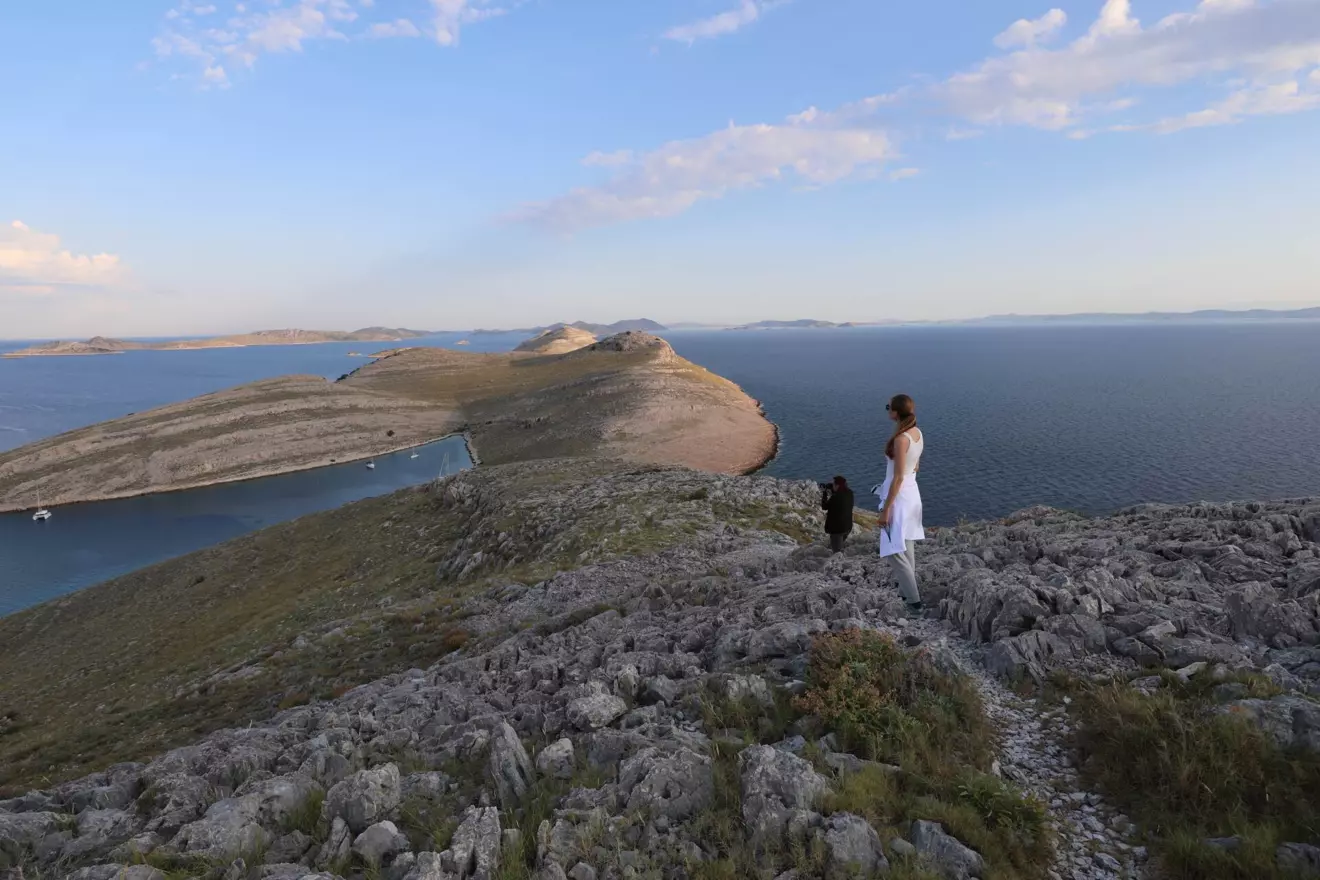
The summit of Opat and Litnji Vrh on Vela Smokvica offer beautiful views towards the Murter Sea to the northeast and the national park on the opposite side. From Otočevac on Piškera Island, almost the entire area of Kornati National Park can be seen. The summit of Levrnaka is relatively easy to reach and is well worth visiting for the views that open across the surrounding islands and sea.
It is important to remember that the central part of the national park, including its peaks, is privately owned, primarily by local families from nearby Murter. Visitors should therefore explore the area carefully and respectfully.
The summer sun in Kornati is intense, while shade is almost nonexistent throughout the archipelago. This can make walking more difficult and uncomfortable, particularly during the hottest part of the day. Choosing the right time, carrying enough water and setting an appropriate pace are therefore just as important as selecting the route itself.
A slower island rhythm
In addition to sailing, viewpoints and diving, Kornati offer a different kind of experience. Visitors can sense the slower and quieter way of life that local communities have known for centuries. It is visible in the olive groves on Kurnat, in traditional fishing and in encounters with the islands’ population of semi-wild sheep, which remain surprisingly tame.
These scenes are not attractions in the conventional sense, but rather part of the atmosphere. They remind visitors that Kornati are not a destination to be rushed through as part of a tightly packed itinerary. They are a place in which it is worth slowing down. For guests arriving by sea, this contrast between sailing, silence and simple island life is one of the greatest reasons to return.
The best time to visit Kornati National Park
The best time to visit Kornati National Park is during the warmer part of the year, from early April until the end of October. This period is well suited to sailing, while weather conditions are more favourable for spending time at sea, swimming, snorkelling and visiting the viewpoints.
The weather is not the only reason to choose the warmer season. Some parts of the national park are closed to visitors outside the main season. Planning a trip between spring and autumn is therefore more practical, especially when combining sailing, walking, diving and visits to cultural landmarks.
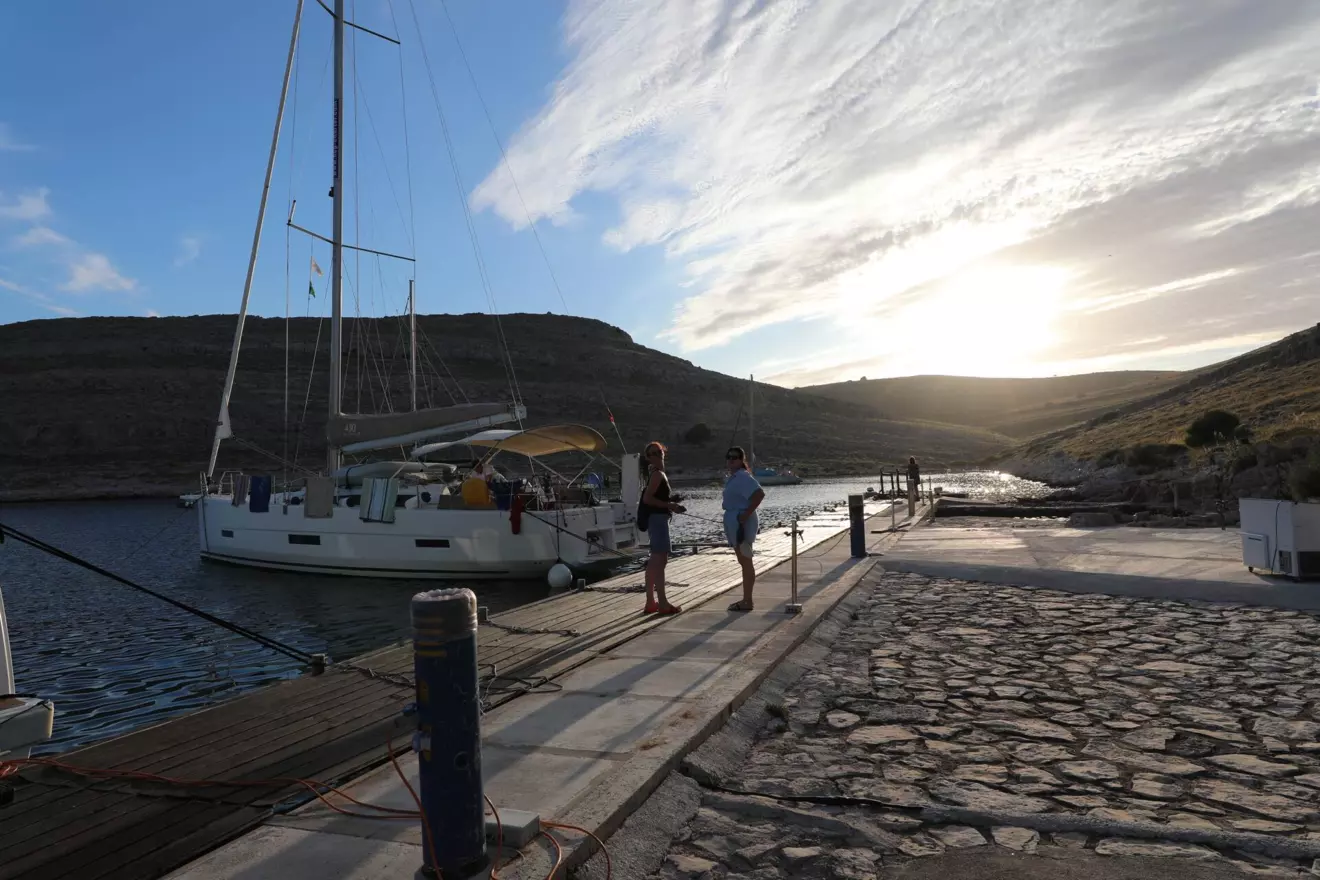
Summer brings the liveliest atmosphere, particularly in popular bays, restaurants and locations frequently visited by excursion boats. Nevertheless, even during the height of the season, Kornati retain their sense of isolation, especially when the itinerary is not limited exclusively to the best-known places.
Marinas, moorings and bays in Kornati National Park
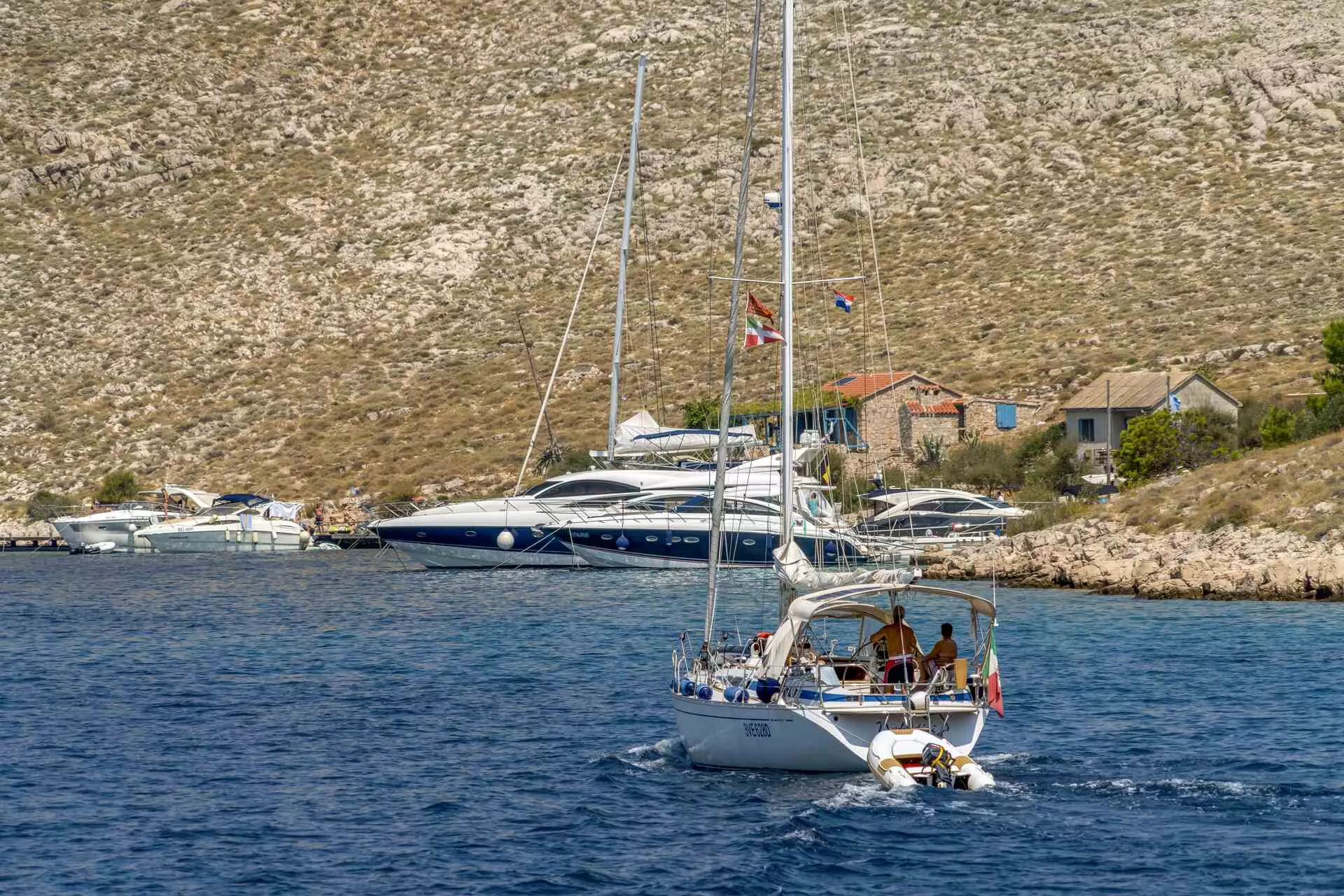
Anchoring and overnight stays are permitted in 19 bays within Kornati National Park, as well as in one marina, ACI Piškera. This is important for sailors, as planning a route through the archipelago must always take into consideration the authorised overnight locations, the conditions within individual bays and the prevailing winds.
Mooring buoys are available in Tomasovac Suha Punta Bay, which has 10 buoys; Šipnate, which also has 10; Anica, which has 12; Kravljačica and Strižnja, which have 20; Vrulje, which has 18; and Kameni Žakan, which has 10.
Excellent restaurants can be found in almost all seasonally inhabited bays across the Kornati islands, and many of them also provide moorings for their guests. Among the most prestigious are Opat, Ravni Žakan, Fešta and Levrnaka.
Bays and popular charter destinations
When sailing from east to west, Vrulje and Strižnja stand out as particularly popular sailing and gastronomic destinations, along with the islands of Vela Smokvica, Lavsa and Katina. These locations are frequently included in yacht charter itineraries because they combine accessibility, beautiful scenery and convenient opportunities to stop.
Visitors looking for greater peace and seclusion often choose the bays of Kravljačica, Šipnate or Statival. Situated along the coast of Kornat Island, they appear as a series of peaceful spots within the vast rocky landscape.
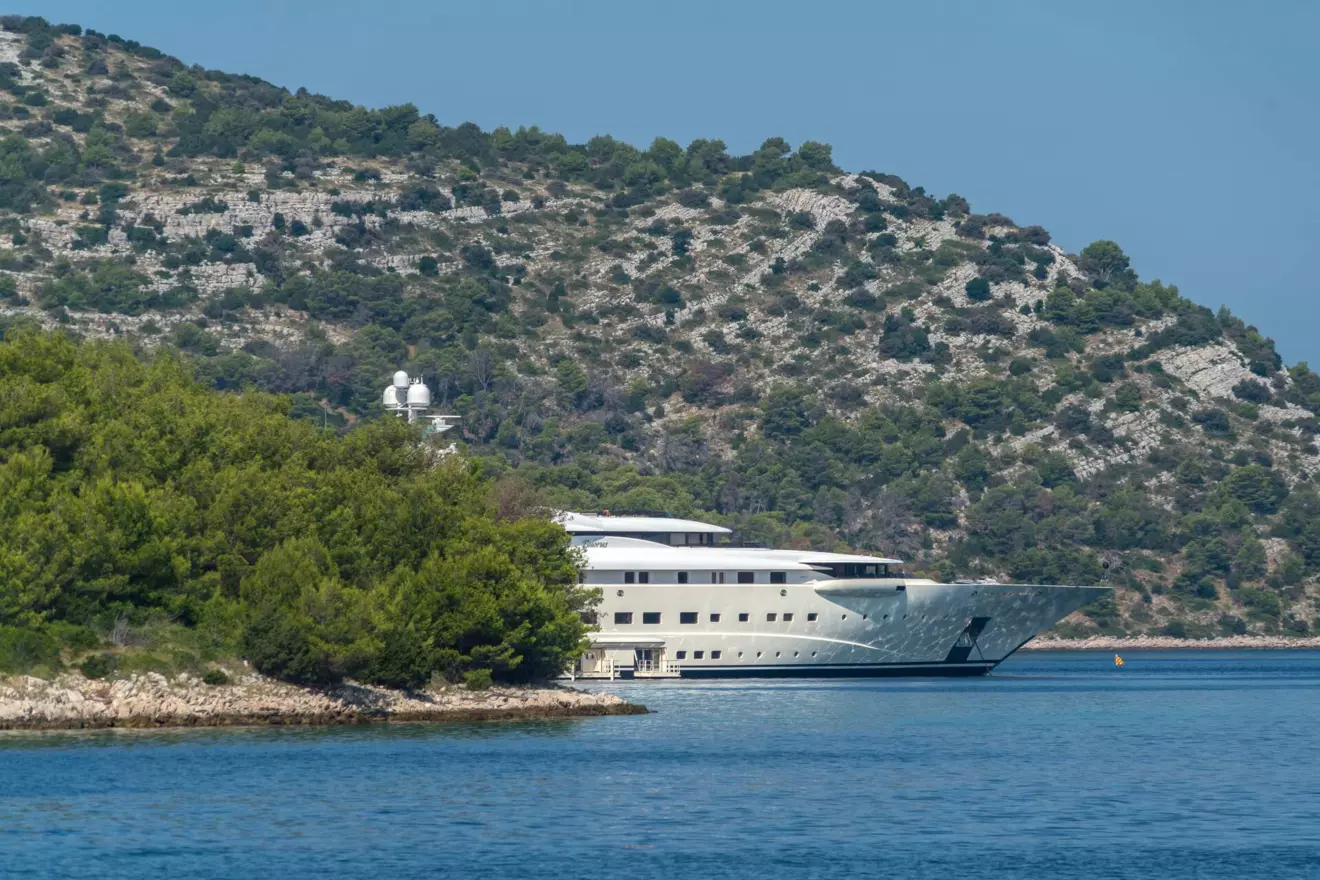
The large bay of Modri Bok is a favourite for swimming and diving. However, the best-known anchorage in the archipelago is Lojena on Levrnaka Island. The bay is bordered by sand and recognised for its intensely blue sea, making it one of the most sought-after locations in sailing guides to Kornati.
ACI Piškera
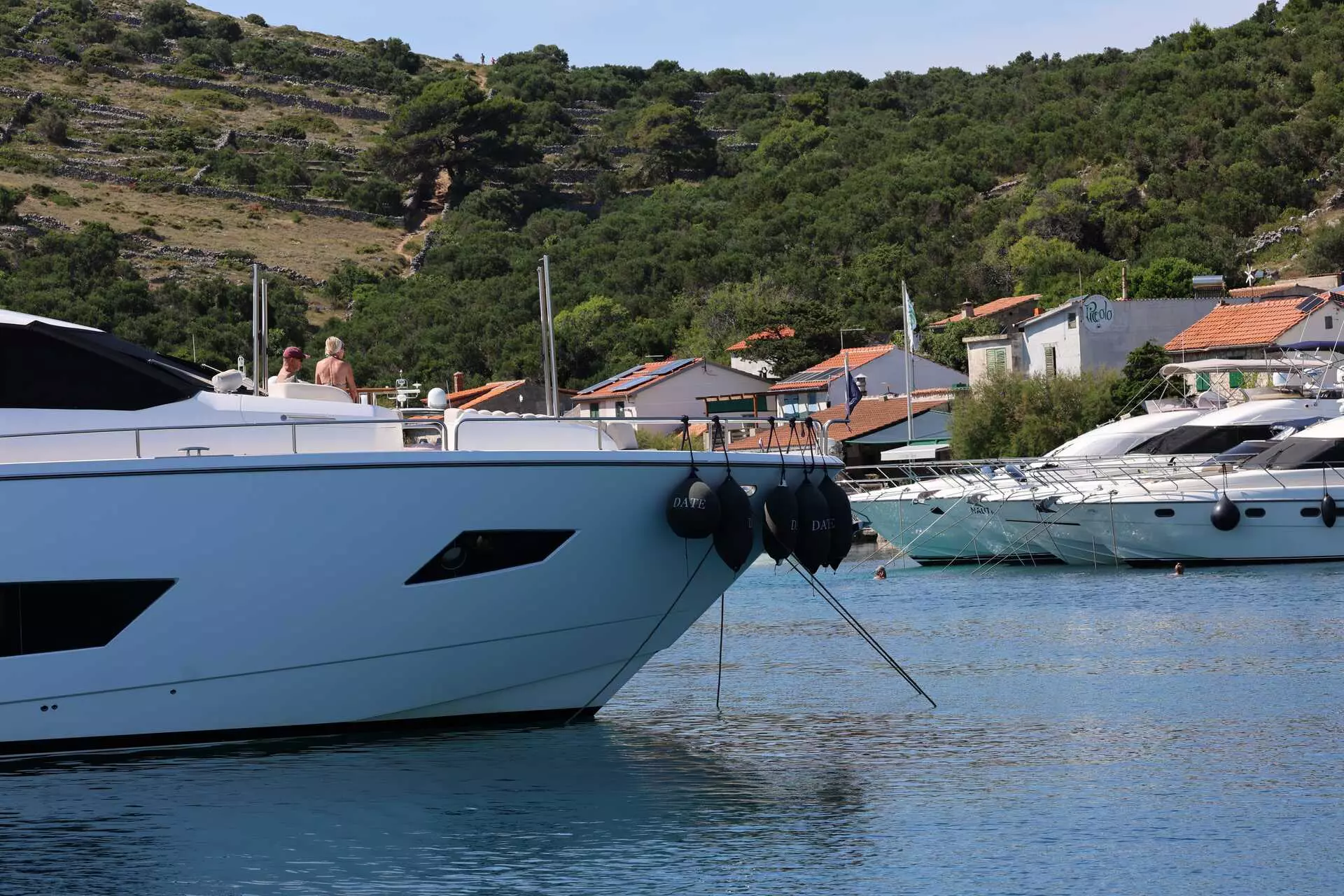
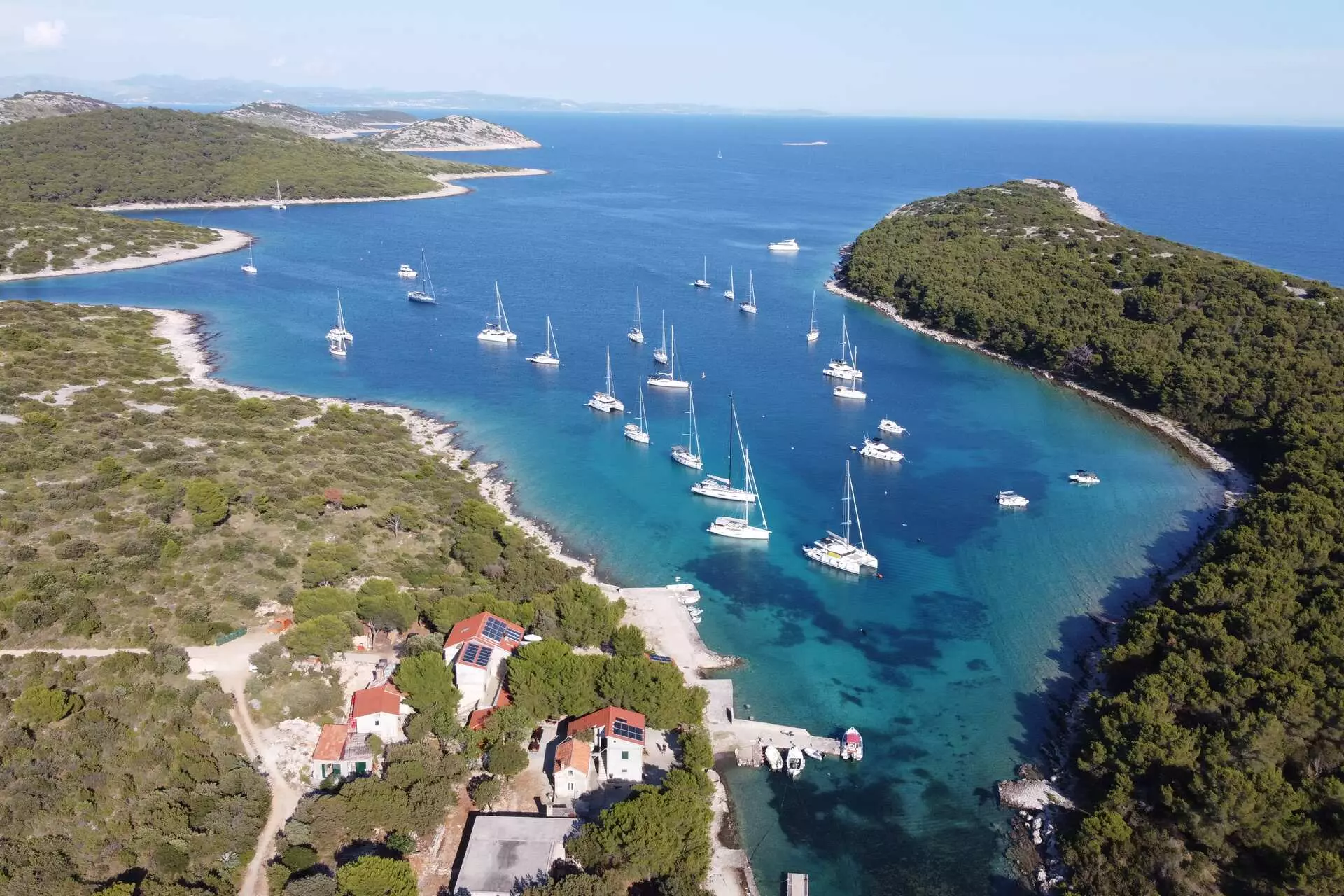
For generations, fishing boats have found shelter in the 70-metre-wide channel between Piškera Island and the much smaller island of Vela Panitula. Today, this distinctive location is a popular destination for sailing boats and yachts exploring Kornati National Park.
ACI Marina Piškera has a shop and a good restaurant, making it a practical stop during a sailing itinerary. While staying there, crossing the channel aboard a small traditional wooden boat offers a particularly authentic experience.
ACI Marina Piškera is open during the sailing season. It can only be approached safely from the south and provides excellent shelter during bad weather. However, the channel is unsafe during the mistral or a strong southerly jugo wind, in which case it is better to leave the visit for another occasion.
Where to eat in Kornati
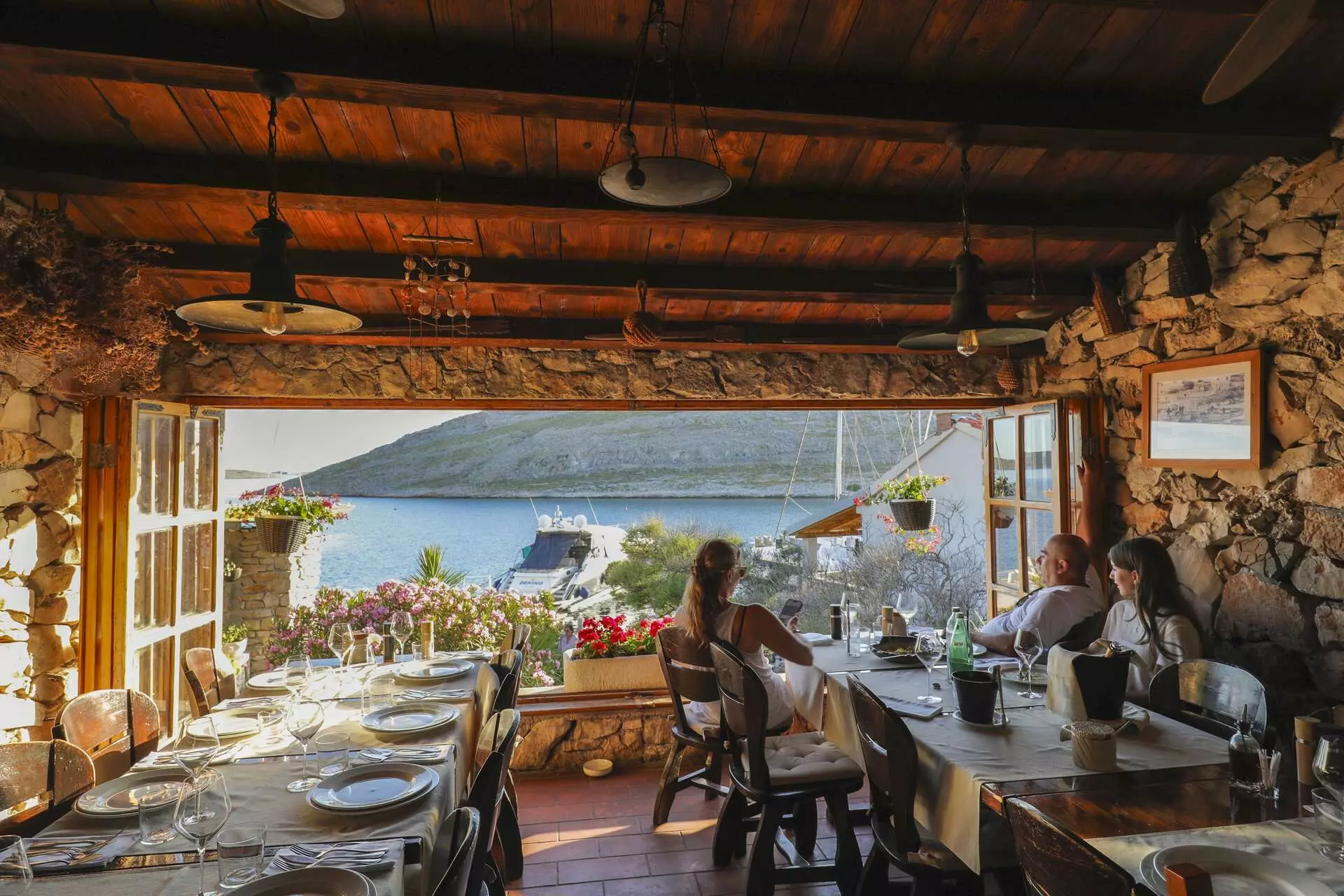
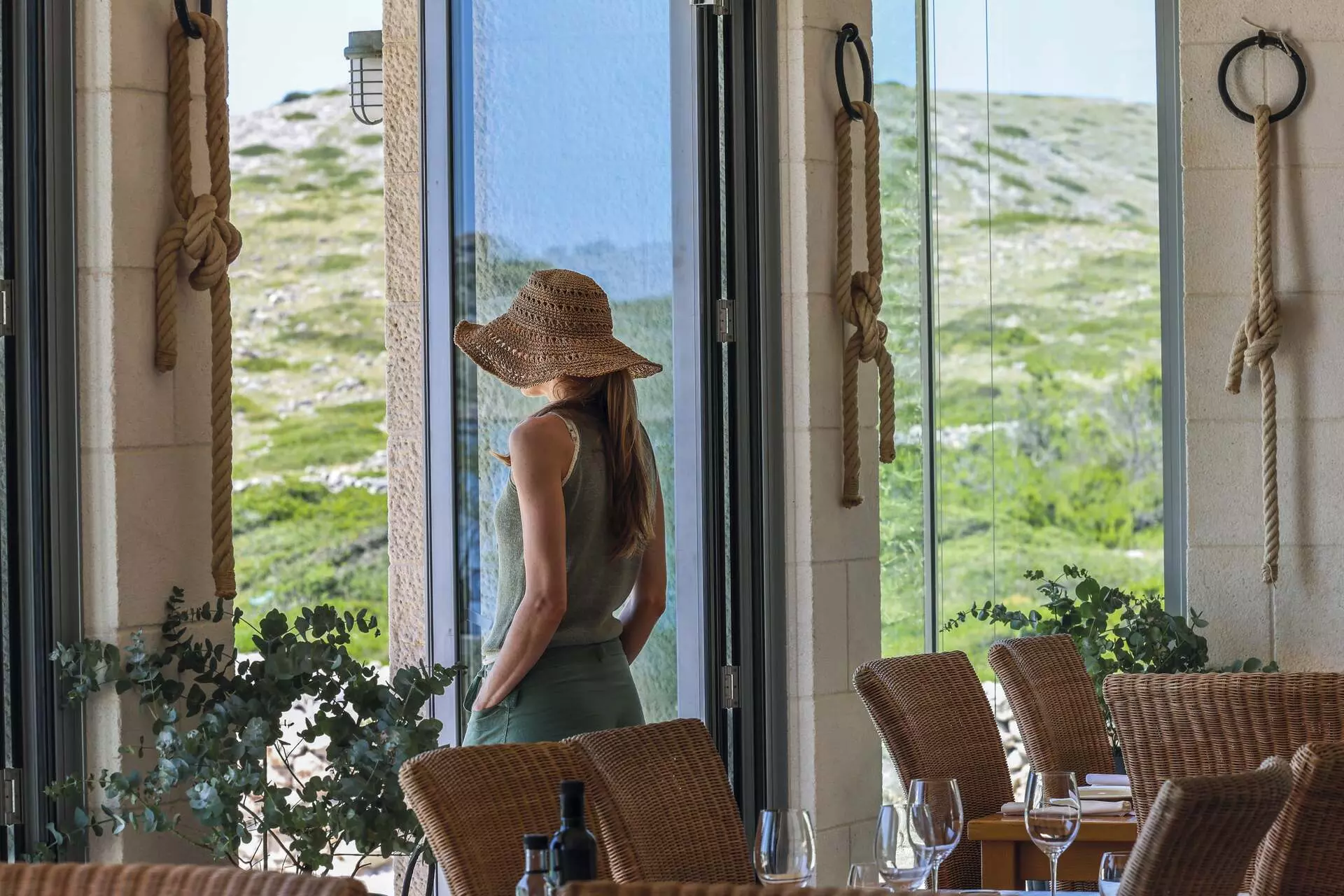
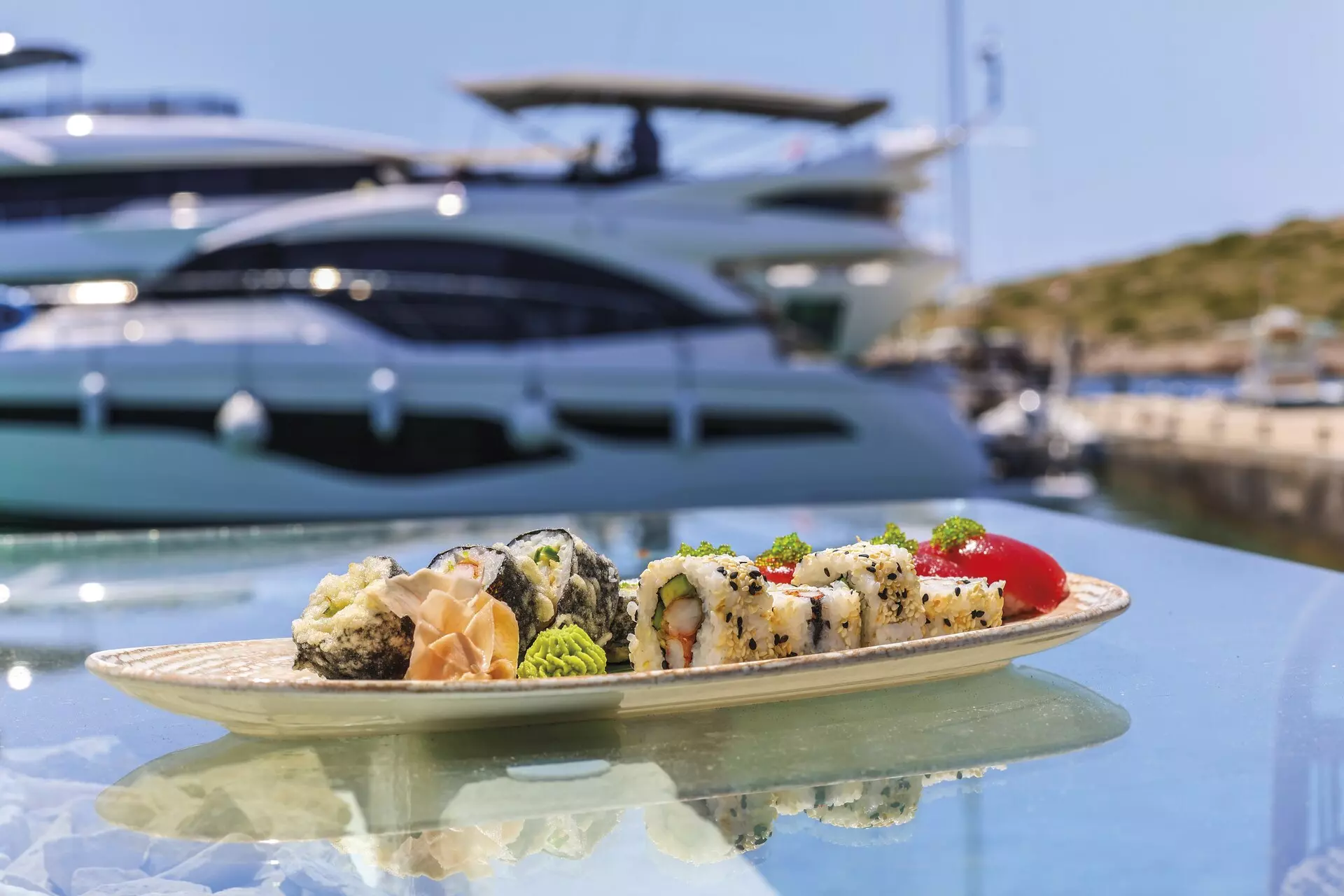
Gastronomy is an important part of sailing through Kornati. Restaurants in seasonally inhabited bays are often far more than places to have lunch or dinner. They are key stops along the route, providing moorings, atmosphere and views of the landscape that can be just as memorable as the food.
Among the best-known restaurants and destinations within Kornati National Park are Opat, Žakan, Fešta and Levrnaka. Each has a different location, character and mooring conditions, so the choice often depends on the itinerary, the wind and the desired pace of the day.
Opat
Opat Bay is primarily known for its local restaurant, which is appreciated for both its menu and atmosphere. The bay is well protected from northerly winds but is not safe during a jugo. A sturdy berth suitable for larger yachts is located along the eastern shore, while several mooring buoys are positioned in the centre of the bay.
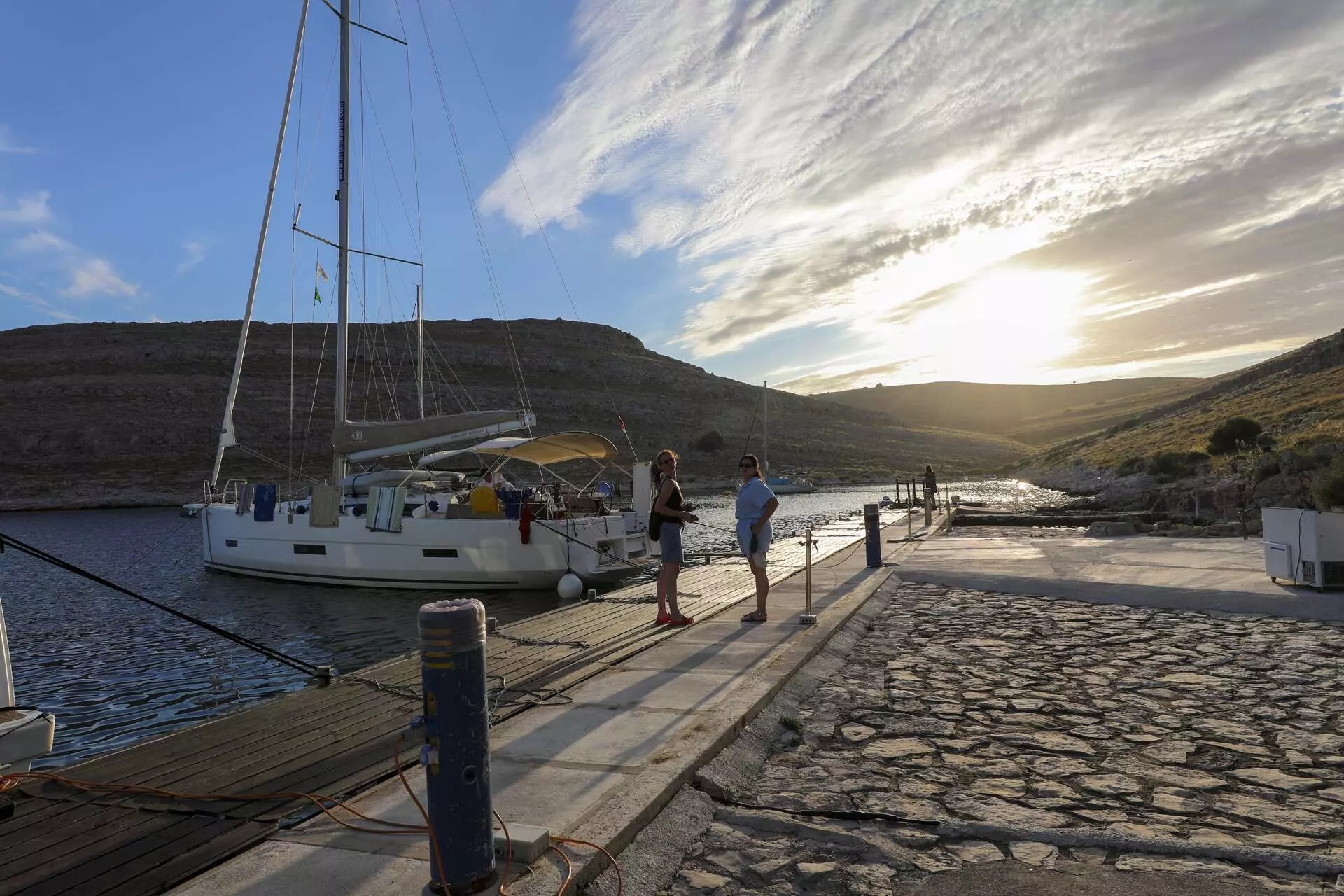
Opat is one of those Kornati destinations where gastronomy, the sea and the surrounding views come together naturally. After arriving, it is well worth climbing to the top of the island to see Kornati National Park from a bird’s-eye perspective. The view clearly reveals the layered structure of the archipelago, the arrangement of its islands and channels, and the dramatic scale of a landscape that feels entirely different when experienced from the sea.
Žakan
Žakan is a small, low-lying island with two bays. One is situated on its southern coast and was popular among fishing boats during the golden age of fishing in Kornati, when a fishing station was constructed there. Today, the location is home to Konoba Žakan.
A long breakwater stands in front of the restaurant and is sturdy enough to accommodate larger yachts sailing through Kornati National Park. The bay is also popular with excursion boats, meaning that Žakan takes on the character of a small tourist centre during the height of the season.
It is worth taking five minutes to walk to the top of the island. From there, the view extends towards Vrata od Opata and the surrounding islands, making Ravni Žakan a rewarding destination for both a brief stop and a longer stay.
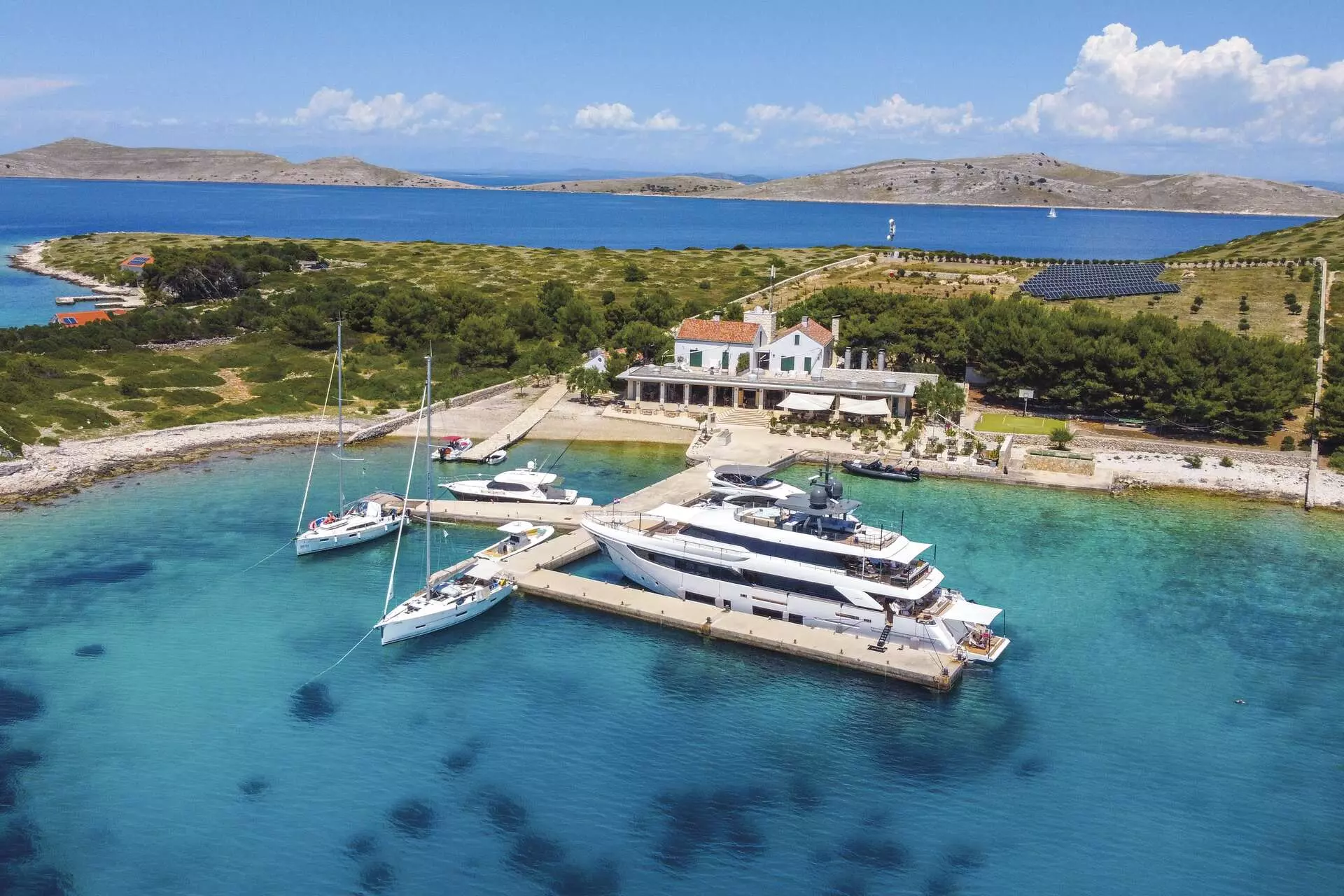
The azure lagoon of Žakan provides protection from the bora, but not from the jugo. During a jugo, the northwestern coast is a safer option. Turčinov Žakan Bay is bordered by a strip of woodland and dotted with private houses, which is unusual within the archipelago. Visitors can anchor in the bay, use one of the several available mooring buoys or berth alongside the stone pier next to Larus restaurant.
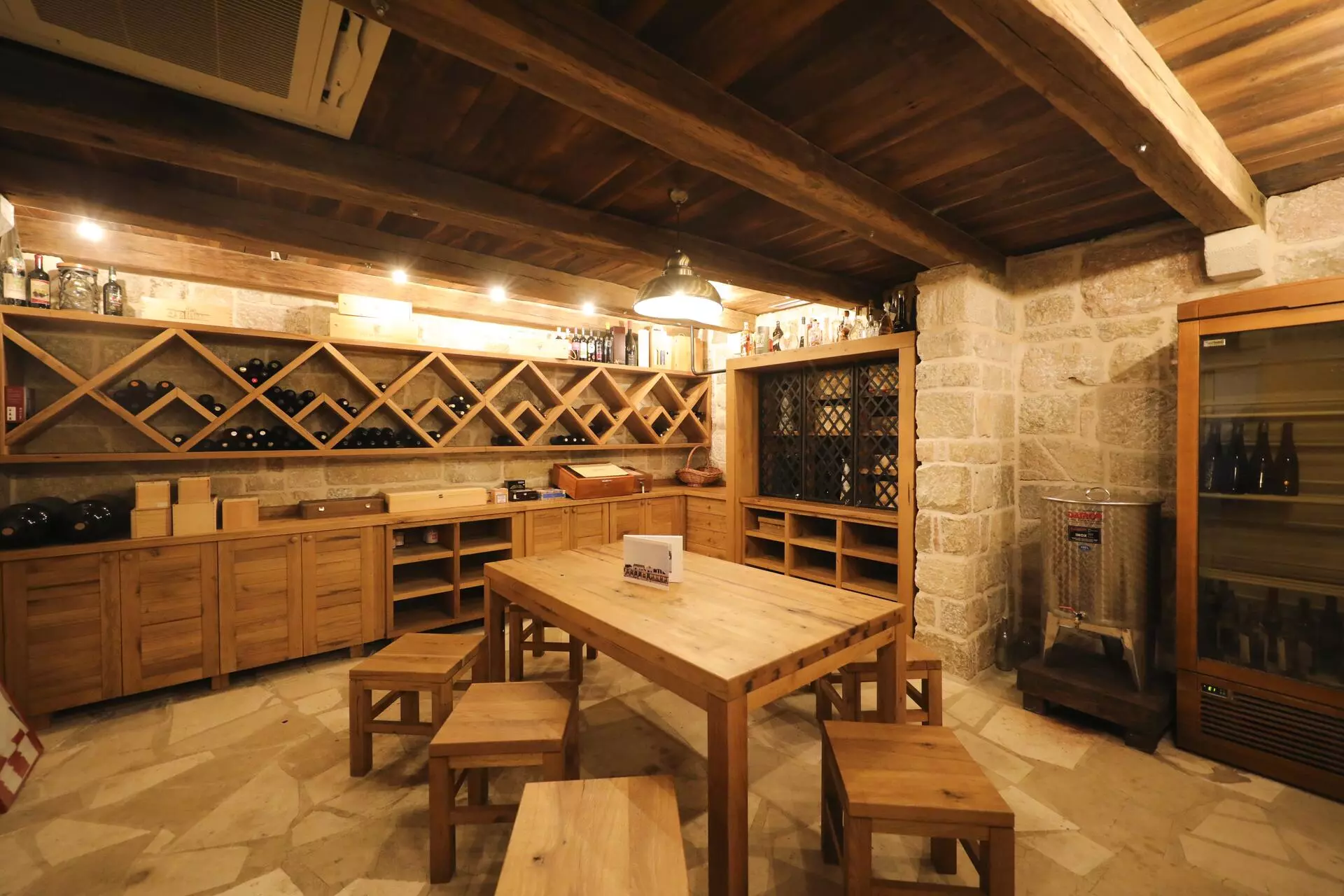
Larus is a small, rustic konoba with a simple menu based on fresh local ingredients and traditional recipes. This simplicity is perfectly suited to the atmosphere of Kornati.
Levrnaka
Levrnaka is another important destination in any guide to sailing through Kornati National Park, particularly because of the restaurant of the same name. It is located in the small, azure Anica Bay, opposite Kornat Island, and has a private pier reserved for restaurant guests.
The bay offers protection from all winds, although the bora and jugo can create uncomfortable waves. Thanks to its location, the colour of the sea and its accessibility, Levrnaka is one of those stops that can easily be included in a wide variety of routes through the archipelago.
It is particularly worthwhile to walk across the island to Lojena, described in the guide as the most beautiful bay in the archipelago. This short journey demonstrates how dramatically the experience of Kornati can change within a very small distance. On one side lies a bay with a restaurant and moorings, while on the other is one of the most famous beaches and anchoring locations in the entire area.
How to plan a day in Kornati
The best way to plan a day in Kornati National Park is to combine sailing with one activity on land, a swimming or snorkelling stop, and lunch or dinner in one of the best-known bays. Since anchoring and overnight stays are permitted in 19 bays, the itinerary must be adapted not only to the wishes of the guests but also to the conditions at sea.
When nature is the main priority, the day can be centred around the Kornati crowns, the view from one of the more accessible peaks, and swimming in Modri Bok or Lojena. When the focus is on cultural heritage, Tureta, Our Lady of Tarac, Lavsa, Vela Panitula and the Kornati Crosses provide enough interest for a quieter and more reflective itinerary.
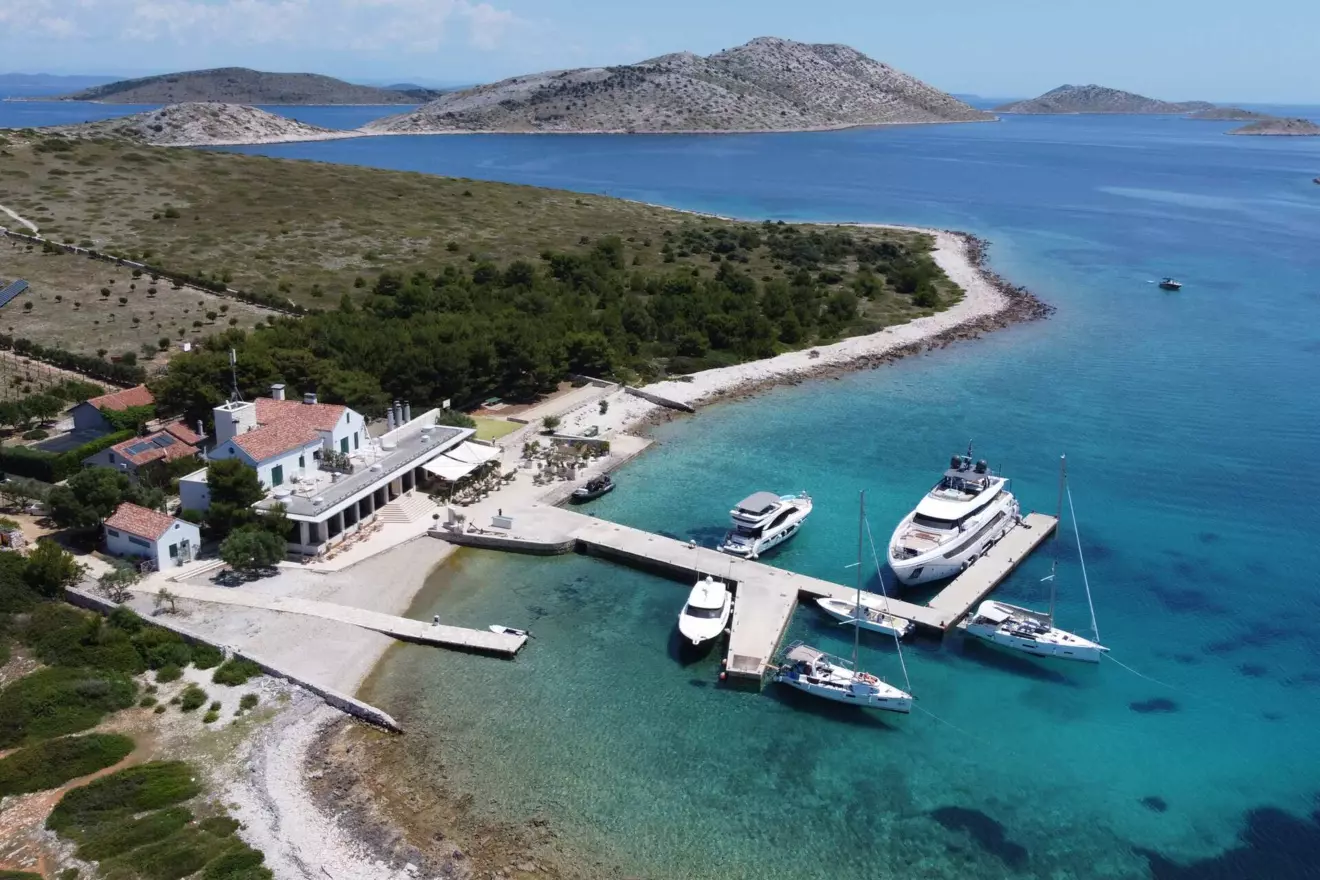
For guests who want to combine gastronomy and sailing, Opat, Žakan and Levrnaka are natural stops. All three destinations bring together food, moorings and landscape, but each has its own character. Opat is particularly memorable for the view from the top of the island, Ravni Žakan for its small-island rhythm and accessibility for larger yachts, and Levrnaka for its proximity to Lojena.
A key piece of advice from the guide is that Kornati are best experienced by choosing fewer destinations and giving each one more time, rather than attempting to visit too many places in a single day.
Conclusion: Kornati are best discovered slowly
Kornati National Park is not a destination to be experienced in a hurry. Its power lies in the constantly shifting combination of sea, stone, silence, cliffs, dry-stone walls, seasonally inhabited bays and views that change throughout the journey. For sailors, it is one of the most distinctive areas of the Adriatic, precisely because cruising is not simply a means of arrival, but the central part of the experience.
Photos Kristina Peračić, Tanja Drinković, Ivana Ledenko, Boris Kačan