The Visionary Behind Axopar: Jan-Erik Viitala on Adventure and the Future of Boating
Date
Reading time
8 min
Video
2
min
As one of Axopar’s founders, the Finnish visionary is credited with creating an entire genre of adventure boats
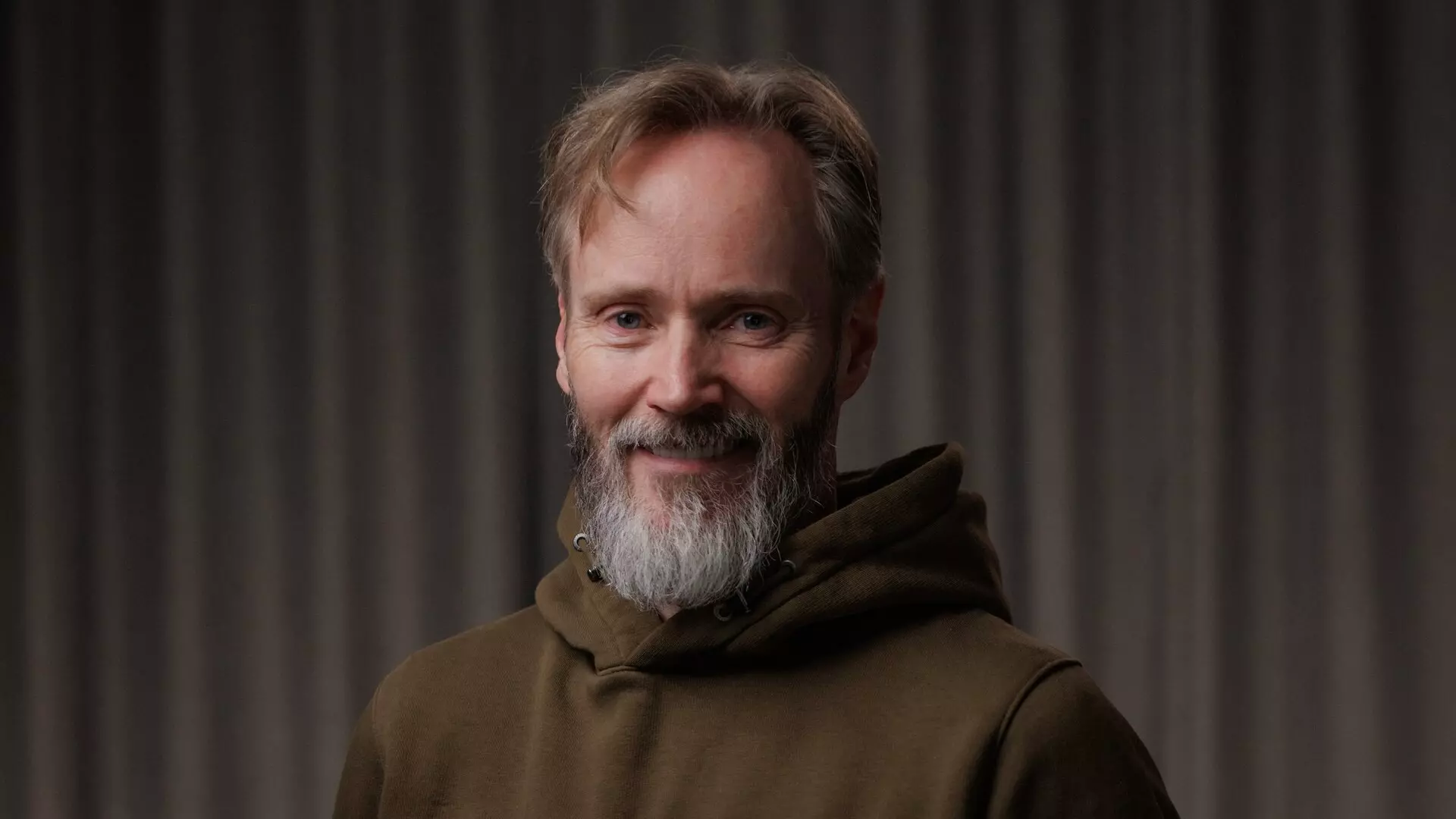
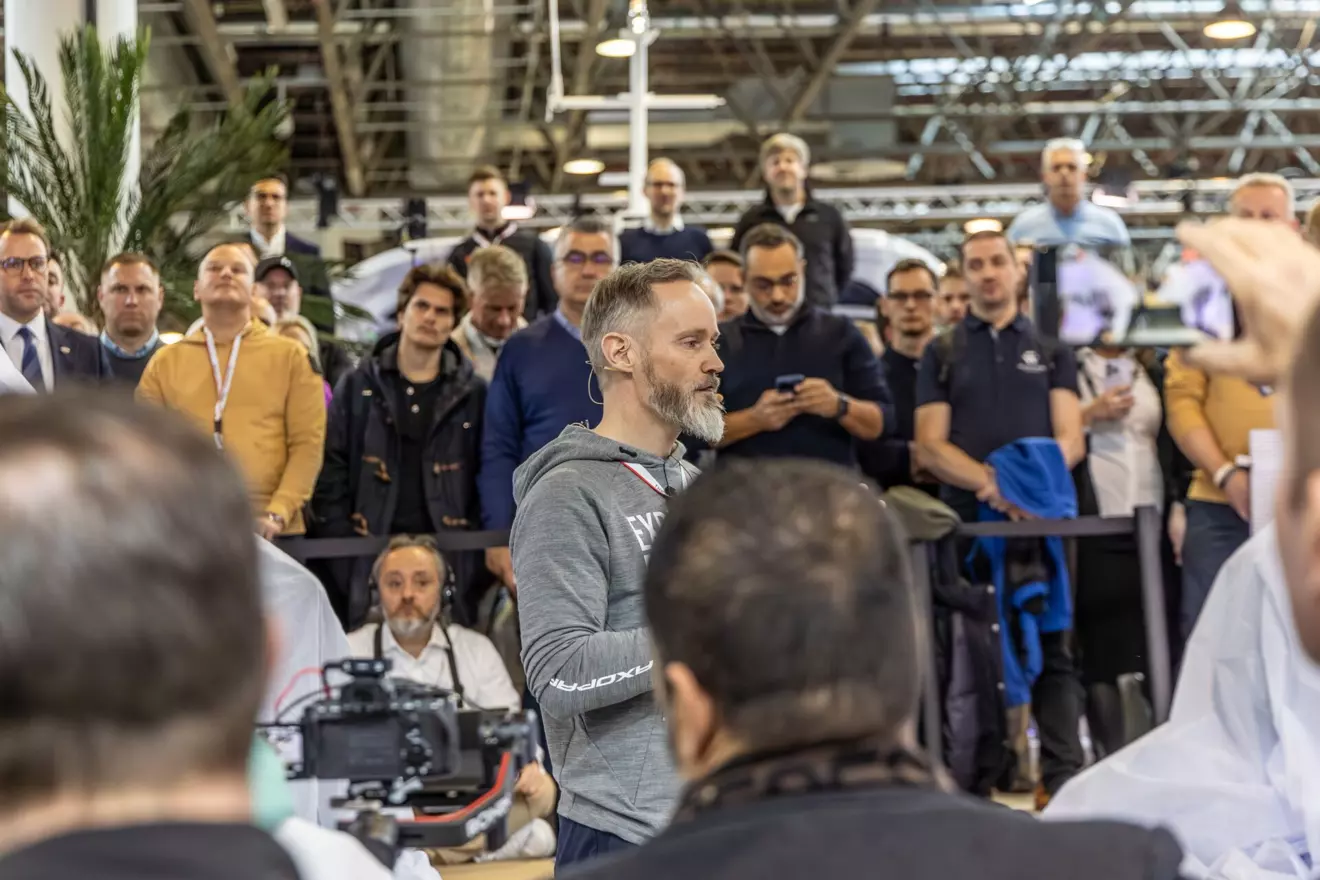
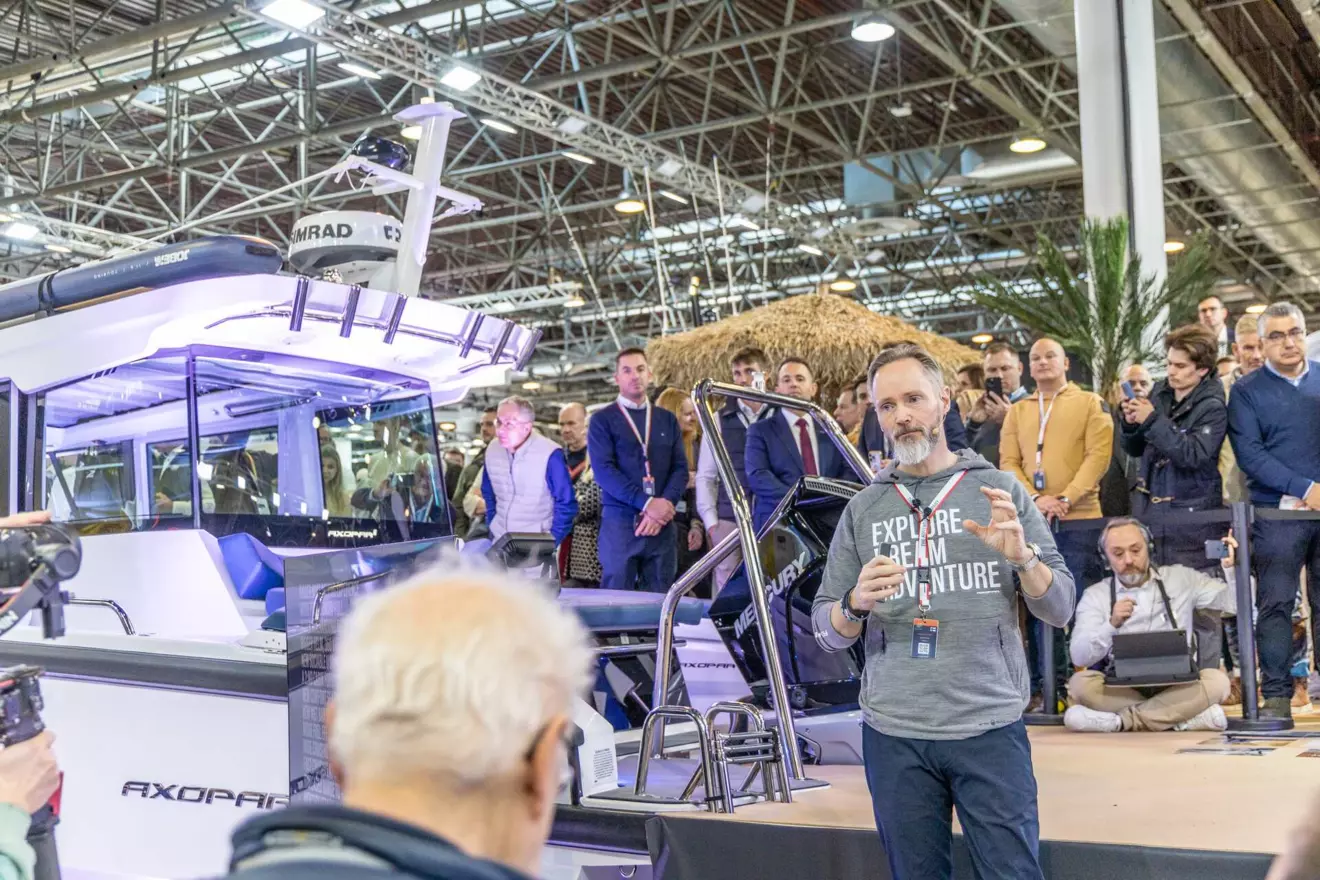
It was our great pleasure to speak with Jan-Erik Viitala, one of Axopar’s founders, the man behind the type of vessel now classified as adventure, which emphasizes experience and a personal way of navigating and living at sea. A passionate adventurer himself, Viitala loves both boats and his work, and that same passion runs through everything he does. We spoke after he presented the company’s latest model, the Axopar 38.
HOW WOULD YOU DESCRIBE YOURSELF?
Well, I am an adventurer by mindset, so for me, being out in nature all year round is something special. My winter hobby is riding snowmobiles in the mountains of Canada or Iceland, in remote, isolated areas. Simply enjoying very technically demanding and challenging snowmobiling, that is my greatest passion in winter. I also have a four-wheel-drive off-road vehicle that I drive to different locations around the world; I have been to Sardinia, driven through the Dolomites, and been to the Lofoten Islands. Last year, I spent a month in Iceland. Sardinia was spectacular, driving through all those vineyards and along all the winding roads in Italy, driving across most of the German, Italian and French Alpine passes. There are beautiful landscapes everywhere. In addition, I drove through Scandinavia, Denmark, Finland, and the national parks. So that is who I am. I am a great advocate of open spaces and nature. When you lead a stressful life and have a stressful job, and you have the chance to set aside free time for adventure, you have to do it. My adventure is in nature.
YOU WERE ONE OF AXOPAR’S FOUNDERS?
Yes, I am a founding partner of Axopar, which we established in 2014, so it has now been on the market for 12 years. But I would say that the real change, the real rise, began in 2017 and 2018. Since 2020, when I came up with the bold idea that Axopar must not be just a boatbuilder, but a creator of adventure, I began promoting boating very actively – not our product, but the lifestyle on the water. That is the first thing you notice when you visit our website. That is how the adventure boating genre was born, a genre that did not exist at the time. Today, things are different; it has partly changed the direction of the entire industry, and now there are many more brands that belong to the adventure boating genre. Axopar is regarded as the original, the benchmark, the leader of the pack.
SPEAKING OF THE ORIGINAL, YOU HAVE BUILT ALMOST 8,000 BOATS SO FAR?
Almost 8,000, yes, that is how many boats we have built over the years we have been operating. Just to illustrate more clearly how high that number really is, most of the boats we build are larger boats. Among them, there have been around 3,000 examples of the Axopar 37 model, and our annual production is around 500 units. That means we build almost two boats a day, and boats longer than 37 feet at that. I do not think anyone in the world builds that many 37-foot boats.
HOW DO YOU ACHIEVE SUCH A RESULT?
Modularity in construction helps us, just as much as it helps the customer get the right boat for themselves. When we invest time and effort into understanding modularity, we can find ways to reduce the production costs of high-quality boats, and improve efficiency. We can simplify the construction process and do everything we can to solve problems on the drawing board rather than in production. Since we are now working on the third generation of products, we have refined and rethought so many things in our production process.
WHAT IS YOUR ROLE AT AXOPAR TODAY?
Officially, I am in charge of creativity and innovation. So, I am responsible for the brand and I am responsible for the product. Those are my two main responsibilities: to ensure that we produce the right products and that we have the right brand that sells our product. In cooperation with the designer, we more or less try to develop concepts, see where the boundaries are, but also understand hydrodynamics, seaworthiness and handling. We must not speculate, but turn ideas into data by using the world’s best software to truly understand hydrodynamics in an entirely new way, which is also what makes us unique.
HOW MUCH TIME DID YOU INVEST IN THE NEW 38?
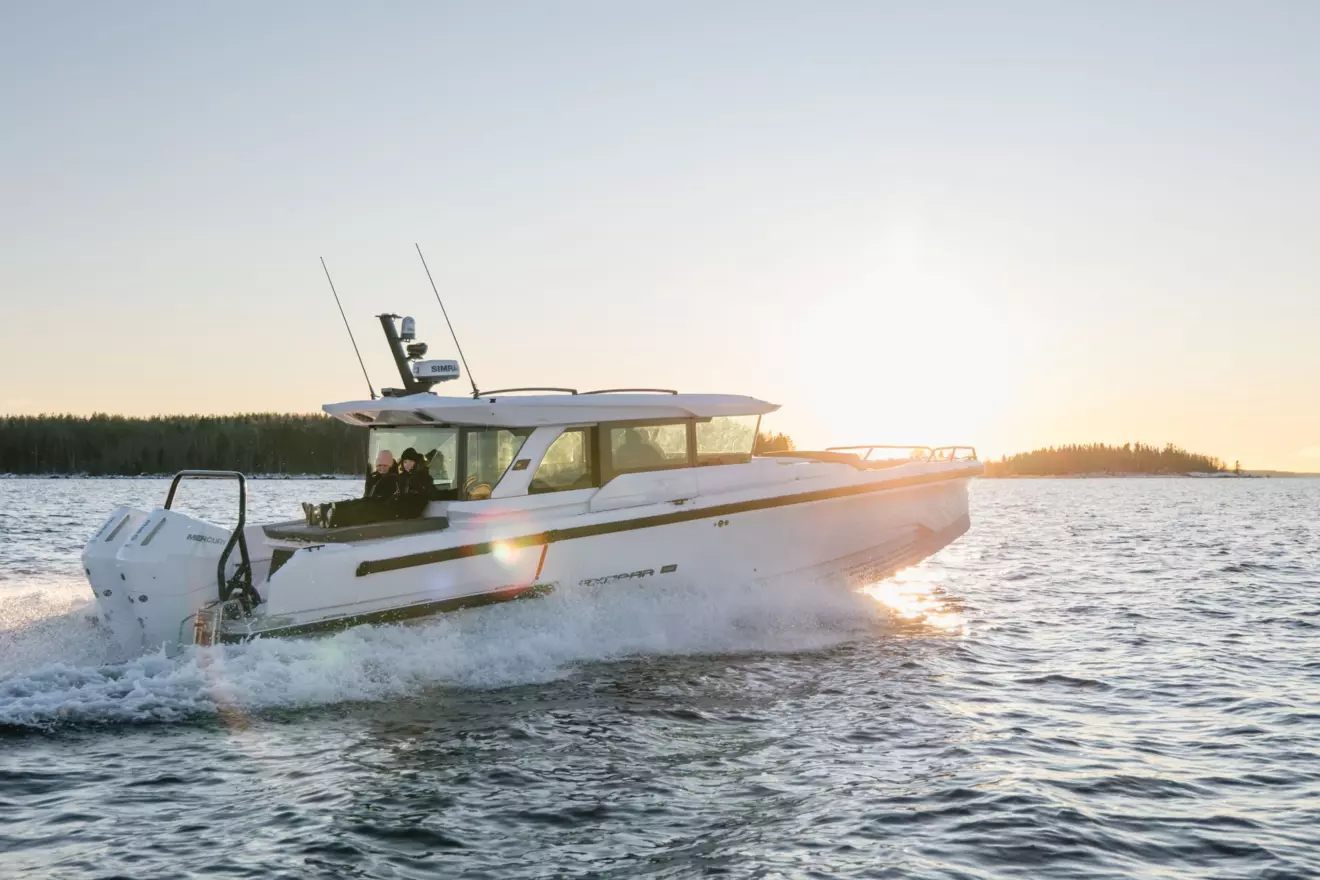
The development of the Axopar 38 took around two and a half years, starting from the concept. Let me put it this way: Axopar is the largest Nordic boatbuilder, and we can build whatever kind of boat we want. If we wanted to produce sailing yachts, we could produce sailing yachts. We have our own production, we have our own design teams, we have the capabilities, so the question is simply what we do not want to do. We want to remain committed and loyal to our chosen mission and to one specific style of boating, and that is adventure boating. We want to become and remain the best in adventure boating. That means that when we start sketching a concept, we do not think about any limitations; we want to see new layouts, functions, innovations, and the experience we can offer. Every innovation you see in others has also been on our drawing boards, but one by one. We did not like most of them enough to put them into practice, because they did not meet Axopar’s criteria. When we shape an idea, we have to refine it to the Axopar level, and that implementation of ideas takes time. Then comes the attempt to understand which ideas can actually be turned into production on a large scale, which ideas we can bring to a certain guaranteed level of quality, to the stability of an idea without malfunctions and at a reasonable price, but also to the possibility of repair anywhere in the world.
WE OFTEN HEAR THAT FORM FOLLOWS FUNCTION. CAN YOU TELL US WHAT THAT LOOKS LIKE IN PRACTICE FOR YOU?
First, I would mention the new wheelhouse layout, because it gives the model the possibility of being used in all weather conditions. It completely changes the experience inside, even if the doors and windows are closed. Second, what you cannot see is the refined handling, according to new standards. Axopar’s trump card is its seakeeping ability, because once you are offshore, everything can be a threat. In bad weather, the only boats on the water are Axopars, because our owners are simply like that. They will enter an empty bay and simply enjoy nature, but they can do that because our models allow it. Seaworthiness is therefore the most important thing. The second important element is, in my opinion, the bow cabin, because it is unique, but I will probably have to explain that more closely, because as I said, seaworthiness is the most important thing. So, we made it possible to create the best boat in the world in terms of seakeeping, and that means the hull has to remain in its current shape. We cannot widen it or change its shape, but we still have to fit in a decently sized toilet, a decently sized galley, a bed and a sofa, all of them of a decent size for a boat of this size with this hull. I am quite proud that we succeeded in that, because we tried it with the 37 model, but back then we did not know how to make it happen. Now, with a little more experience and expertise, we really gave it our all and succeeded. We achieved that goal, and in a very beautiful way.
YOU INTRODUCED BLOCKCHAIN TECHNOLOGY INTO BOATING, WHICH IS COMPLETELY UNEXPECTED. HOW DID YOU COME UP WITH THAT IDEA?
Blockchain is a technology used to secure information about all of a boat’s documentation throughout its entire life cycle, which cannot be falsified or copied. It is immutable. In fact, I have to thank Konstantin Bushmann and Brabus for that idea. Our blockchain consortium mainly focuses on the authentication of luxury items such as Louis Vuitton, Chanel, Dior or Rimowa bags, but it is also used by two top automotive companies. One is Mercedes-Benz and the other is Brabus, and Konstantin told me that this was something we could do as well. We know we want to build boats that will last a long time, and during that long lifespan we also want to ensure that every owner can always have a complete and transparent history of that particular boat known to the factory, so that every servicing and maintenance activity we have carried out on the boat is always recorded and the information is always shared with the new owner, or the owner with us. If something remains unfinished and we know about it, then the new owner will know it too; they will hear that an upgrade may be needed.
TWO AND A HALF YEARS AGO, YOU PRESENTED YOUR COLLABORATION WITH EVOY. HOW IS THAT GOING?
We sell electric boats, and today we are even co-owners of Evoy, and the collaboration with Evoy is good. We sell electric boats in certain regions of the world, such as some lakes, where only those are available, but electric boats are still an unusual sight. The biggest obstacle to their popularity at the moment is price, and the second is the development of infrastructure. I think price is still the more important factor, so when battery technology develops and the purchase price of an electric boat falls by 50 percent, then electric boats will truly become popular. That is when demand will grow, and that is when people will invest the necessary funds in building infrastructure. At the moment, we depend on the automotive and heavy industries to lend us more cost-effective battery solutions, so I would say that electric boats are progressing in a way, but they are still not widespread because of the price.
Text Darko Šupuk
Photos Axopar