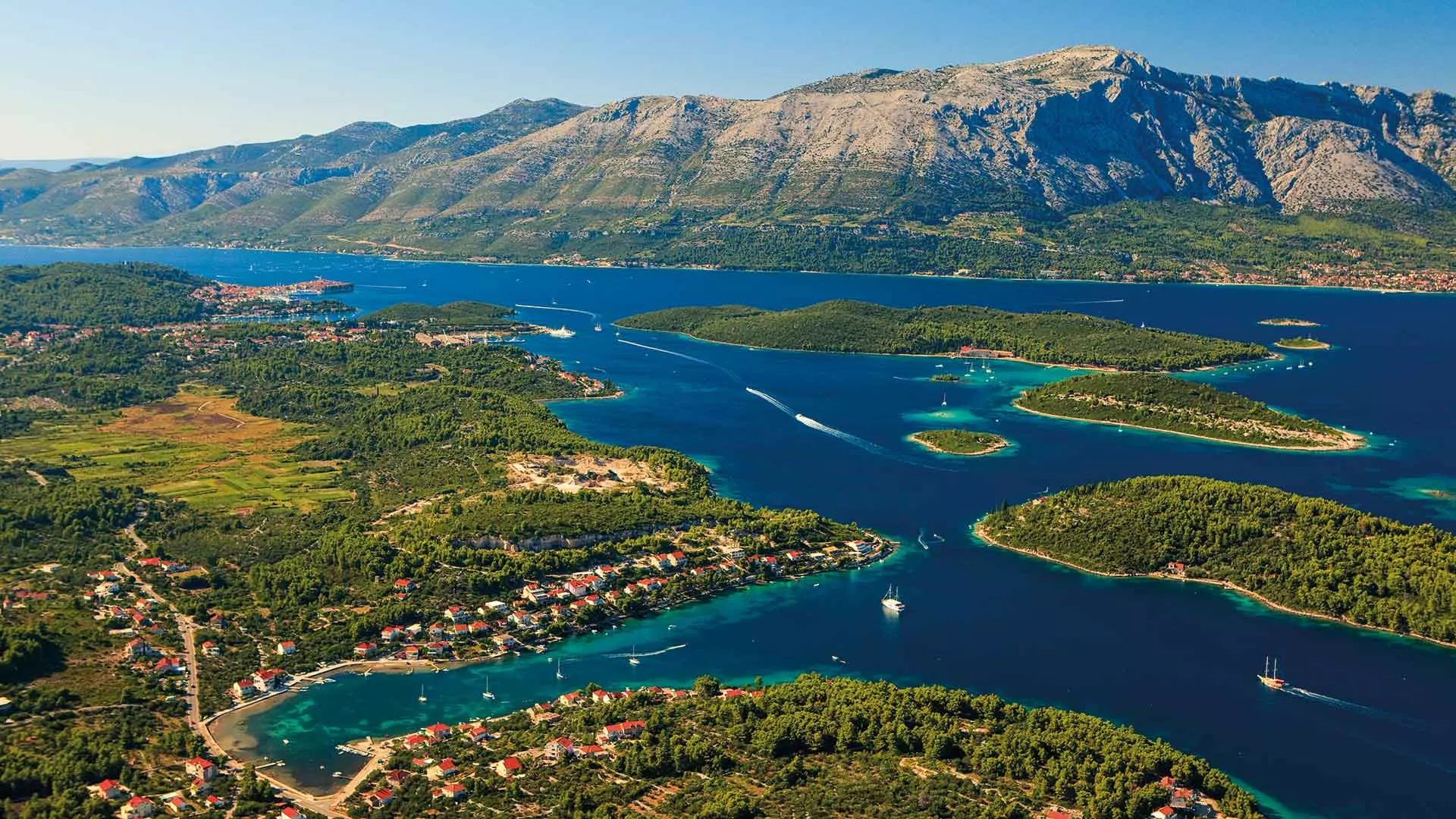
Korčula Archipelago: 20 Islands of Pure Adriatic Escape
Date
Reading time
4 min

This charming archipelago between Korčula and Lumbarda is a popular stopover spot for yachts looking for some privacy and unspoiled beauty
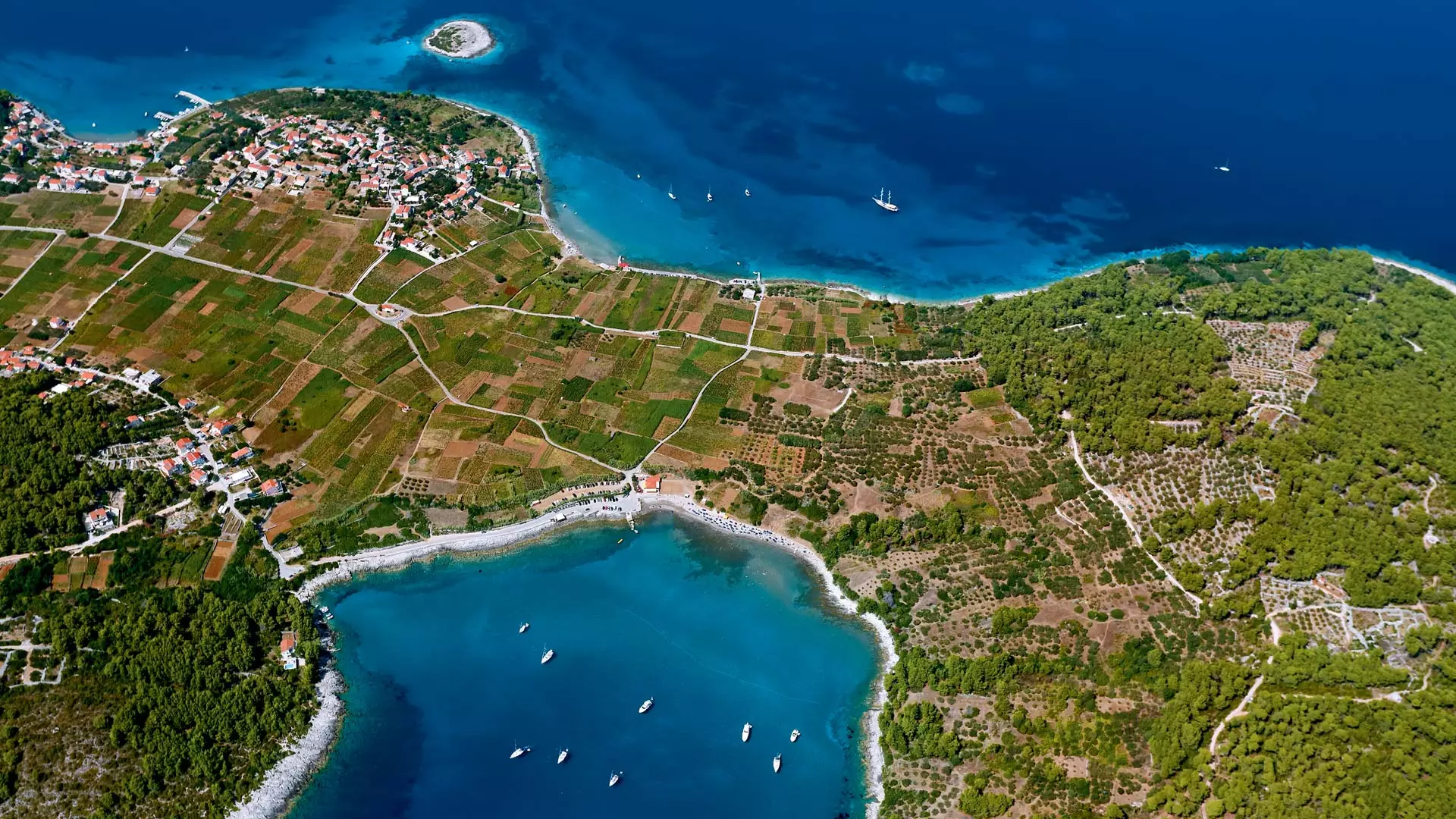
Half way between the waters of Split and those of Dubrovnik lies a charming little archipelago locally known as Korčulanski škoji. This picturesque microcosm stretches over 20 or so islands big and small, and is equally beloved among the locals and passing yachts.
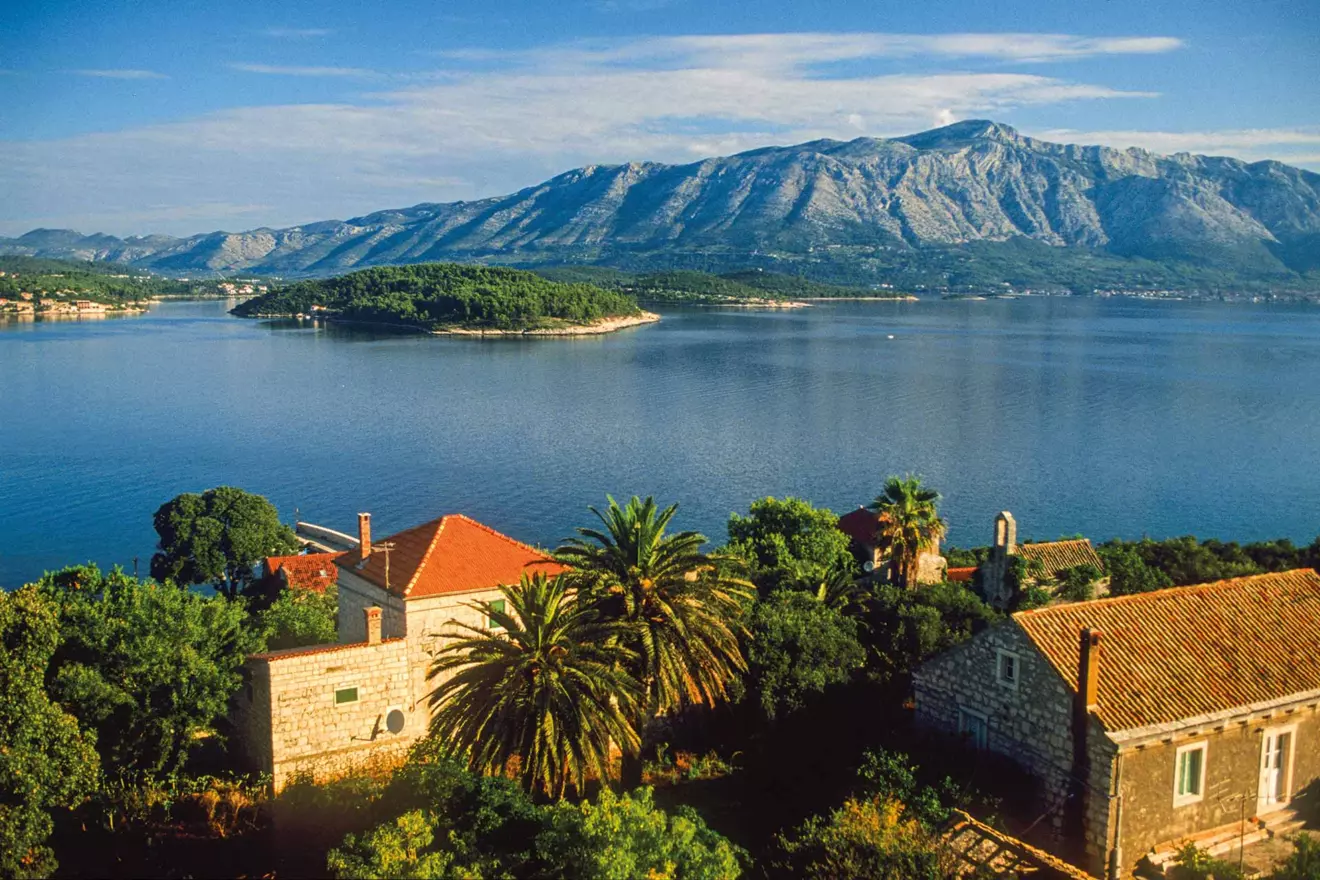
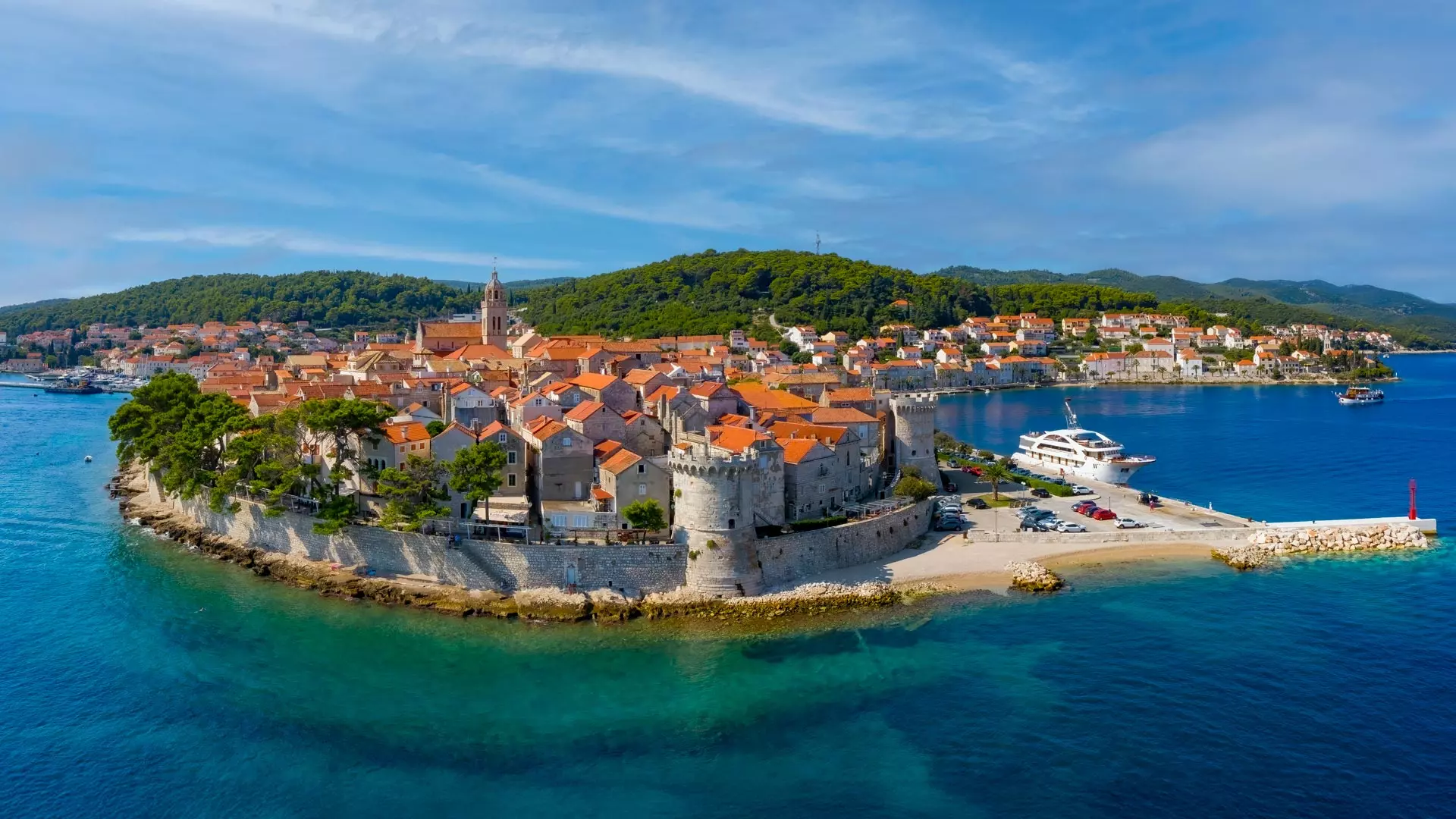
On its western side lie the impressive city walls of old Korčula town, on its eastern side Lumbarda, Greek colony founded in the 4th century and the birthplace of the local wine cultivar, grk (Greek). The calm channels and short distances between the islands also make the archipelago one of Korčula's finest destinations for kayaking and stand-up paddleboarding.
Badija Island, the kingdom of deer near Korčula
The largest island in the archipelago is Badija, best known for the Franciscan monastery that rises above its pine-covered landscape. Its well-sheltered southern shore has long been a favourite anchorage for passing yachts, offering good protection from northerly winds. When mooring, be sure to secure your yacht to the shore.
A broad seaside promenade encircles the island beneath the shade of tall pine trees, inviting visitors to explore at a leisurely pace. Along the way, you may encounter a variety of wildlife, including Badija's well-known fallow deer. They are among the island's greatest attractions, but are best admired from a respectful distance without being fed.
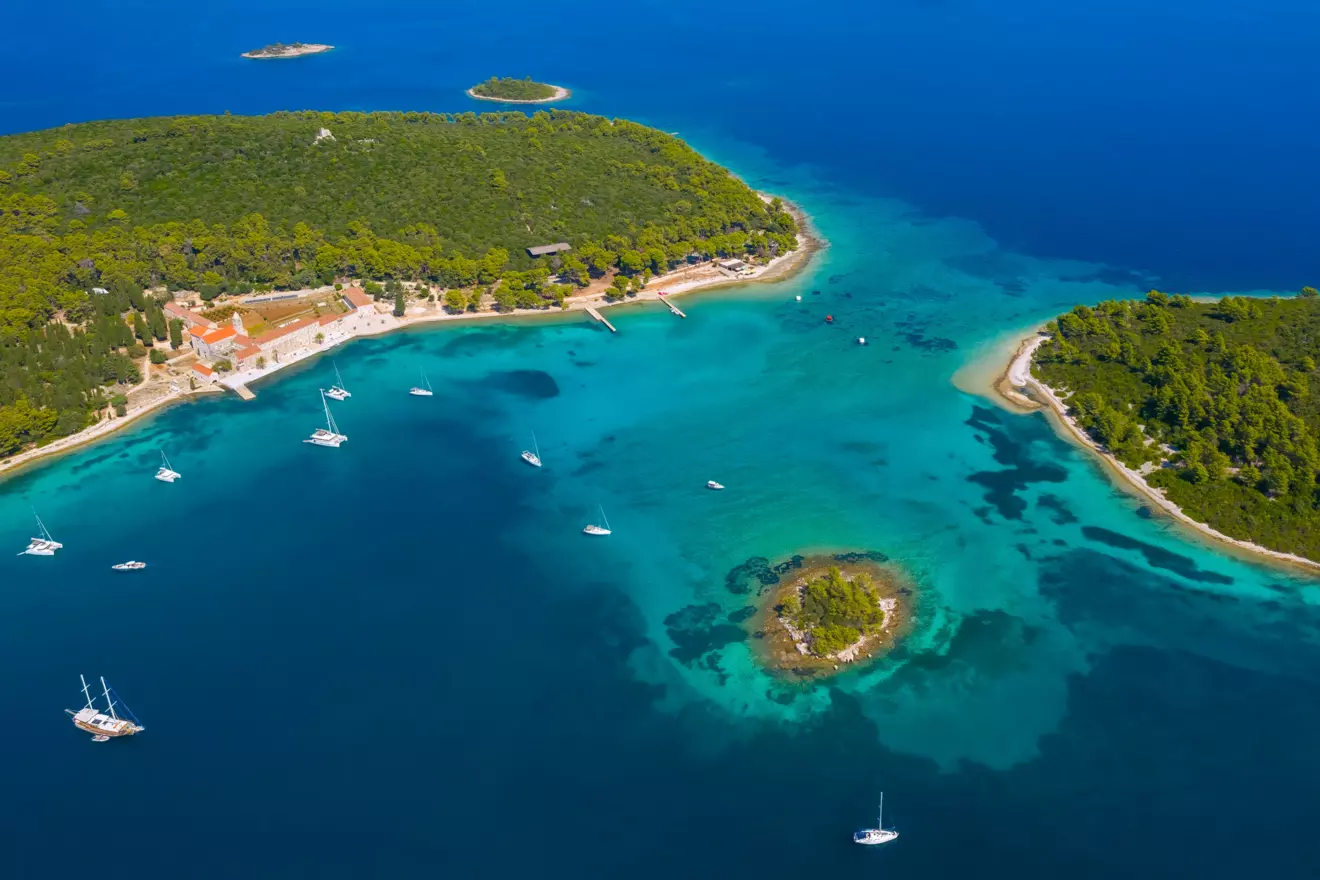
Vrnik Island
The only inhabited island in the archipelago is Vrnik, whose beauty is enough to make many a yacht swerve out of her route and anchor there. The island is best known for quarries, where pristine white stone has been harvested for centuries and used in building not only locally, in Korčula and Dubrovnik, but also Istanbul, Venice, Budapest and Zagreb, and if you ask locals, allegedly the White House, too.
In recent seasons, this miniature island has become one of the archipelago’s most sought-after day stops – but seeing how tiny it is, the crowd is rather limited to a number of lucky visitors who get to enjoy privacy and pristine nature. Larger yachts can anchor safely along its southern shores. The most attractive island in the Korčula archipelago is Stupe, famous for its turquoise lagoon, offering no protection from any wind, and thus mostly popular for day trips.
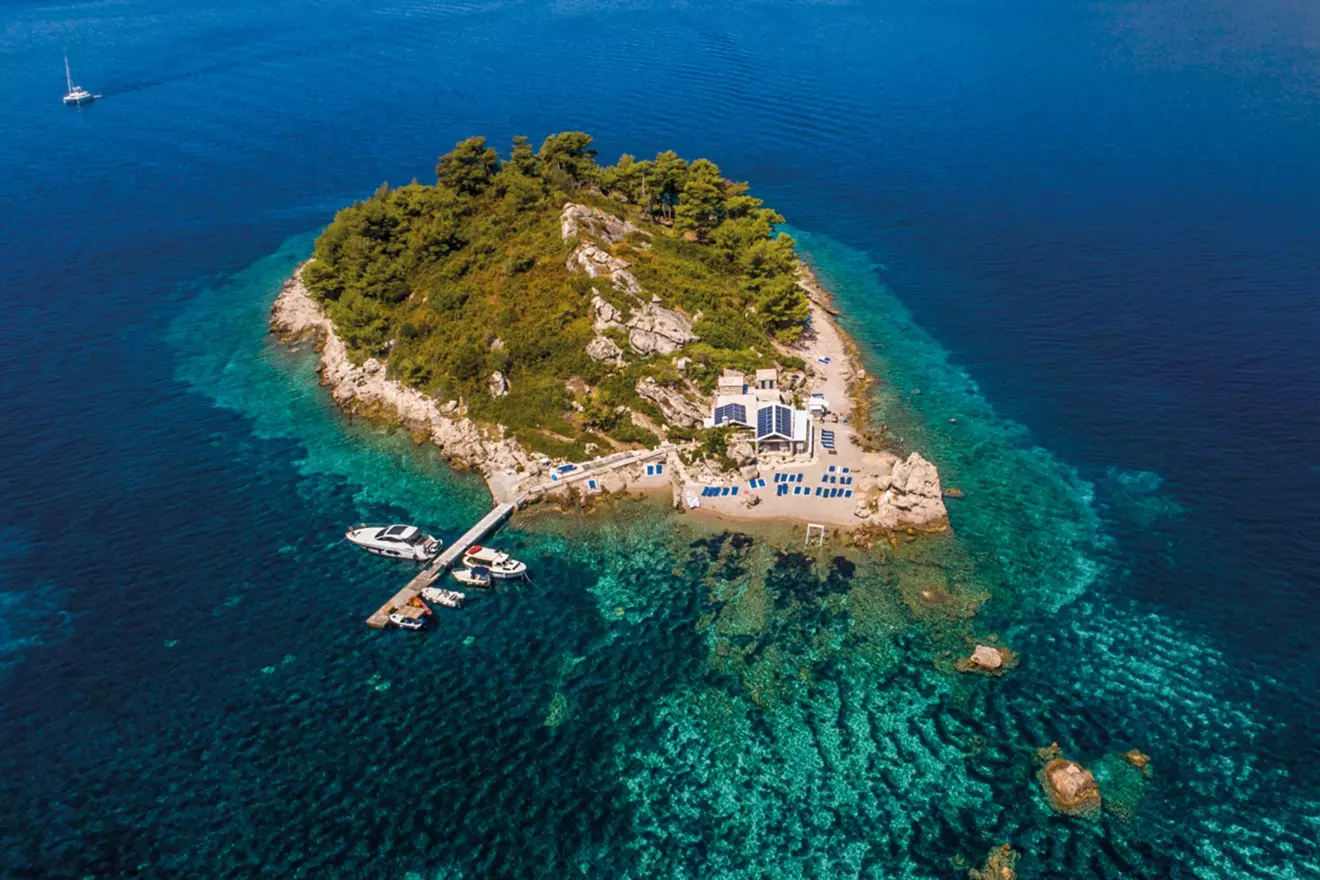
Moro beach bar Stupe, attractive place near Korčula
With little to no wind, though, Stupe is safe enough for a romantic night at anchor, or moored near Moro Beach Stupe, an exclusive beach bar with unique atmosphere and Instagram-worthy details, like their swing above the sea or cozy beach beds. Reservations are recommended in high season. This mystical place is so easy to dive into and forget the time before you arrived there, especially if you literally take a dive and lose yourself in the endless blue beneath the surface.
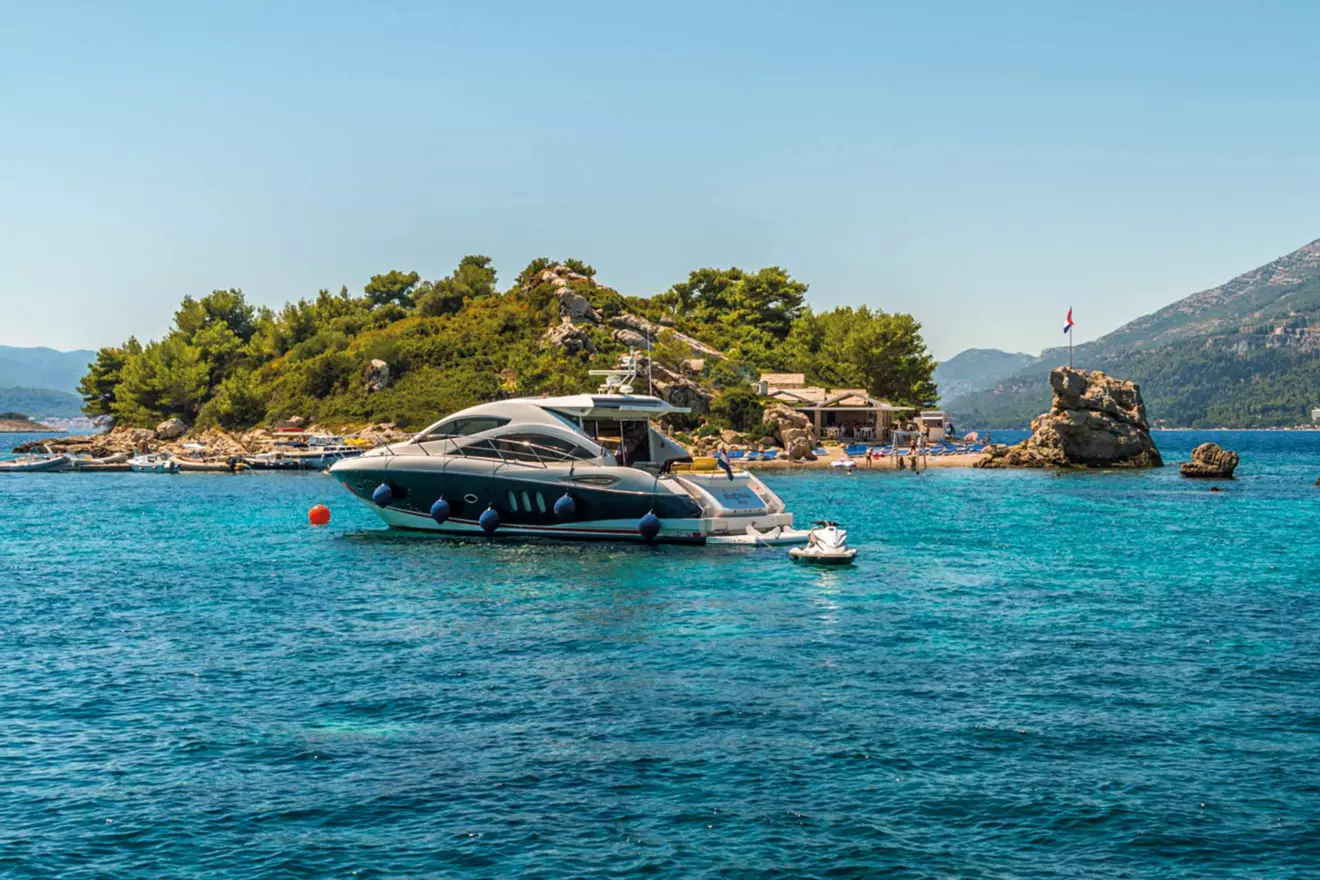
The islands of Majsan, Planjak, Sutvara and Gubavac all have lovely coves and small beaches, some of them populated by rabbits. Those islands are popular among locals, who sometimes claim an entire island for themselves for the entire day – what a way to spend a day.
As regulations and anchoring rules may vary by zone and season, sailors should always check the latest nautical notices before entering the archipelago. This part of the Adriatic has some underwater rocks (all marked) and a speed limit of 4 knots, which might be a thing to keep in mind if you’re sailing into the archipelago on a yacht – but something you can forget if you’re kayaking, like many visitors.
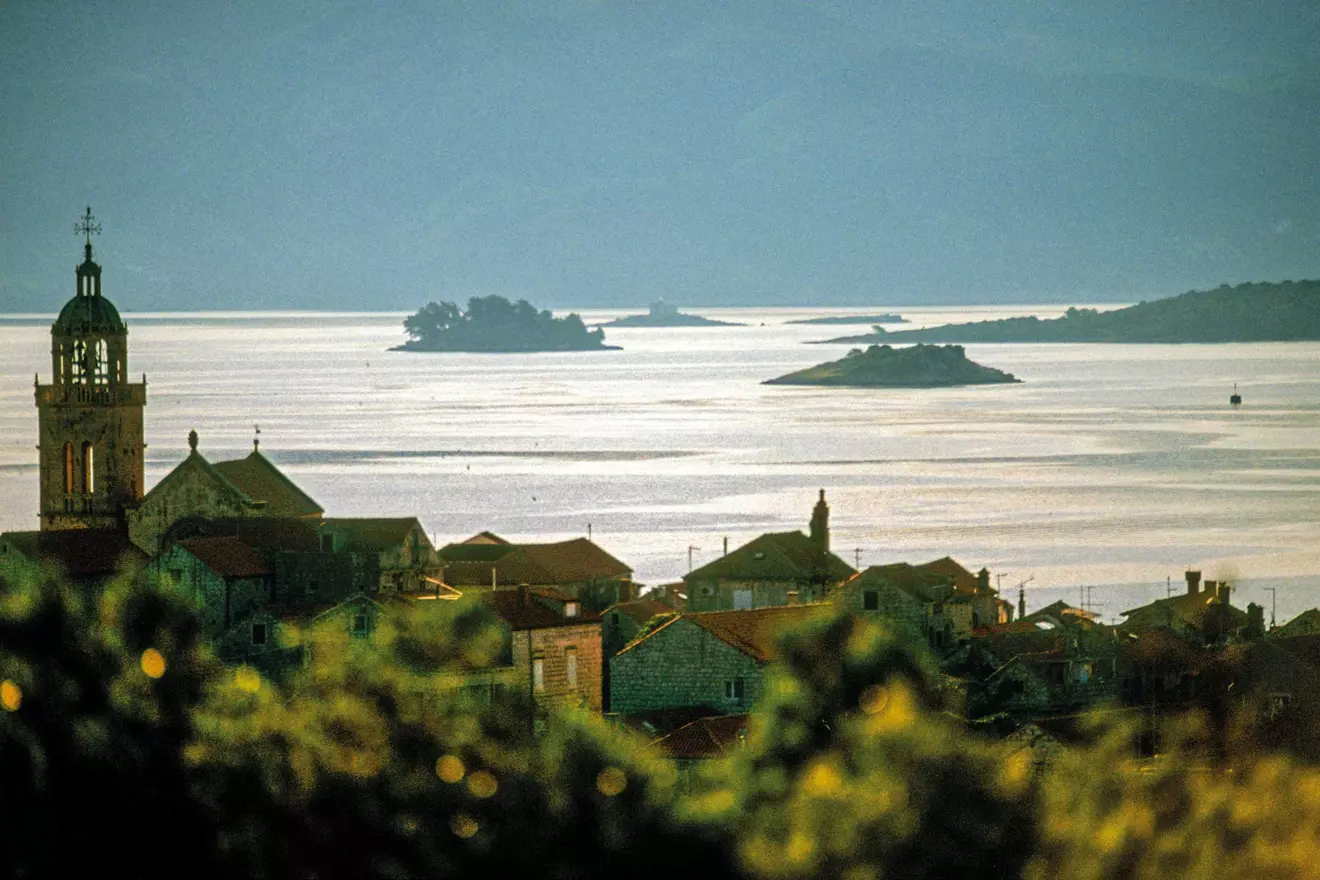
The only thing to keep in mind if kayaking along these shores is bora, the strongest of winds, that sometimes rolls down from the nearby St. Ilija (961 m), the guardian of Pelješac, or southern wind and mistral both rather strong in this part of the Adriatic. Wind surfers and kitesurfers, on the other hand, love this part of the Korčula archipelago specifically for that reason, as the strong wind helps them show off their skills.
Sea urchins have long been part of the Adriatic's culinary and maritime heritage, although today they are best appreciated as an integral part of the archipelago's rich marine ecosystem. Their presence is yet another indicator of the remarkably clean waters that surround Korčula's islands.
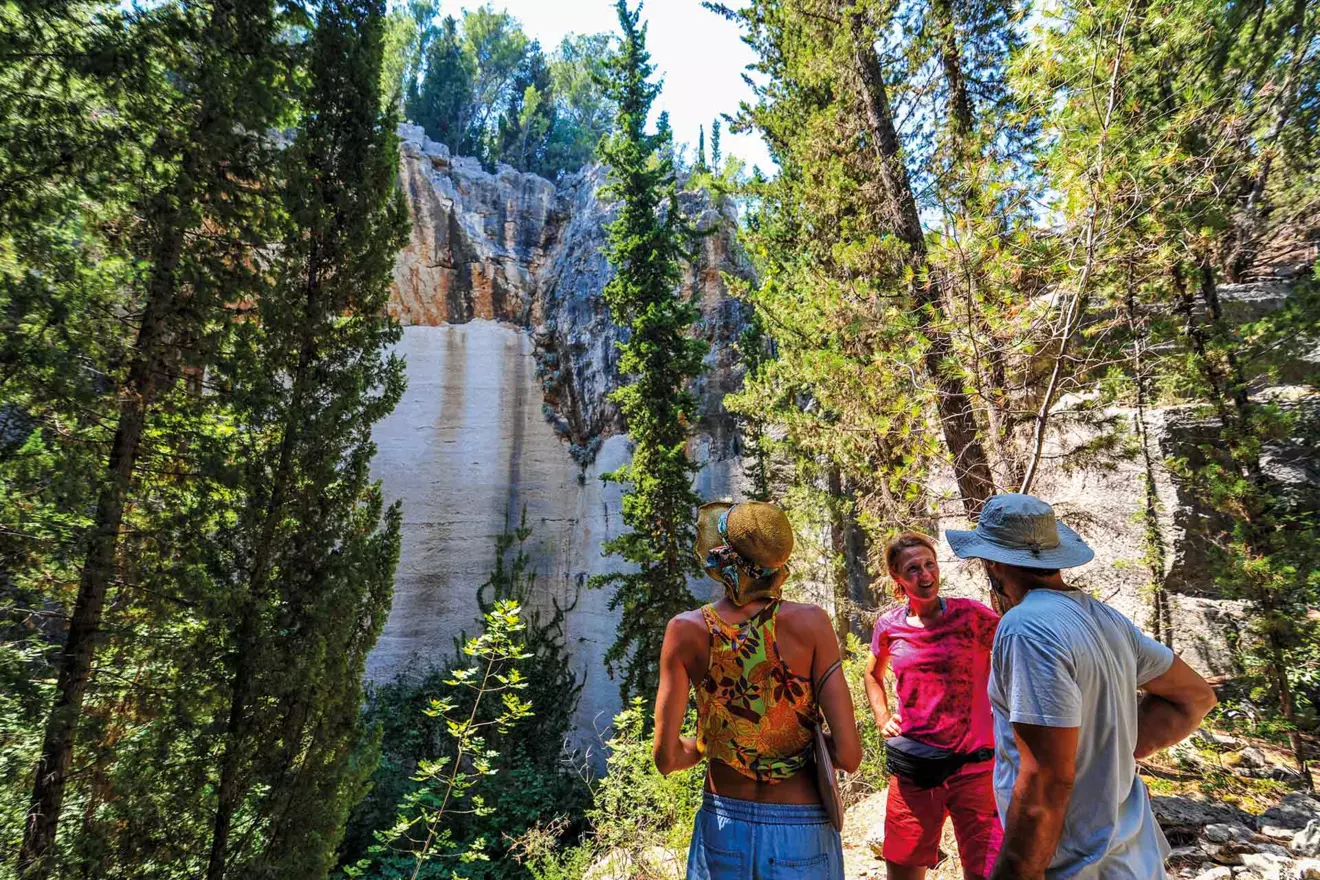
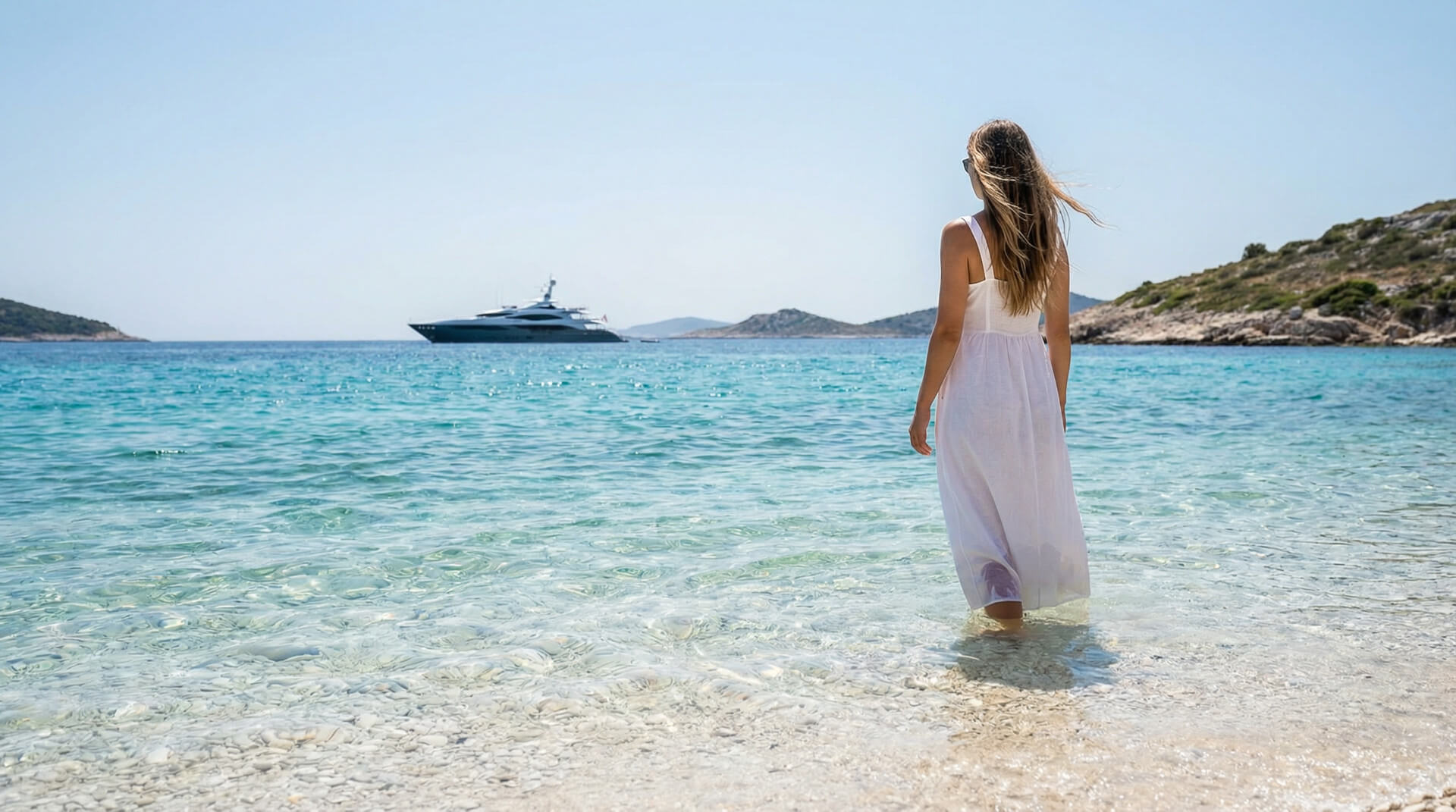
Whether you arrive aboard your own yacht or on a short island-hopping excursion from Korčula, the archipelago reveals a quieter side of the Adriatic. With secluded anchorages, crystal-clear waters and islands that each tell a different story, it remains one of southern Dalmatia's most rewarding cruising grounds.
Text Josipa Vlahović Cikatić
Photos Ivo Pervan, Mario Jelavić, Damir Pačić, Mario Romulić & Boris Kačan