Lumbarda, Where Vineyards Meet the Sea
Date
Reading time
4 min

Known for its unique Grk grape, sandy beaches, and peaceful coves, Lumbarda is one of those places that best captures the authentic spirit of Korčula
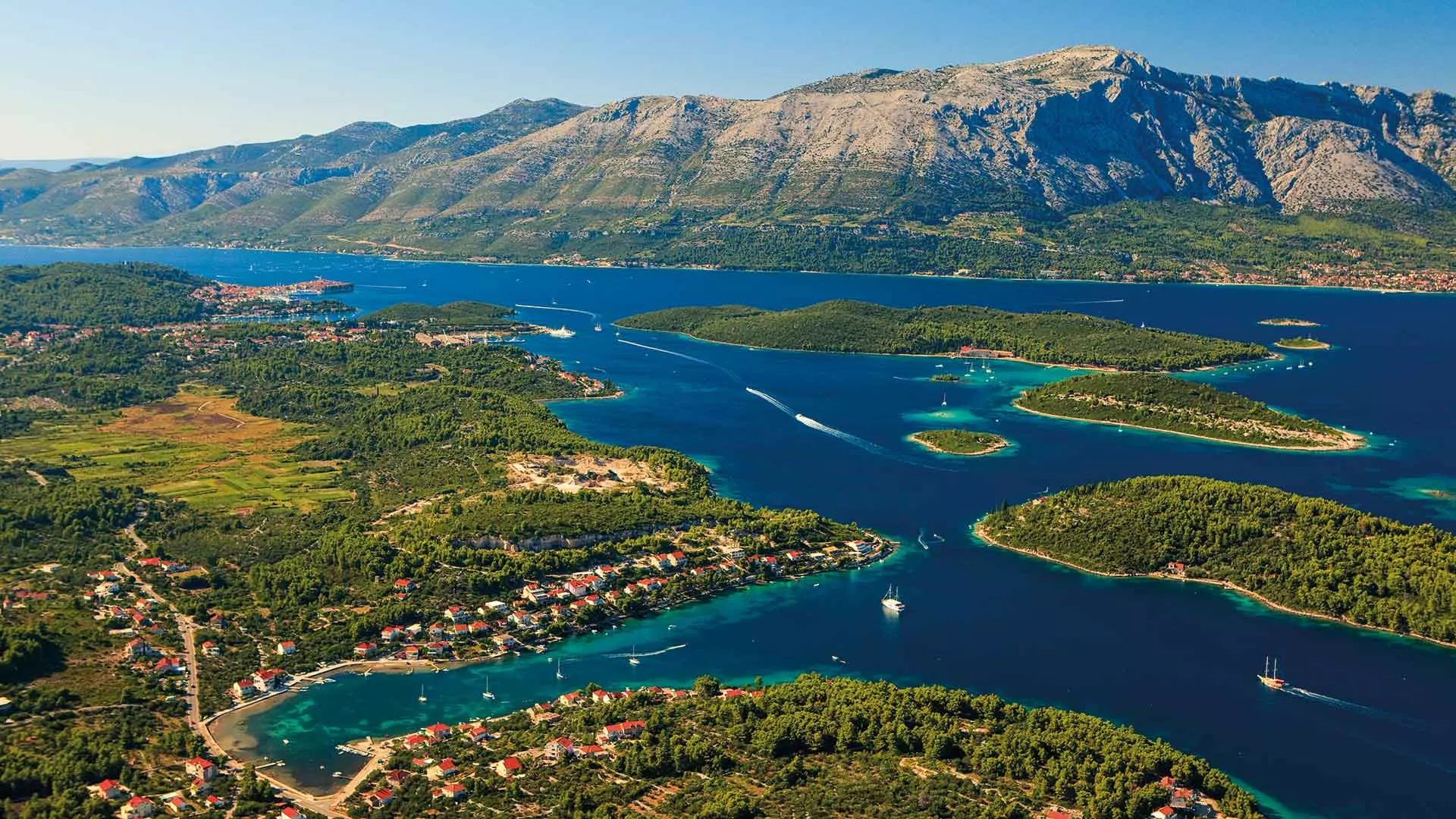
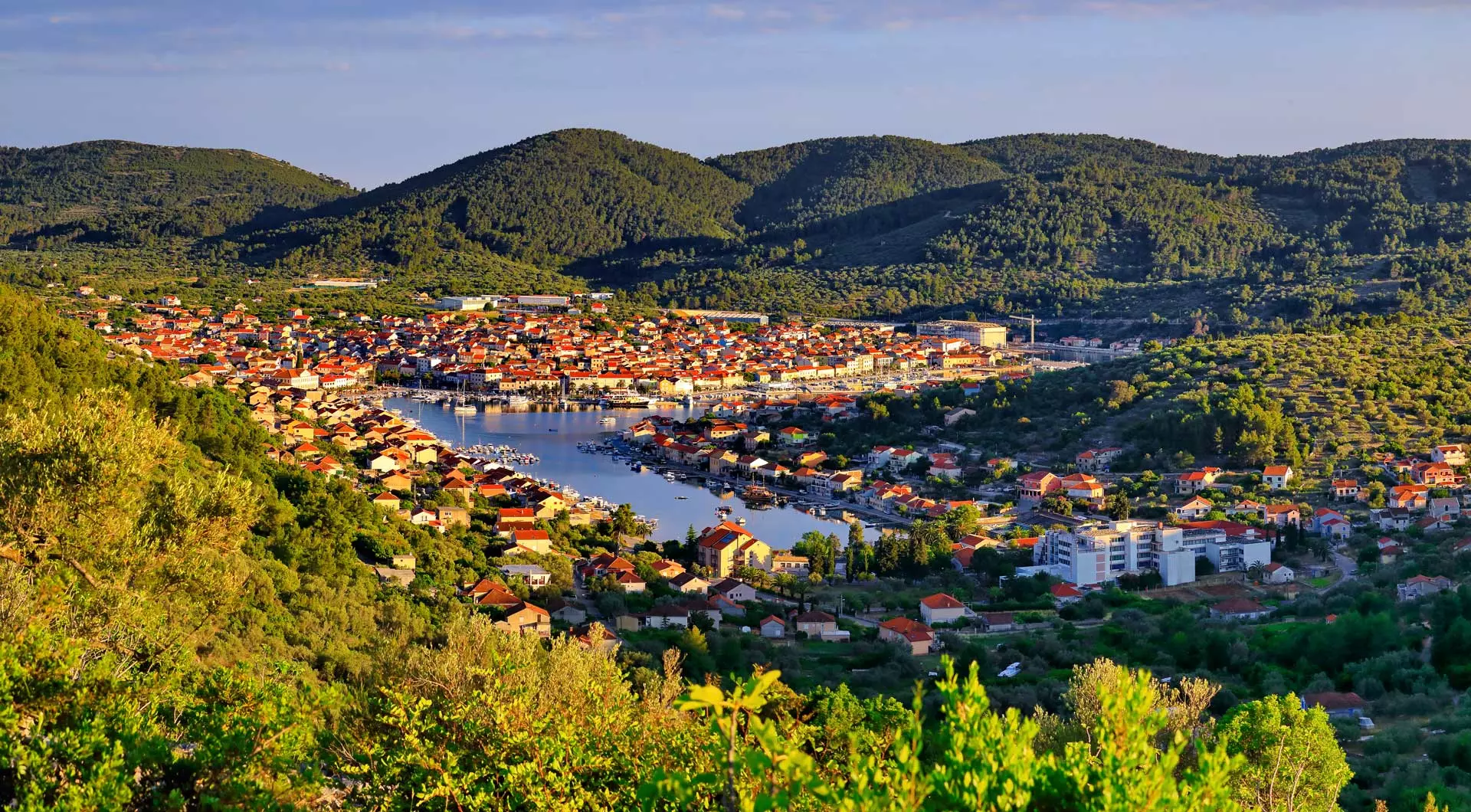
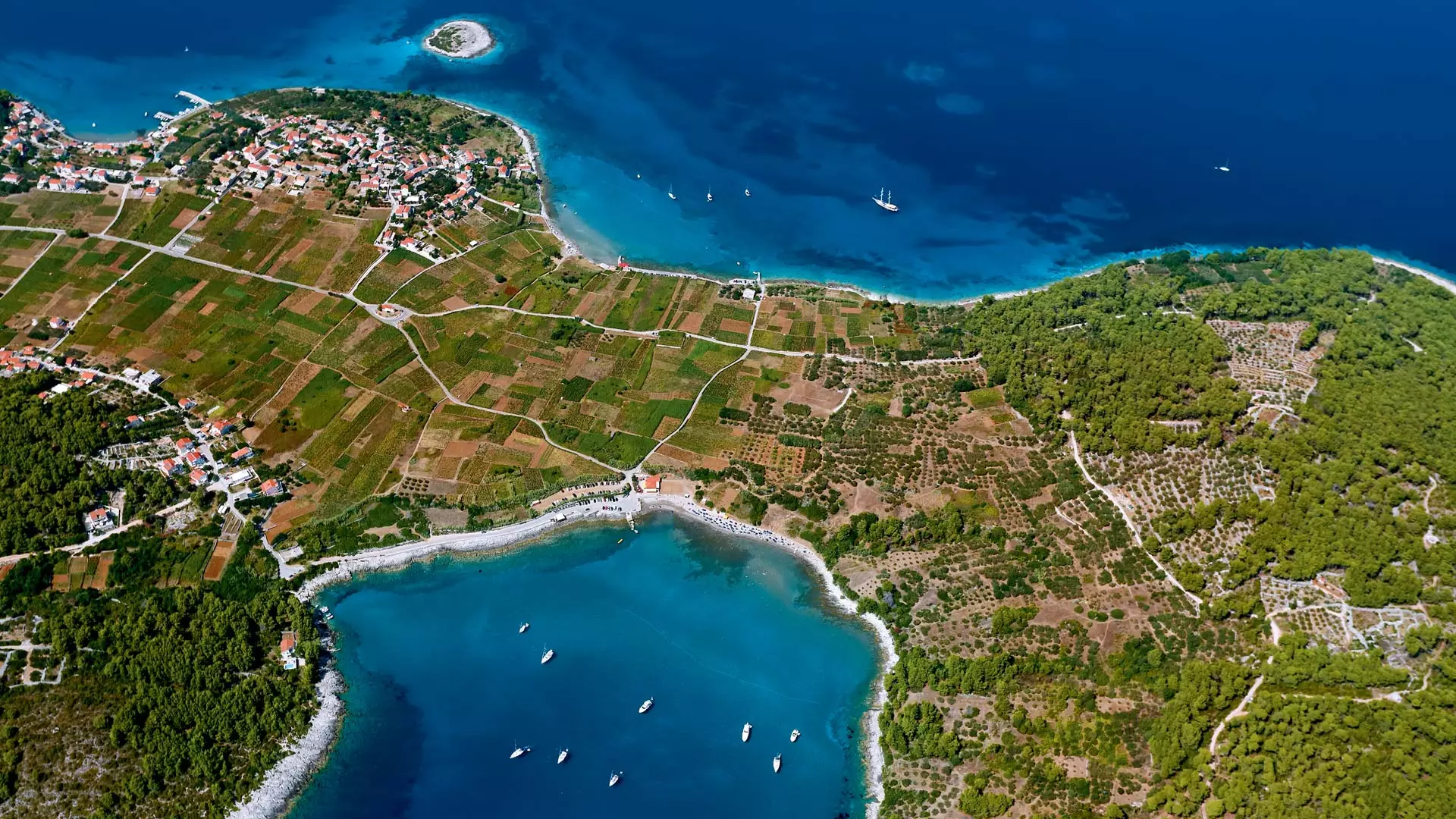
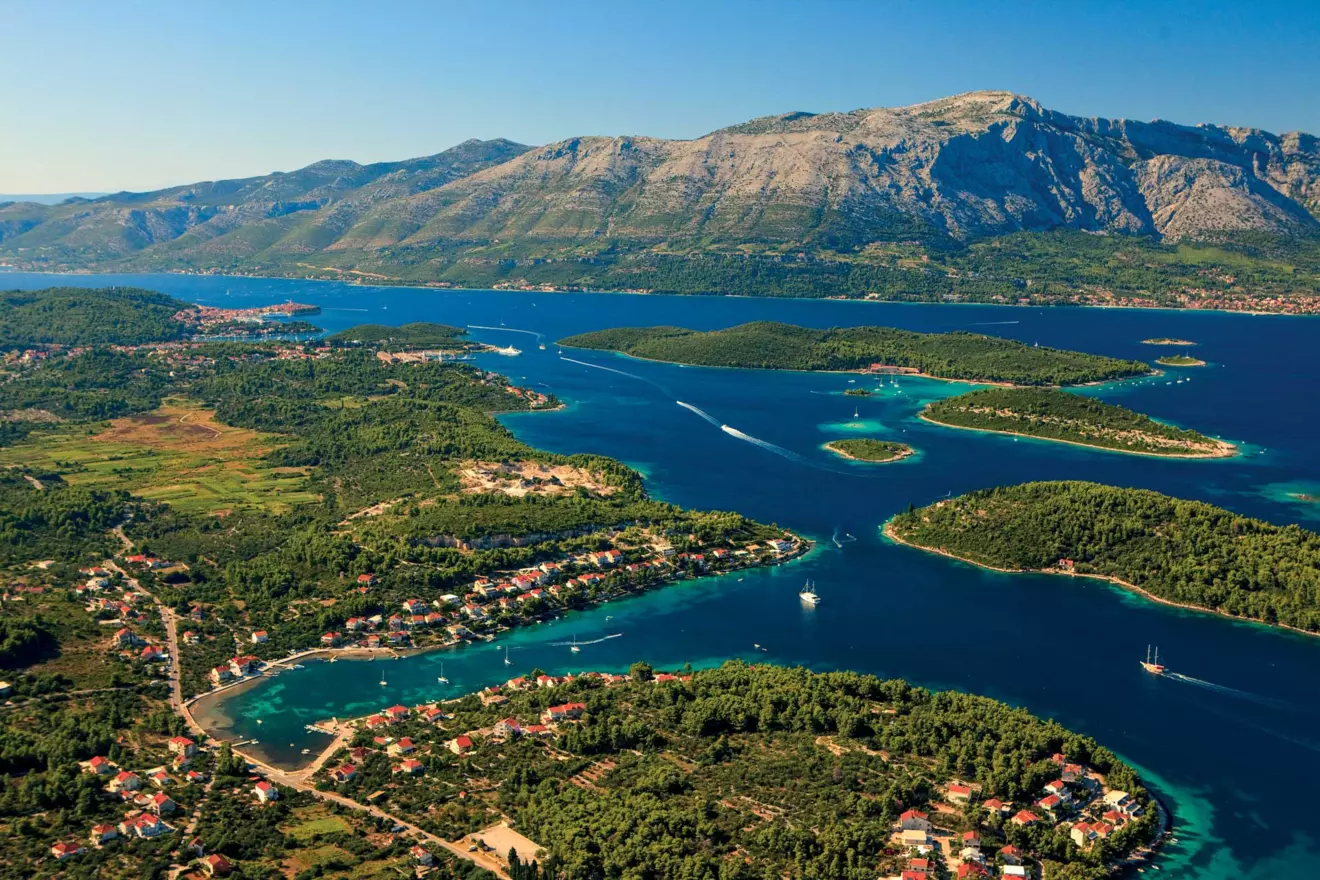
Nestled on the northeastern tip of the island of Korčula, Lumbarda has grown around a small marina and a series of sandy hills overlooking the sea. Endless vineyards, olive groves and views across a scattered archipelago give this charming village its unmistakable Mediterranean character.
History, wine and tradition
Lumbarda is home to the first ancient Greek settlement on the island of Korčula. Picturesque and full of authentic island charm, it has preserved its traditional fishing spirit while remaining renowned for the warm hospitality of its locals.
At the foot of the Koludrt Peninsula lies one of Croatia's most important archaeological discoveries, the Lumbarda Psephisma, a Greek inscription dating to the 3rd century BC that documents the founding of the ancient colony at the site of present-day Lumbarda. It is one of the oldest written monuments in this part of Europe and secured Lumbarda an important place in archaeological history.
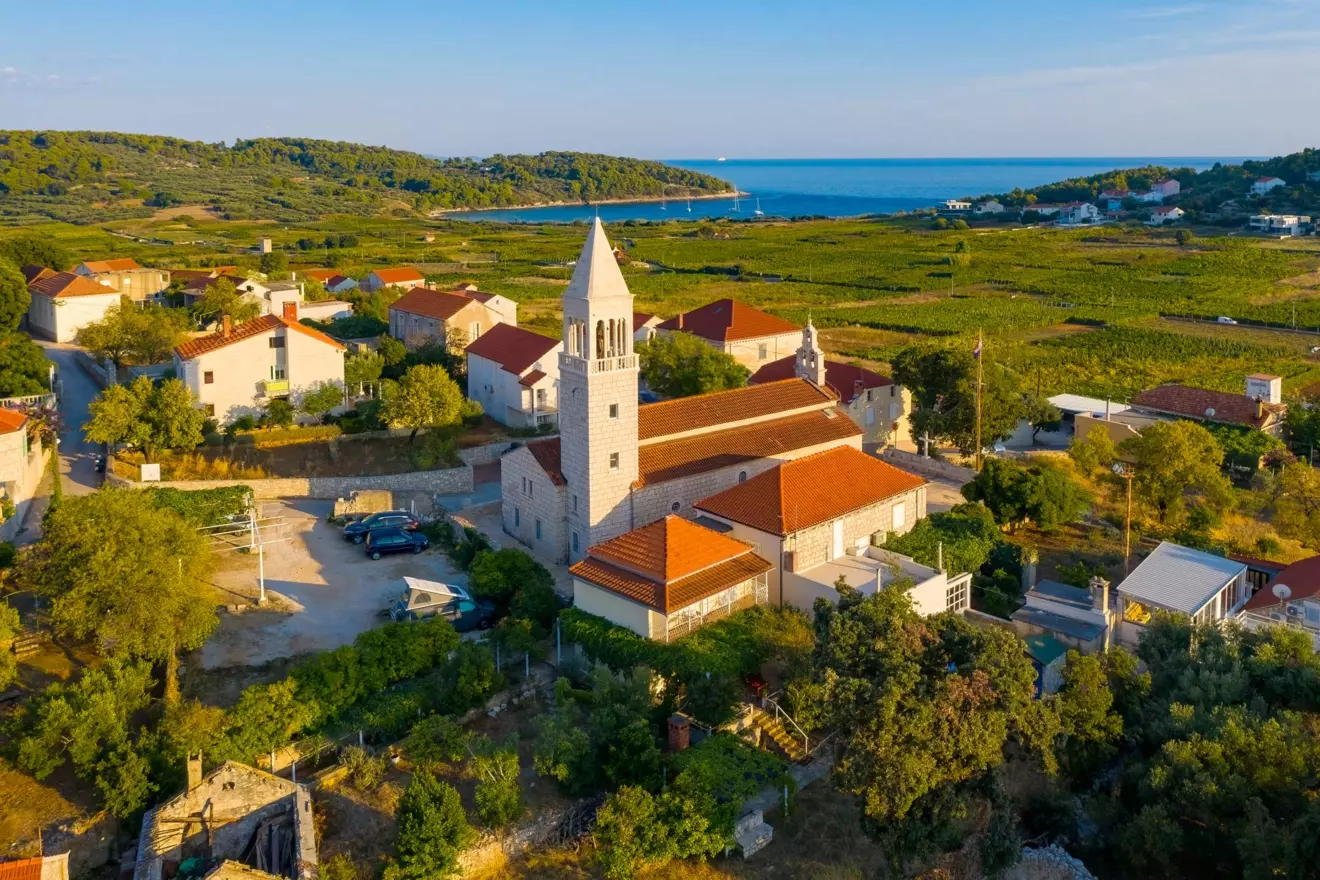
A walk through the village naturally leads to the Parish Church of St. Roch, Lumbarda's patron saint, perched on a hill above the old settlement. From here, sweeping views extend across more than twenty small islands before the path continues through an avenue of mulberry trees towards the sandy vineyards where the renowned Grk grape has been cultivated for centuries.
Here, history and landscape are inseparable. The sandy vineyards have shaped the identity of Lumbarda just as profoundly as its ancient heritage.
Grk is an indigenous white grape variety that reaches its finest expression in the dry, sandy soils surrounding Lumbarda. According to one theory, it was introduced by the ancient Greeks as early as the 5th century BC, while another suggests its name derives from the wine's subtly pleasant bitterness.
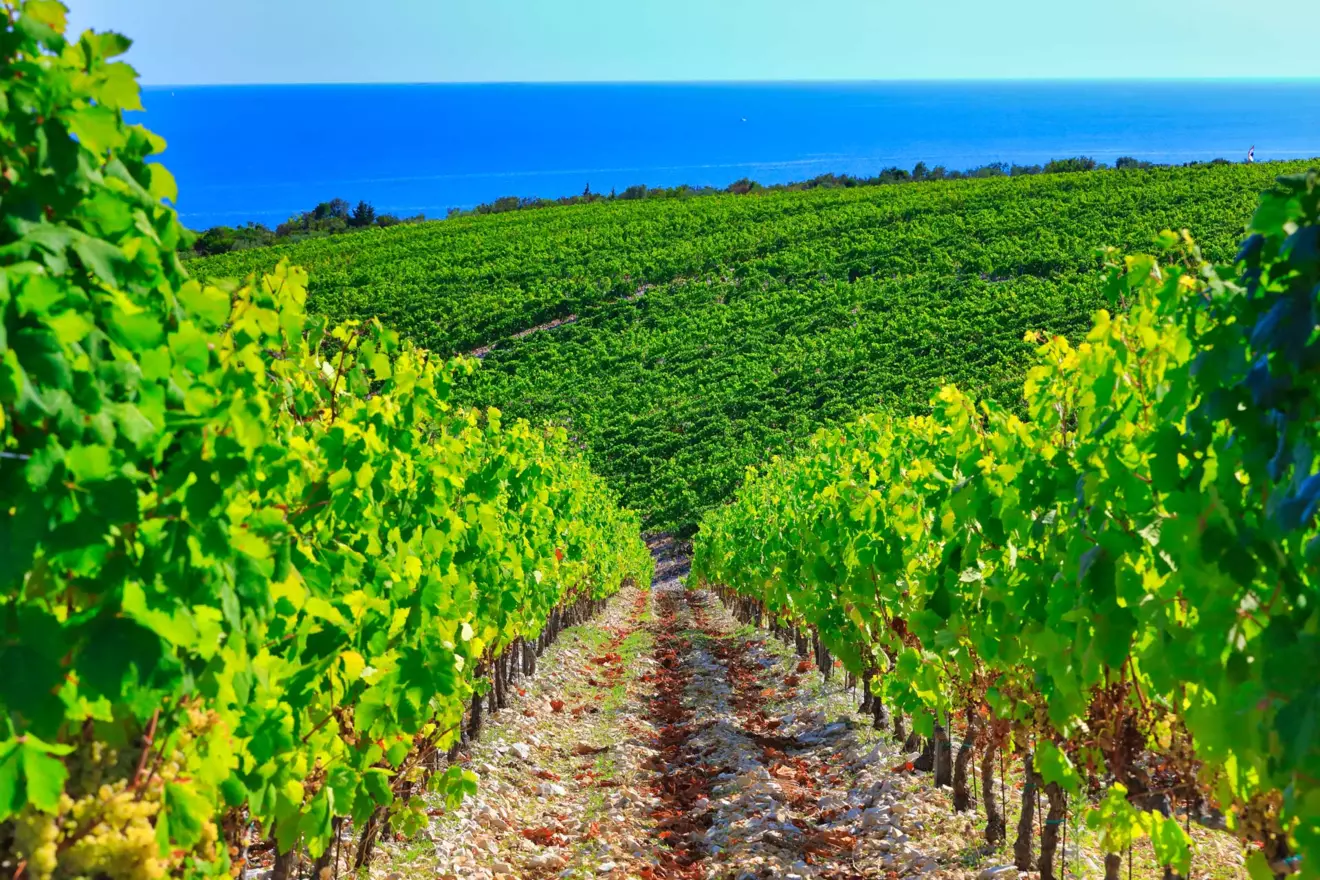
One of Grk's unique characteristics is its functionally female flower, meaning it must traditionally be planted alongside Plavac Mali, which acts as its pollinator. Combined with the area's distinctive sandy terroir, this unusual cultivation method has made Grk one of southern Croatia's most celebrated indigenous wines.
If you're in the mood for a glass of outstanding local wine or an authentic taste of Korčula, Lumbarda today offers far more than a handful of well-known taverns. Wine tourism has flourished in recent years, with guided vineyard walks and tasting experiences connecting visitors to the island's renowned wineries while revealing the story behind its indigenous Grk grape.
Family-run estates such as Bire, Zure, Cebalo and Lovrić continue a centuries-old winemaking tradition, producing not only Grk but also Plavac Mali, and increasingly welcoming guests for tastings among the vines. The local cuisine is firmly rooted in the Adriatic, with fresh fish, shellfish, octopus, extra-virgin olive oil, and seasonal ingredients taking centre stage. Throughout the year, numerous festivals and wine events celebrate both Grk and Lumbarda's rich gastronomic heritage, adding another reason to visit beyond the summer months.
Sea, vineyards and panoramic views
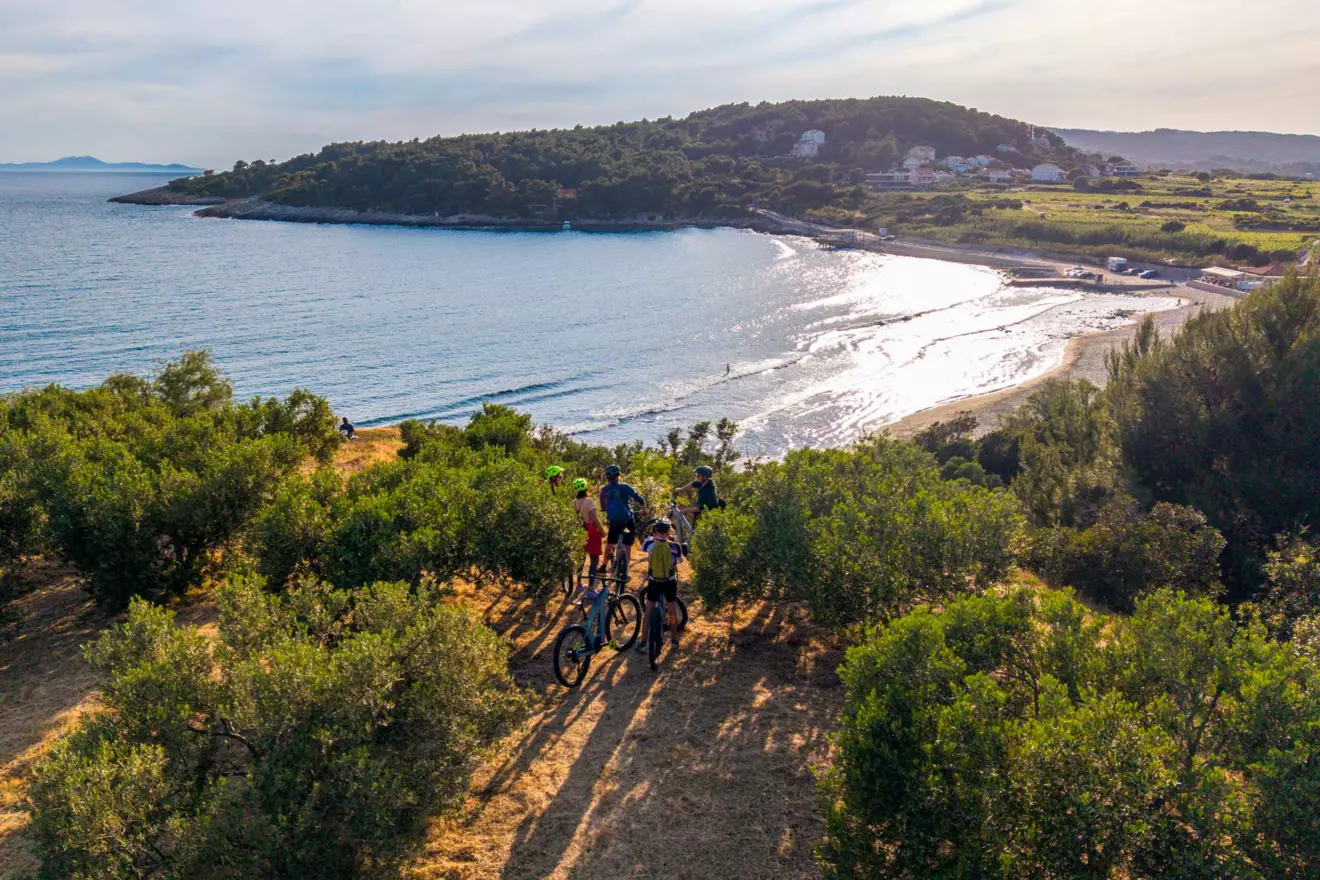
Although Lumbarda is synonymous with relaxation, its surroundings invite exploration. Rent a bicycle and follow quiet roads through vineyards to the sandy shores of Pržina, or continue through olive groves and the hills of Gornje Blato to panoramic viewpoints overlooking Lastovo, Glavat and Mljet.
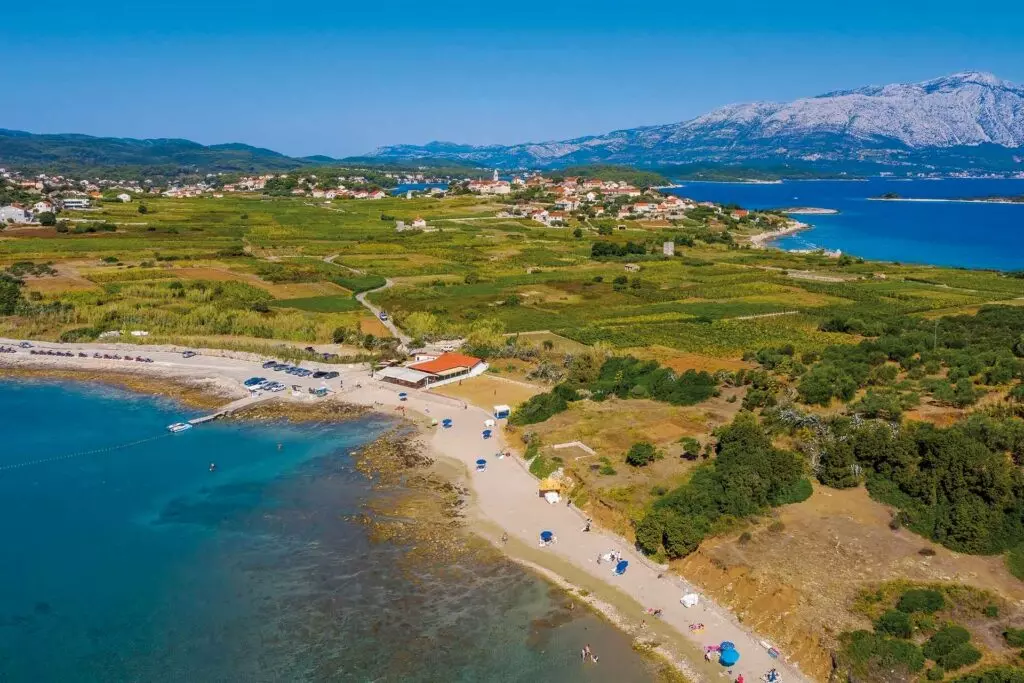
Pržina, the island's best-known sandy beach, is sheltered from the northerly winds and, thanks to its shallow, south-facing bay, offers warm swimming conditions from early in the season. Just a short stroll away, through the Grk vineyards, Bilin Žal opens towards the Pelješac Peninsula and the scattered islets of the Korčula archipelago, while the north-facing Tatinja is a favourite with families. Those staying in the village centre will also find a well-kept pebble beach beside the local marina.
For those drawn to the sea, the surrounding archipelago is best explored by kayak or stand-up paddleboard, with the islands of Vrnik, Badija and Stupe all within easy reach. The exceptionally clear waters also make the area ideal for snorkelling and diving.
It is this effortless combination of sandy beaches, centuries of history, acclaimed wines and the unhurried rhythm of Dalmatian island life that makes Lumbarda one of Korčula's most rewarding destinations.
Marina and a spectacular archipelago
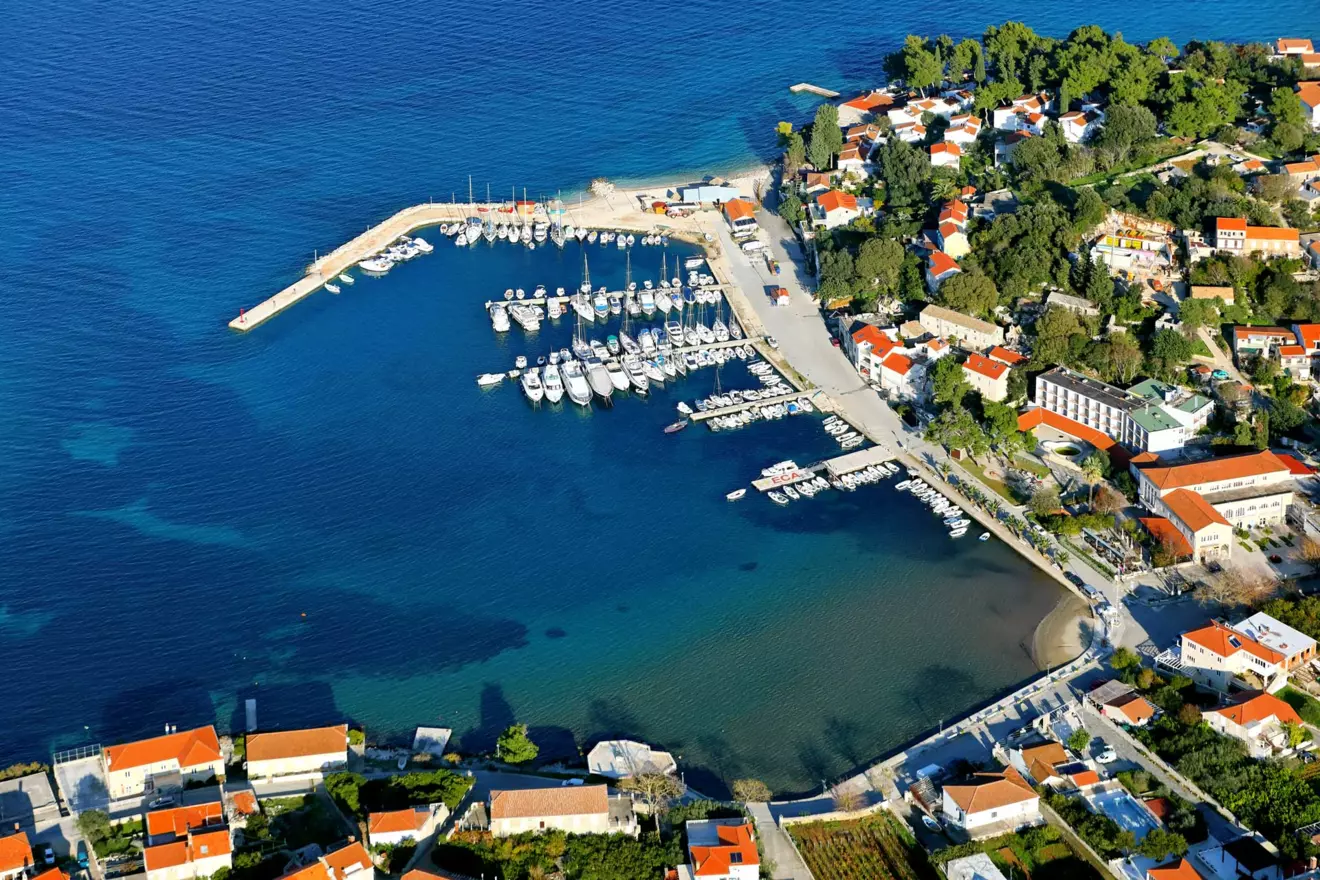
The waters surrounding Lumbarda are dotted with shoals, reefs and numerous islets, so careful navigation is essential when approaching the harbour. Speed is limited to four knots and particular attention should be paid when entering the bay. Although the marina can be exposed to the bora, it remains well protected by its breakwater. Depths gradually decrease from around eight metres to approximately one and a half metres towards the head of the bay, making the depth sounder an indispensable companion during the approach.
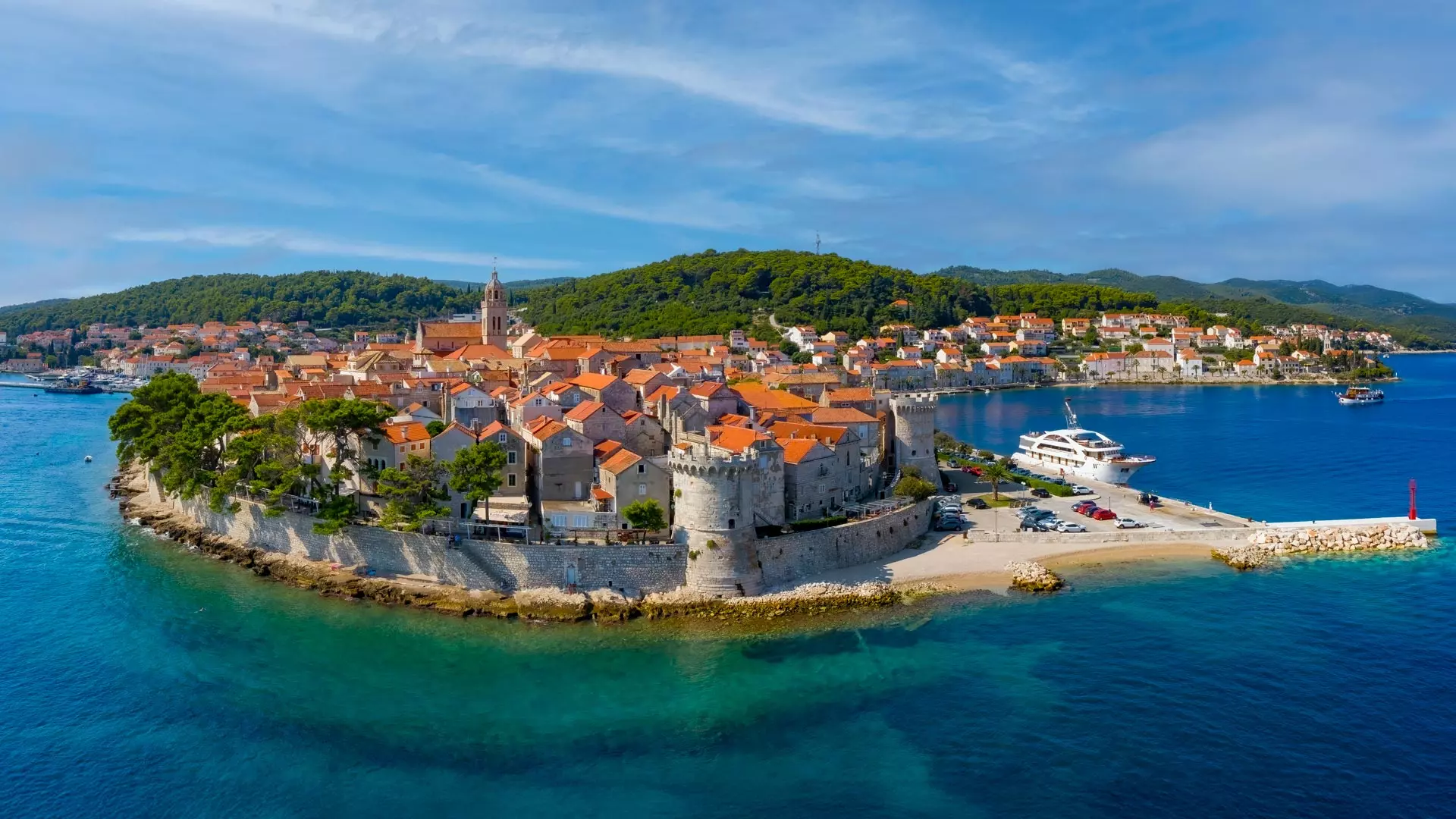
Once ashore, take time to enjoy a drink at the small café tucked behind the marina, overlooking a charming beach and the colourful archipelago that separates Lumbarda from the town of Korčula.
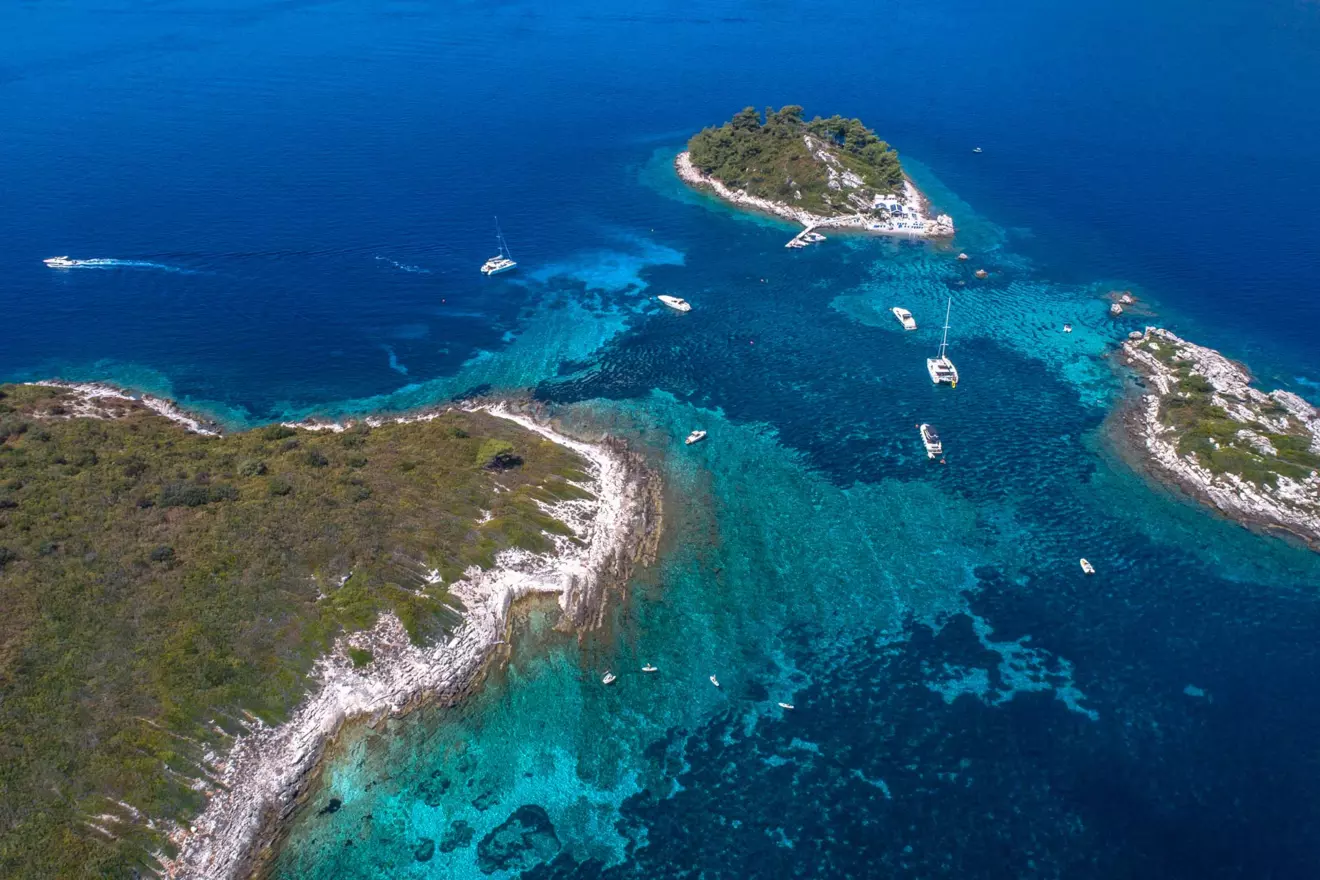
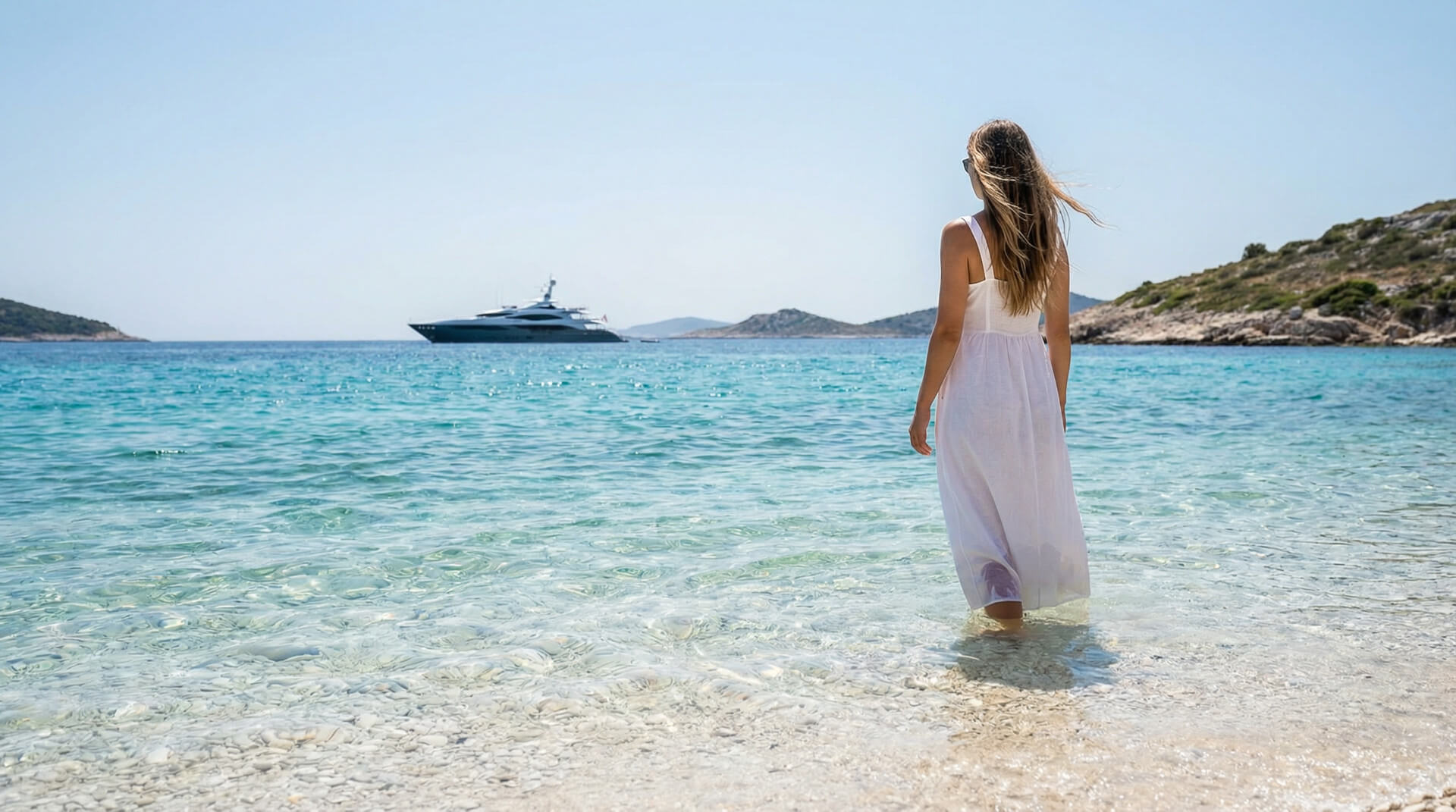
For a livelier atmosphere and evening entertainment, Korčula Town is only six kilometres away. There are also several excellent anchoring options nearby, including the sandy bays of Bilin Žal and Pržina, the southern shores of Badija with its Franciscan monastery, or the southern side of Stupa Islet, home to the widely acclaimed waterside tavern of the same name. Whichever anchorage you choose, you will be surrounded by turquoise waters, fragrant pine forests and one of the most picturesque island landscapes in the southern Adriatic.
Photos Mario Jelavić, Boris Kačan & Mario Romulić