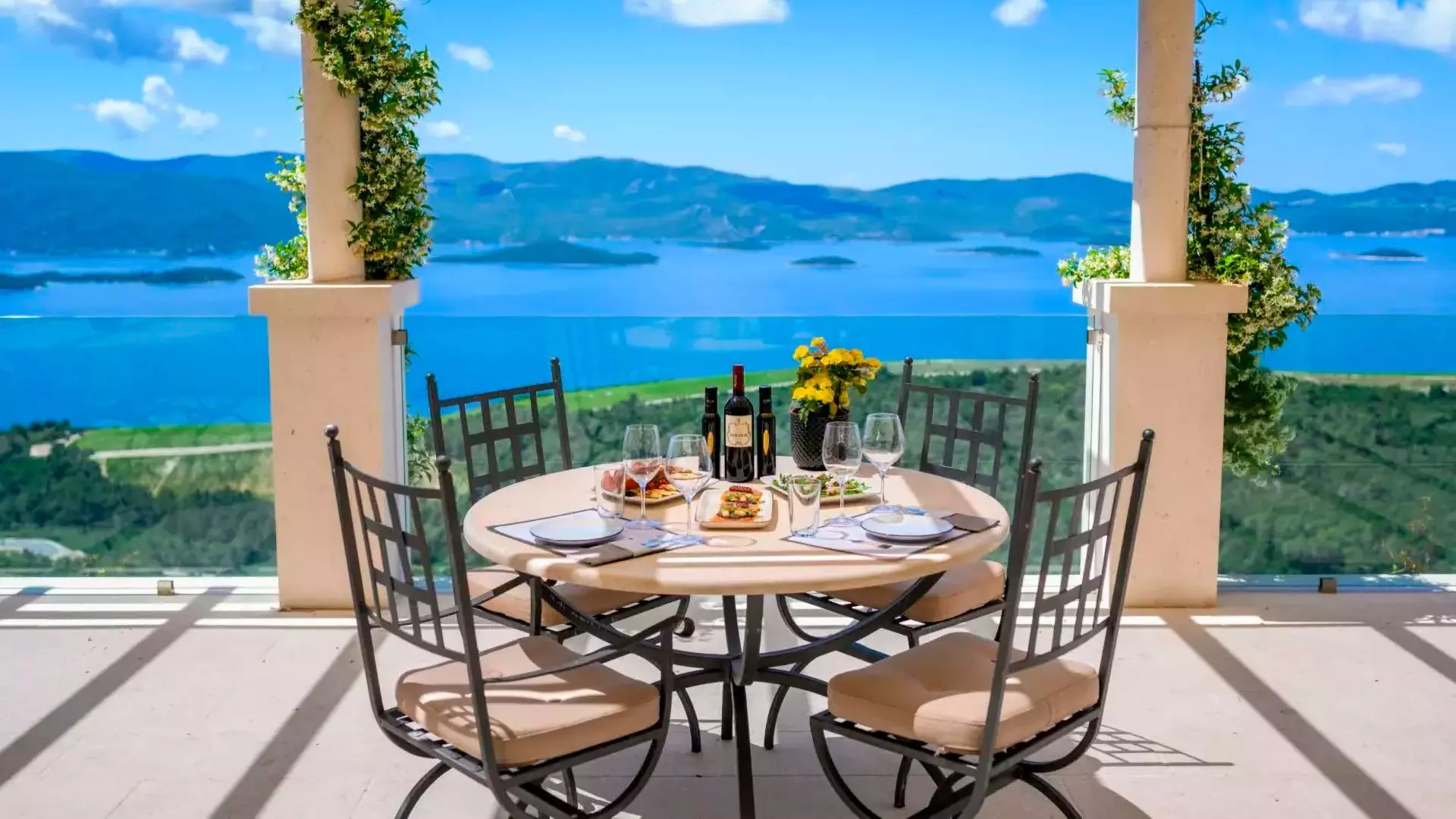
Wine & Gastronomy Yacht Charter Croatia: Ultimate Guide
Date
Reading time
22 min


Croatia is one of the Mediterranean's top destinations for a wine and gastronomy yacht charter. The country produces wine from more than 130 indigenous grape varieties, many found nowhere else in the world, and its Adriatic coast is home to 10 Michelin-starred restaurants, several of which are accessible directly from a marina or by tender. From the oyster beds of Mali Ston and truffle forests of Istria to island vineyards producing Pošip, Grk, and Plavac Mali, Croatia offers a food and wine experience that is inseparable from the sea.
This guide covers everything you need to plan a food and wine charter in Croatia: the key wine regions and grape varieties by island, the Michelin-starred restaurants reachable by yacht, and the culinary experiences including winery visits, konoba dinners, and olive oil tastings.
Croatia: Food & wine destination
Croatia's culinary geography is as varied as its coastline, and understanding it is the first step to planning a charter that does it justice. The country divides into two distinct worlds: the Adriatic coast and islands, where the Mediterranean dominates in the form of olive oil, fresh fish, seafood, and sun-ripened vegetables; and the continental interior, where Central European traditions of slow-braised meats, dairy, and woodland ingredients like truffles and wild mushrooms hold sway. A yacht charter positions you perfectly to navigate between both, sampling from each without ever unpacking your suitcase.
Exploring the wine landscape
Croatia's wine industry ranges from large cooperative producers to micro-estates making just a few thousand bottles annually. The diversity of scale mirrors the diversity of approach: you will find everything from technically sophisticated cellars using French barrique aging and temperature-controlled fermentation to family producers who have changed virtually nothing about their methods in three generations.
What unites the best Croatian wine producers is a sense of place. The country's combination of limestone and clay soils, maritime breezes, and high sunshine hours creates conditions that lend wines a distinctive character: freshness balanced with body, aromatic complexity, and a minerality that speaks directly of the Adriatic coast.

On a yacht charter, the advantage is the ability to visit coastal and island estates directly from the water. This allows for an itinerary built around seaside vineyards and producers, incorporating wine tastings as a natural part of the route.
130+ indigenous grape varieties
Perhaps no single fact better illustrates Croatia's uniqueness as a wine destination than the number of its indigenous grape varieties. More than 130 autochthonous varieties have been identified and catalogued, a figure that places Croatia among the most genetically diverse wine nations in the world. Many of these grapes remain little known outside the country, cultivated on just a handful of hectares by a small number of dedicated producers.
A yacht charter allows for tasting specific varieties such as Malvazija and Teran in Istria, Plavac Mali along the Dalmatian coast, or Grk and Pošip on Korčula, varieties that between them tell the story of Croatian wine more clearly than any textbook could.
Mediterranean meets central european cuisine
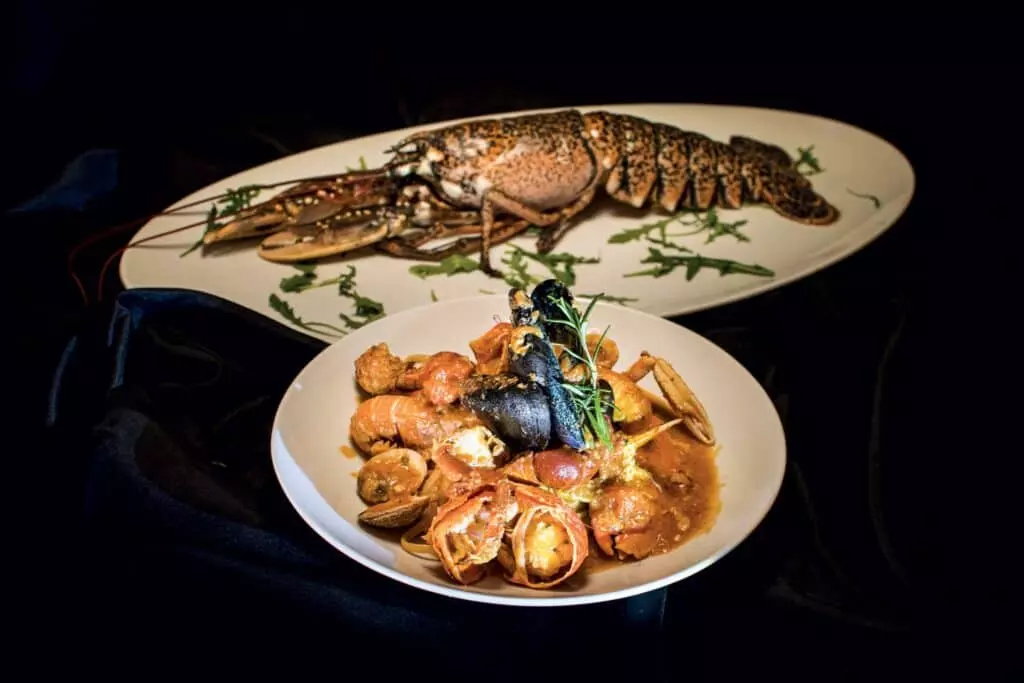
Croatian cuisine is best understood as a conversation between two culinary traditions. On the coast and islands, the Mediterranean influence is paramount: olive oil replaces butter, fish and seafood are treated with restraint and respect, vegetables are roasted or grilled rather than heavily sauced, and meals move to the rhythms of long, sociable lunches in the open air. The food is clean, bright, and deeply seasonal.
In the northern region of Istria and the continental interior, the culinary influences shift. The peninsula’s position between the Adriatic and the Alps creates a culture where truffles are used in a variety of dishes, from pasta to eggs. Slow-braised meats, game, and rich dairy products reflect Central European traditions. A yacht charter that combines coastal navigation with a visit to Istria allows for a single itinerary that covers this full range of styles.
13 Michelin stars & counting
Croatia's Michelin story began in 2017, when Rovinj's Monte became the first restaurant in the country to receive a star. The tally has grown steadily since, reaching 13 starred restaurants in the most recent guide, including Agli Amici in Rovinj, the country's first two-star establishment.
These accolades signal a generation of Croatian chefs who trained across Europe, absorbed the techniques of contemporary fine dining, and returned home with a specific mission: to put Croatian ingredients, traditions, and identity at the center of serious gastronomy. The results are menus that feel rooted and original rather than derivative, where the cooking reflects the landscape as much as the kitchen.
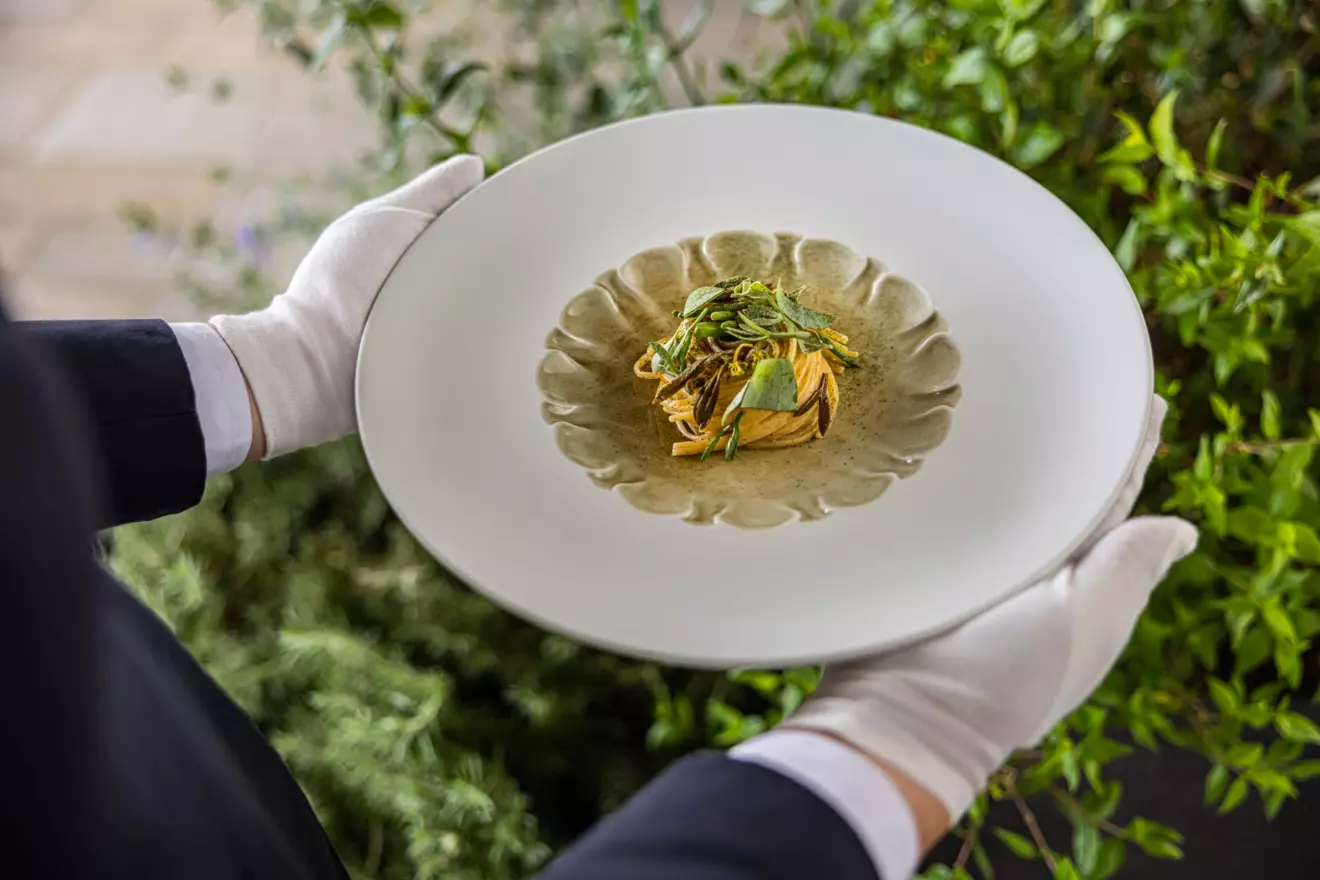
For anyone planning a food and wine yacht charter in Croatia, the Michelin constellation provides a useful roadmap. Several starred restaurants are accessible directly by yacht: Agli Amici and Cap Aureo in Rovinj are within walking distance of the marina, while Restaurant 360 in Dubrovnik is reachable by tender from the city's outer harbour. Booking well in advance, ideally before departure, is essential.
Why combine yachting with gastronomy
The combination of a yacht charter and gastronomic exploration is not merely a matter of convenience, although it offers plenty of that. It represents a fundamentally different way of engaging with a destination’s food and wine culture, one that feels more intimate, more flexible and ultimately more rewarding than any land based alternative.
Access to remote restaurants
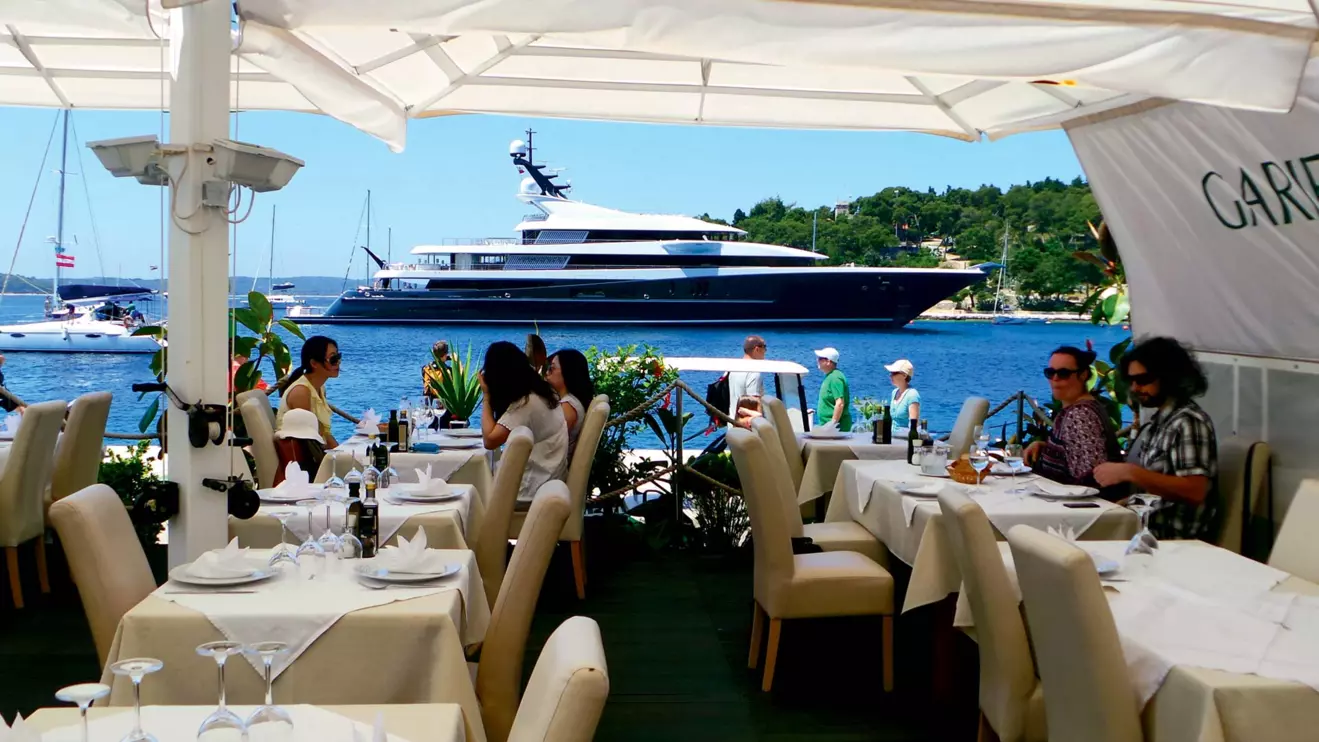
Some of Croatia's most memorable dining experiences occur in locations that are difficult to reach without a boat. This includes restaurants perched above roadless coves such as Bowa on Šipan, or island destinations like Fešta on Žut in the Kornati archipelago.
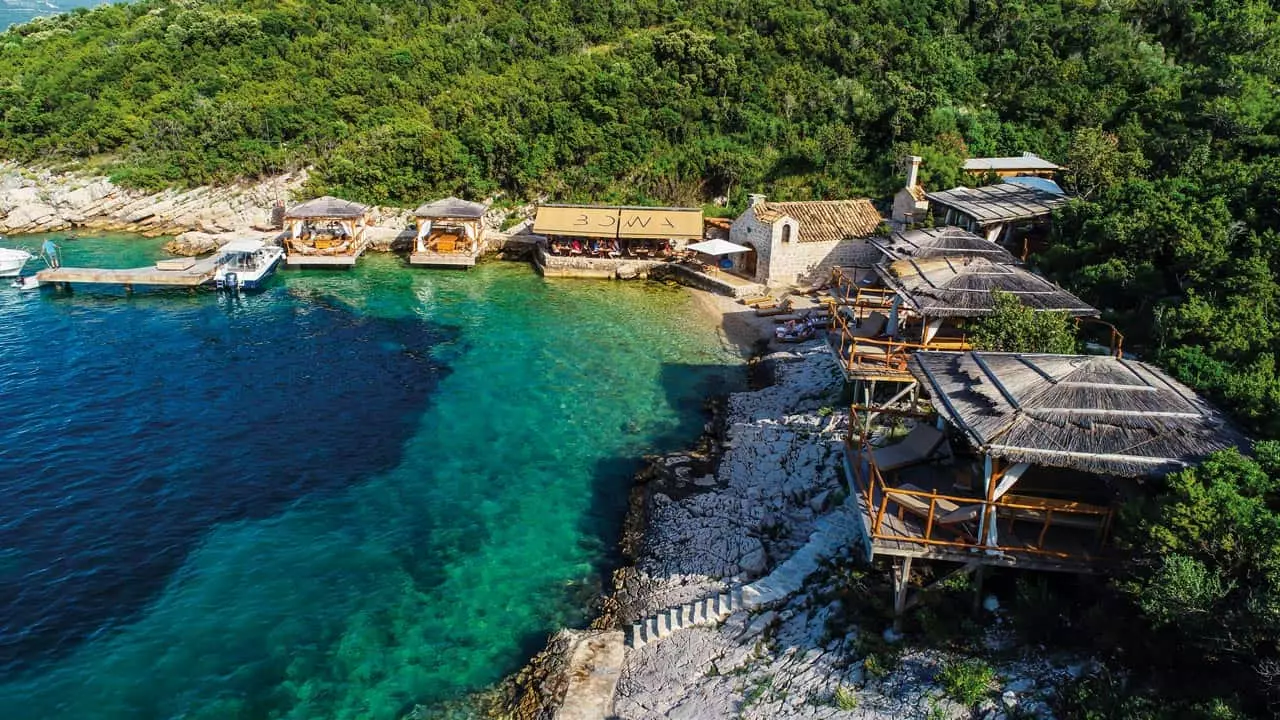
Similarly, coastal spots like Gastro Mare in Kobaš on the Pelješac peninsula and wineries like Grgić Vina sit on hillsides above natural harbors, welcoming visitors who arrive by tender directly from their vessel. These places are simply shaped by the coastline, oriented toward the sea rather than the road.
A yacht reshapes that reality. When your base is on the water, ferry timetables and road connections no longer dictate the plan. You drop anchor where the table is worth it, linger when the setting calls for another bottle, and depart on your own terms.
Island hopping wine routes
Croatia’s wine regions are defined by their island and coastal geography. The Pelješac peninsula, the country's premier red wine region, extends into the Adriatic between Dubrovnik and Split. Nearby, the island of Korčula produces white varieties like Pošip and Grk, which are among the most distinct in the region. Hvar, characterized by limestone terraces, produces wines noted for their aromatic complexity. Each island maintains its own viticultural identity, shaped by specific microclimates and soil types.
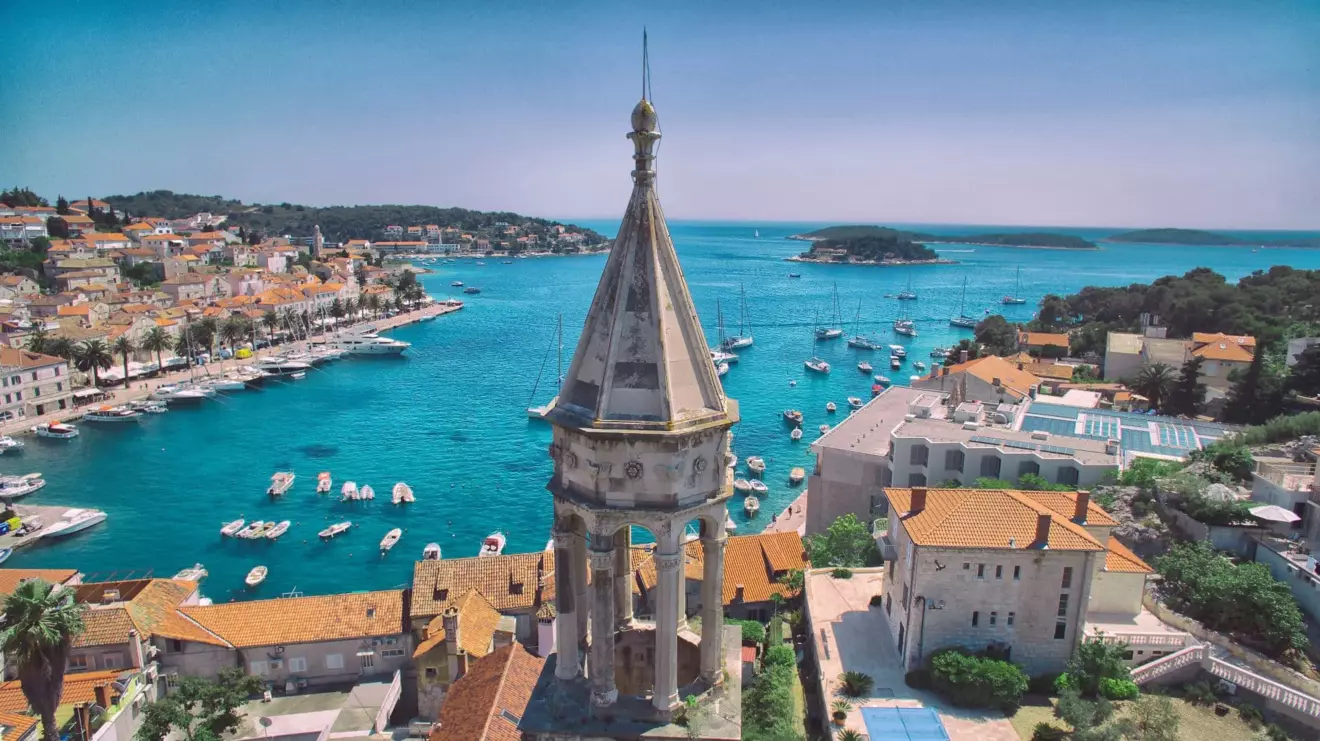
An itinerary that incorporates these wine regions allows you to trace the routes in sequence, tasting the wines in their place of origin, with a direct understanding of how geography shapes flavor.
Your chef as culinary guide
Many of Croatia's finest charter yachts come with a private chef as part of the crew, and on a food focused charter, that role becomes one of the most valuable on board. A skilled yacht chef working in Croatian waters typically maintains close relationships with local producers, market vendors, fishermen and winemakers, connections developed over seasons of sourcing ingredients for guests.
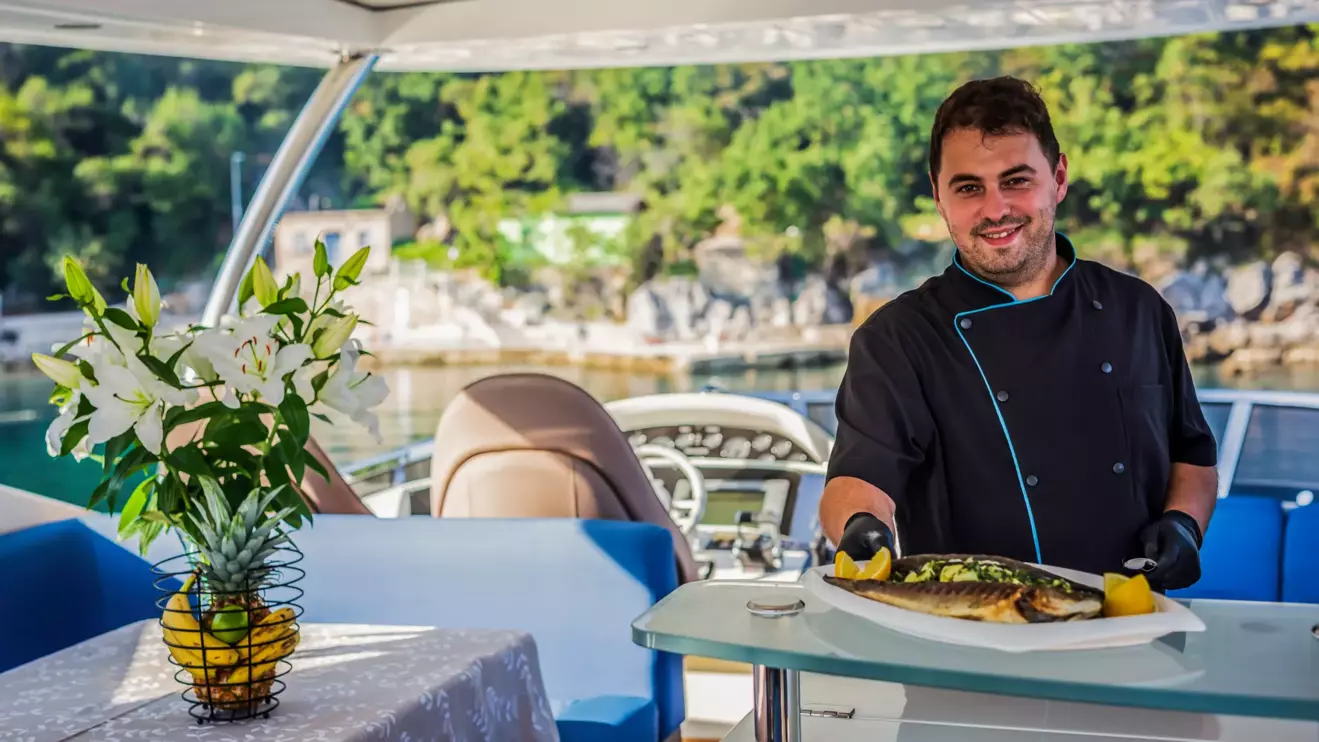
This means the chef is not simply preparing meals. They act as a culinary guide, able to suggest which winery is worth your time, which local dish defines a given island, and which market stall offers the best produce. Brief them well before departure with a clear preference list: dietary requirements, favourite ingredients and cuisines, wines you want to explore, and any producers or markets you want to visit. The more specific the brief, the better the result.
Farm-to-table at sea
While the term 'farm-to-table' is often overused in modern dining, on a yacht in Croatia, it is often a matter of practical routine. Because the boat moves between islands, your chef can source ingredients directly from local markets in Split, Hvar, or Korčula. This typically involves vegetables harvested that morning and fish landed within hours.
Croatian wine regions by yacht
Croatia is divided into several major wine-producing regions, each with a distinct character and accessible by yacht through different parts of the Adriatic coast. Understanding the regional map helps you design an itinerary that makes logical geographic sense while covering the widest possible range of wine styles.
Dalmatia: Three islands, three wine stories
Dalmatia divides broadly into three sub-zones of particular interest for a food and wine charter: the Pelješac peninsula, the island of Korčula, and the island of Hvar.
Pelješac: Red wine peninsula
Pelješac is the center for Plavac Mali, the indigenous red grape behind some of Croatia's most highly regarded red wines. The steep, south-facing terraces of Dingač and Postup are protected designations with centuries of history, producing wines known for their depth and structure. Many local winemakers welcome visitors arriving by boat, offering tastings in cellars that have, in some cases, remained largely unchanged for generations.

Key locations such as Saints Hills and Korta Katarina offer sophisticated tasting experiences, while Vinarija Križ provides a distinct perspective with its commitment to organic viticulture and traditional methods. Visits can be coordinated to include private tastings, often paired with lunch on-site.
Reaching the peninsula typically involves anchoring in Orebić, or utilizing the marina in Korčula town, located two nautical miles across the Pelješac channel.
Korčula: Home of Pošip and Grk
Located a short crossing from Pelješac, Korčula is the primary region for Pošip and Grk. Pošip is Dalmatia's most widely planted white grape, typically producing wines with peach and citrus notes and a distinct mineral character. Grk is a rarer variety, grown almost exclusively in the sandy soils around the village of Lumbarda, resulting in a more concentrated flavor profile. The proximity of these vineyards to the coast allows for efficient visits to estates such as Bire or Zure, where the Grk grape has its deepest roots.

The island itself is one of the most beautiful in the Adriatic, with a medieval old town that deserves as much time as the wines.
Hvar: From Bogdanuša to Plavac Mali
Hvar is characterized by its significant sun exposure and aromatic vegetation, which influence the island’s viticulture. The wines typically emphasize freshness and aromatic intensity, with Bogdanuša standing out as the most notable indigenous white variety.
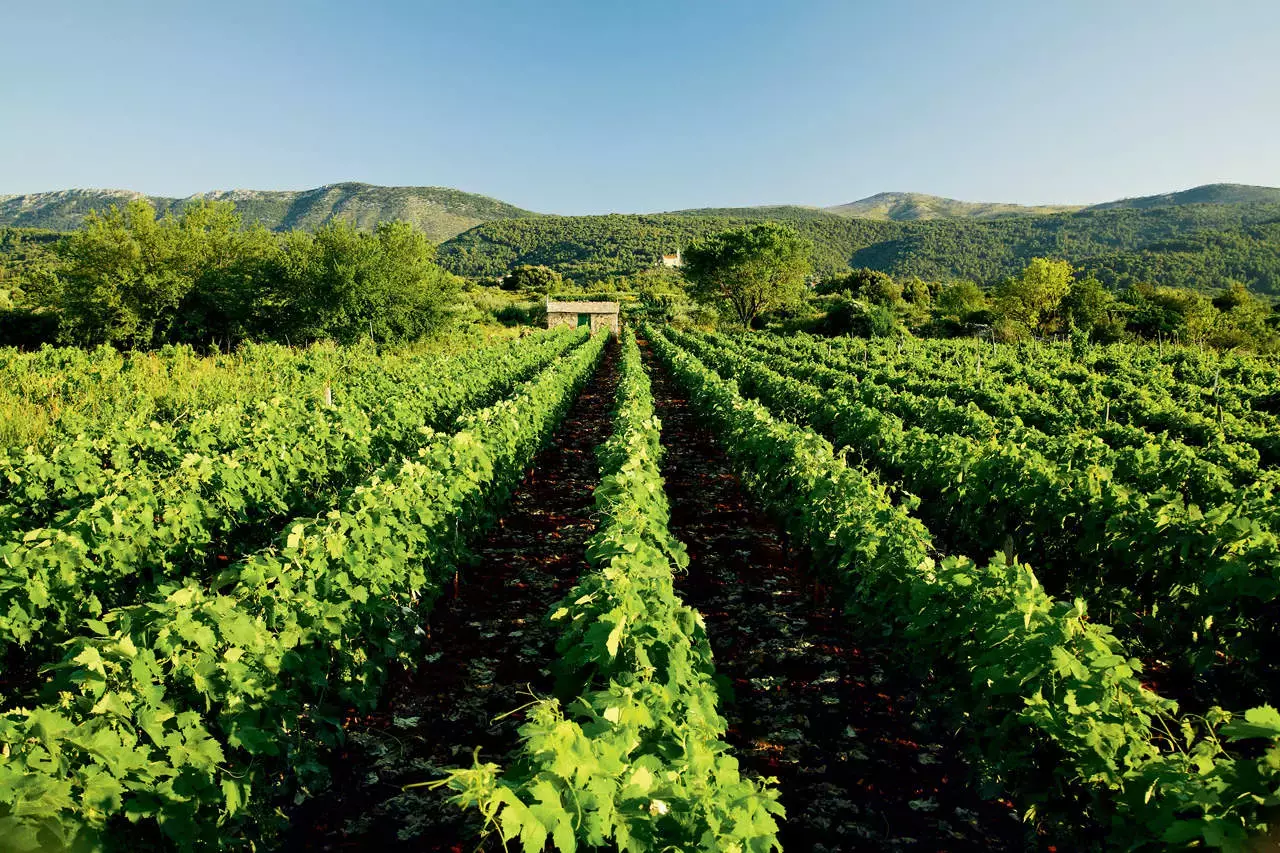
A central cultural feature of the island is the Stari Grad Plain, a UNESCO World Heritage site where land division has remained largely unchanged since Greek colonization. For those visiting by yacht, the southern slopes of the island, particularly around Sveta Nedjelja and Ivan Dolac, are of particular interest. These steep, limestone rich locations are home to some of the most robust expressions of Plavac Mali.
A significant benchmark for the island's winemaking is Tonči Marijan, based in the inland village of Pitve. His Vron Bod was the first Plavac Mali to be awarded a gold medal at the Decanter World Wine Awards, highlighting the potential of Hvar's terroir for producing reds of international standing.
Istria: Malvazija & Teran Country
Istria occupies a triangular peninsula in Croatia's north, separated from the Italian region of Friuli by just a short stretch of water. The Istrian wine identity is built on two grapes above all others: Malvazija, the white variety that accounts for the majority of production, and Teran, the brooding red that reflects the region's iron-rich red soils.
Malvazija produces wines that range from light and crisp for early drinking to richly textured skin-contact versions aged in large oak or acacia. The best examples are among the most interesting white wines made anywhere in the world, offering a distinctive combination of stone fruit, herbs, and saline minerality.
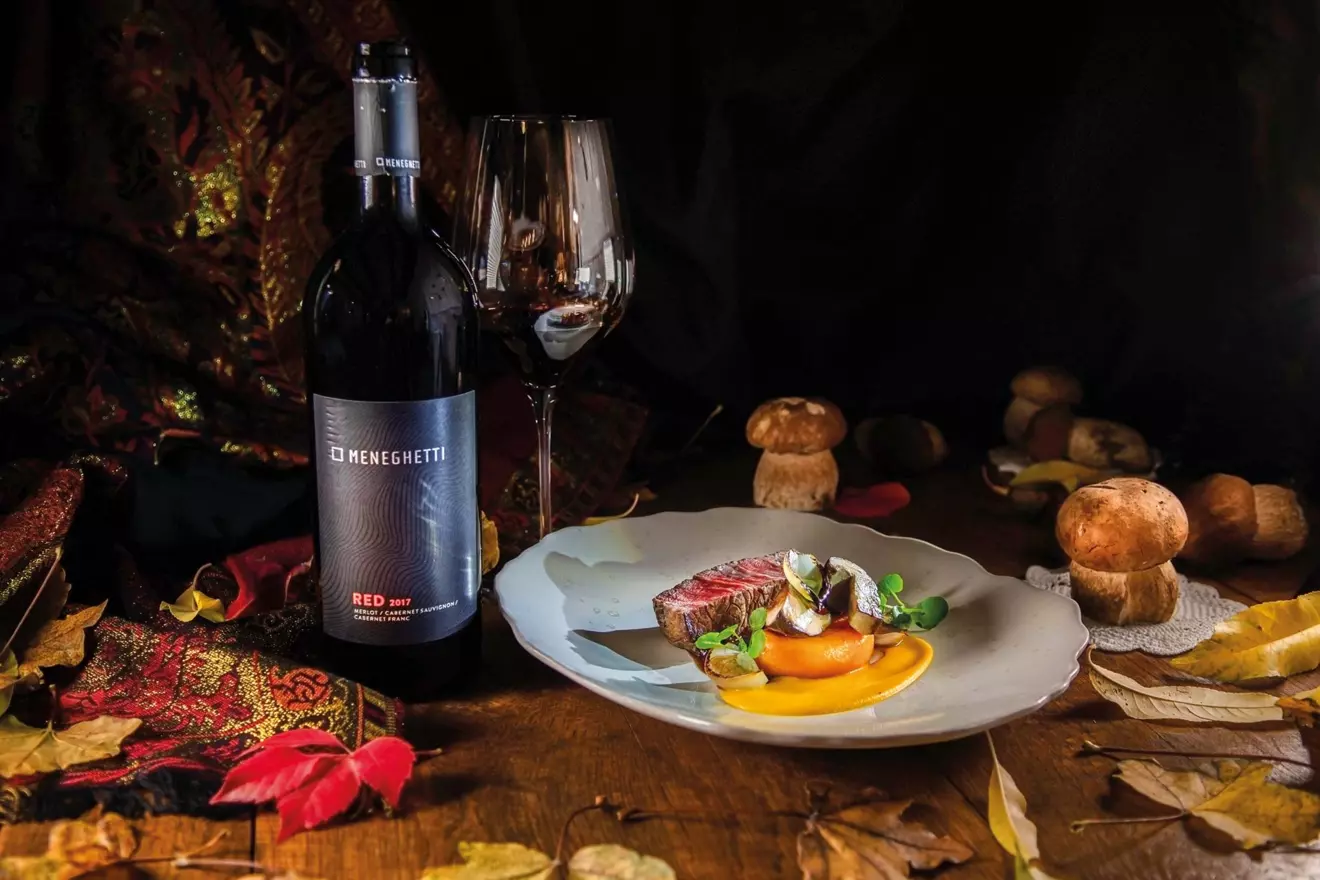
Teran, with its deep color, high acidity, and earthy, iron-tinged character, is an acquired taste but one that reveals itself beautifully with Istrian food, particularly prosciutto, pasta with truffles, and slow-braised meat dishes.
Istria also produces exceptional olive oil and is home to some of the most productive truffle grounds in Europe, making the forested interior valleys near Motovun and Buzet as worth visiting as the coast itself.
Kvarner: Northern elegance
The Kvarner Gulf sits between Istria and Dalmatia and offers genuine gastronomic interest, even if it receives less attention than its neighbors. The area is known above all for its scampi, caught in the cold, deep waters of the northern Adriatic and considered among the finest in the Mediterranean. Equally notable is the lamb raised on the islands of Cres and Pag, where animals graze on wild herbs and sparse pasture, producing meat of exceptional flavor and tenderness.
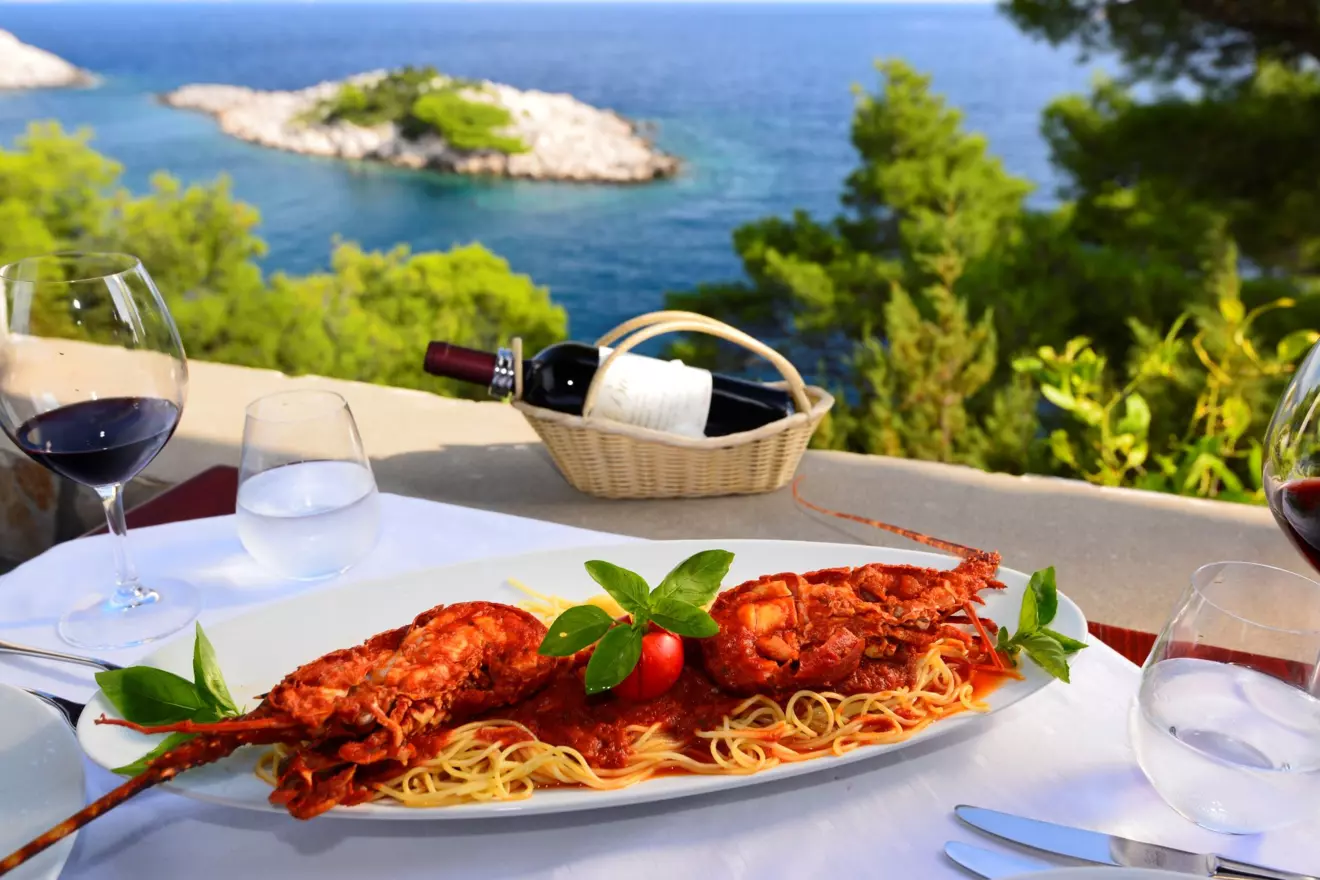
Kvarner's relative quiet is part of its appeal. Visitor numbers are lower than in Dalmatia, the scenery is dramatic, with the Velebit mountains providing a backdrop to the cruise, and the region's restaurants serve some of the most honest and unfussy seafood on the Adriatic coast.
Islands: Unique terroir
Beyond the major regions, Croatia's outer islands offer some of the most distinctive wines in the country, grown in conditions of relative isolation by producers whose methods remain largely traditional.
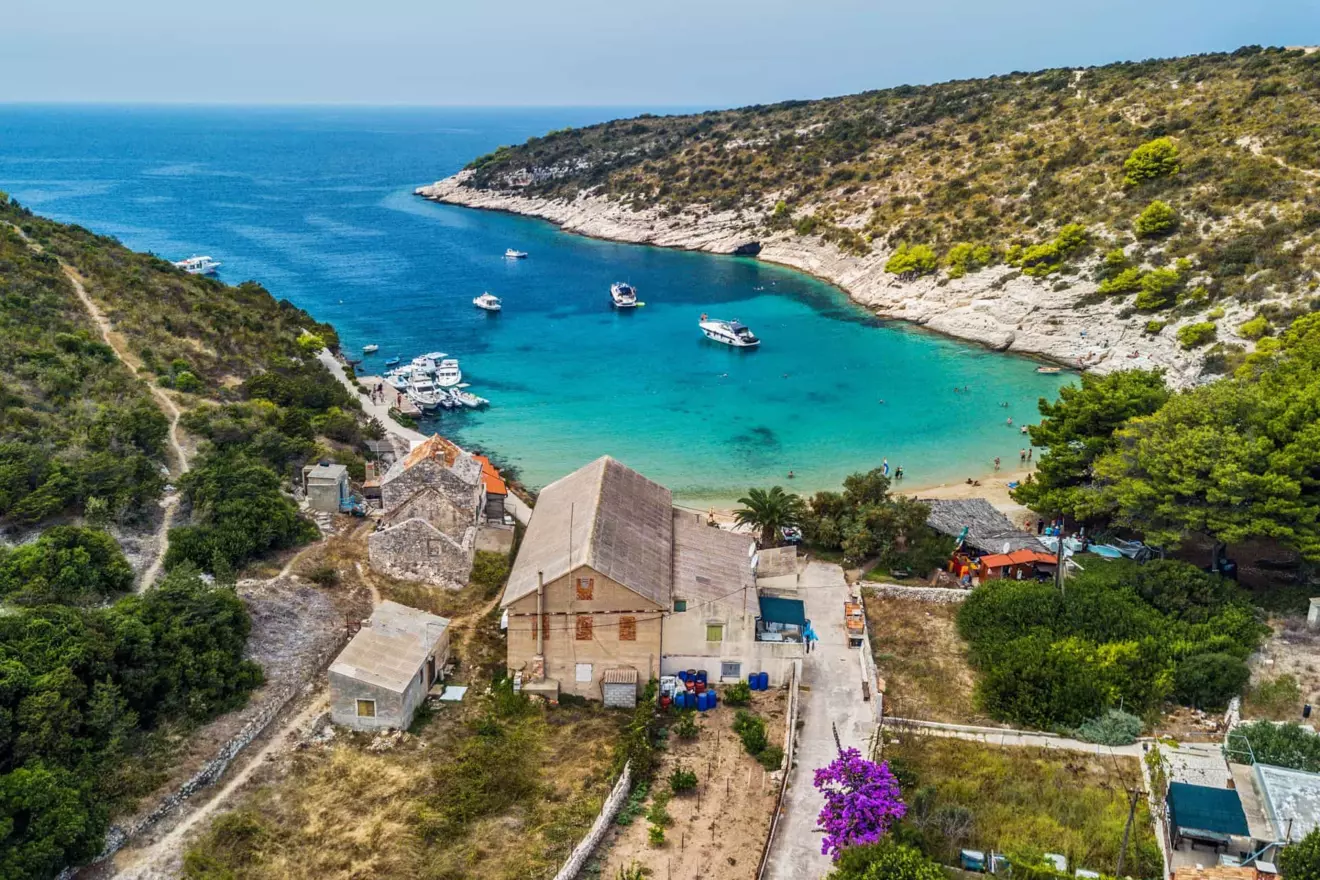
Vis, the most remote of the major Dalmatian islands, produces Vugava, a white variety of remarkable character, as well as Plavac Mali on the neighbouring islet of Biševo. Šolta produces Dobričić, a red of historic significance that is the genetic parent of Plavac Mali. Lastovo grows its own interpretation of Grk, while Brač produces Plavac Mali of a distinctly island character.
These wines are by definition difficult to find outside Croatia, and tasting them on the island where they are grown, from the producer who made them, is one of the experiences that makes a Croatian yacht charter genuinely irreplaceable.
Must-try Croatian wines
Croatia's wine list is long and diverse, shaped by geography and a cast of indigenous varieties found nowhere else. The following are the essential ones to seek out, the ones that best express what the country's wine culture is capable of at its finest.
White: Pošip, Grk, Malvazija
Pošip is the most widely planted white variety in Dalmatia, indigenous to the island of Korčula and now grown across much of the central and southern coast. The style is accessible and elegantly structured, pairing naturally with grilled fish and seafood.

Grk grows almost exclusively in the sandy soils around Lumbarda on the island of Korčula, producing wines of intense concentration and unusual textural richness, broad on the palate with flavors of ripe stone fruit, almonds, and a distinctive saline finish. The name translates loosely as Greek, a reference to the ancient colonists who may have introduced the variety to the island. Only a handful of producers make Grk, and bottles are rarely seen outside Croatia, making a tasting at source a particularly memorable experience.
Malvazija is the defining white of the north, ranging from light, stainless-steel fermented everyday drinking wines to complex, oxidative amphora-aged expressions. It rewards exploration across multiple producers and vintages, with each interpretation offering a genuinely different perspective on the same grape.
Red: Plavac Mali, Dingač, Postup
Plavac Mali is the great red grape of the Croatian coast, a natural crossing of Dobričić and Crljenak Kaštelanski, the latter genetically identical to California's Zinfandel and Italy's Primitivo. At its best, in the steep south-facing vineyards of the Pelješac peninsula, it produces wines of real character: deep in color, with aromas of dried dark fruits, spice, and a faint suggestion of sea air. The islands of Hvar, Vis, and Brač each produce their own distinct interpretations of the variety, shaped by the microclimate and soils of each island.
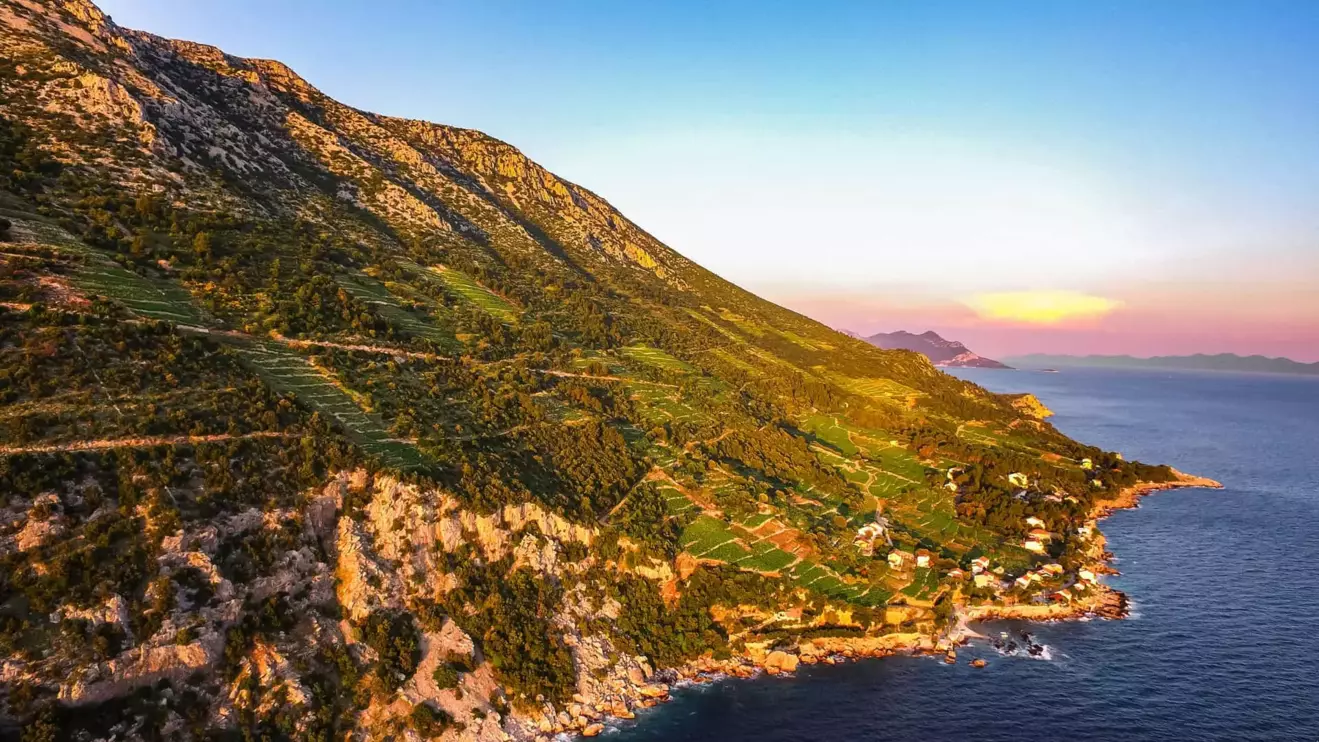
Dingač is Croatia's first and most prestigious protected wine designation, covering a specific area of south-facing limestone terraces on Pelješac where Plavac Mali reaches its maximum concentration. Wines from Dingač are typically full-bodied, high in alcohol, and built to age, developing complexity over a decade or more in good vintages. Postup, the neighboring designation on the same ridge, produces wines in a similar but generally softer style. Both are worth seeking out on any Dalmatian itinerary.
Indigenous varieties to discover
Beyond the headline varieties, Croatia rewards the curious wine traveler with a cast of indigenous varieties found nowhere else. Bogdanuša from Hvar produces a delicate, aromatic white with floral notes and refreshing acidity. Vugava from Vis is an aromatic white of genuine individuality, with notes of apricot, citrus, and wild herbs, and enough body to pair well with the island's seafood. Debit from the northern Dalmatian hinterland around Šibenik and Skradin is a refreshing, aromatic white with a natural acidity that keeps it lively and food-friendly.
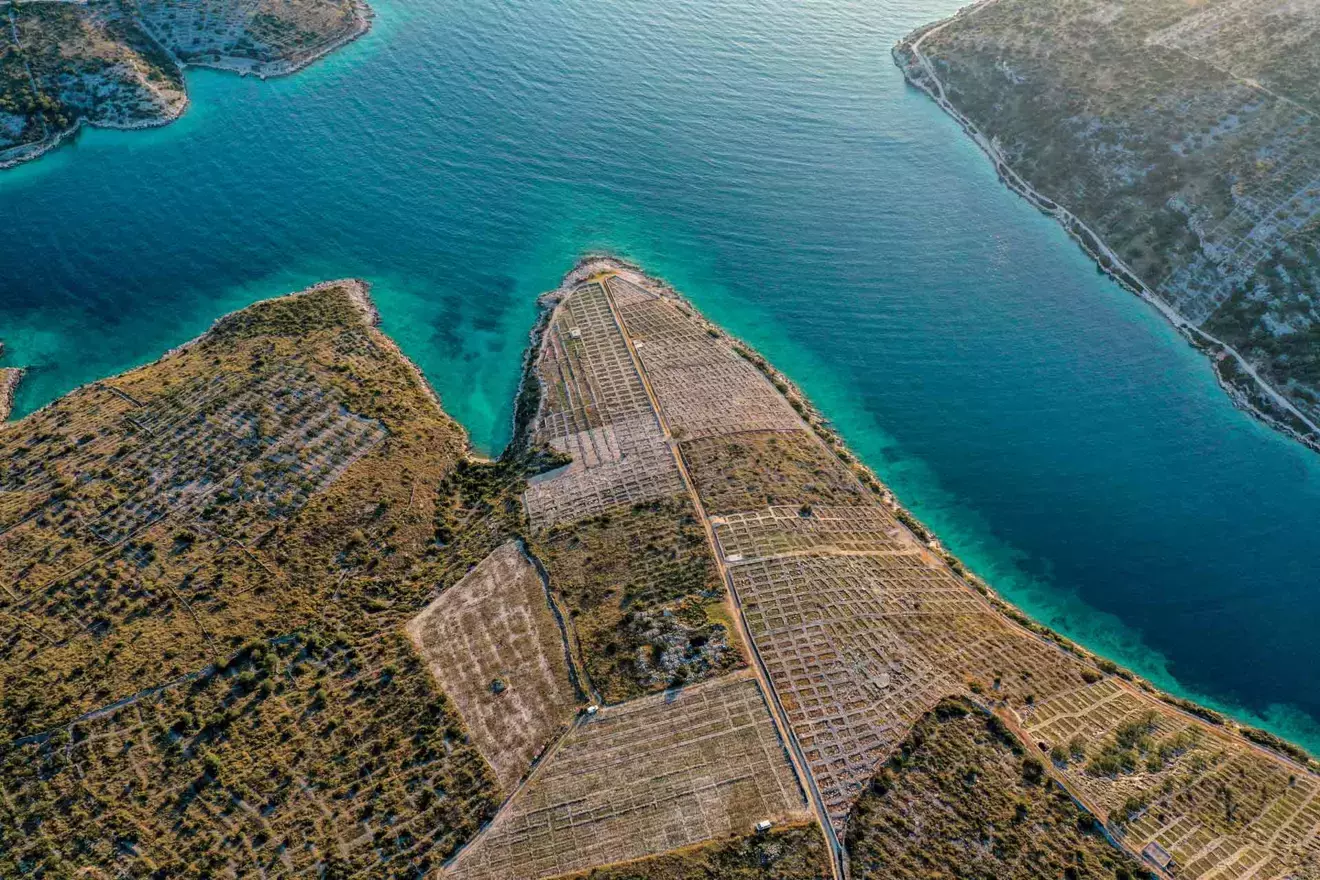
Among reds, Babić from the area around Šibenik and Primošten deserves particular attention, producing wines of spice, dark fruit, and earthy depth. Lasina, Maraština, Prč, Malvasija Dubrovačka: these are wines that exist nowhere else, and a yacht charter is the most natural way to find them.
Where to taste each
Pošip and Grk are best tasted on Korčula itself, with the villages of Čara and Smokvica as the natural base for Pošip and Lumbarda for Grk. Malvazija is at its finest in Istria, where the varied soils of the peninsula, from red iron-rich terra rossa to grey and white limestone, shape distinctly different expressions of the same variety.
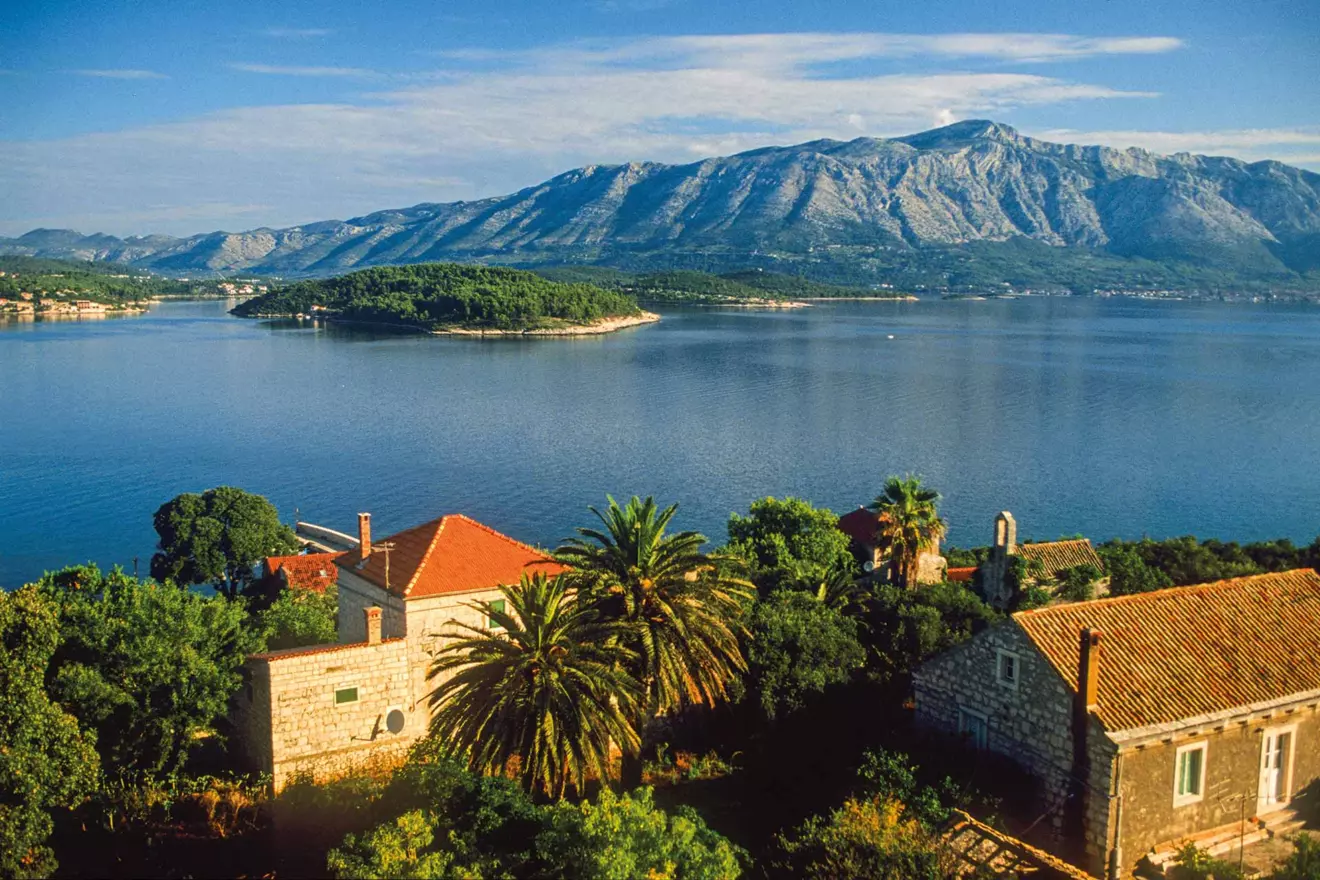
Plavac Mali is best explored on Pelješac, with Dingač and Postup as the two key designations to seek out and Potomje and Trstenik as convenient stopping points. On the outer islands, small producers on Vis, Hvar, and Brač will open their cellars to visitors who make contact in advance, something a charter broker or captain can usually help arrange.
Culinary experiences by yacht
A wine and gastronomy charter in Croatia encompasses far more than wine tasting and fine dining. Beyond restaurants, the Croatian coast offers a set of food experiences that are harder to categorize but often more memorable.

Winery visits from the water
The defining experience of a wine charter in Croatia is the winery visit conducted from the sea. Rather than arranging transport from a hotel, you approach the cellar door by tender, stepping ashore at a small quay or rocky landing to walk through the vineyards and taste directly from barrel and bottle. This experience is possible at numerous wineries along the Dalmatian coast and islands, and at several in Istria where the terrain reaches the sea.
Oysters from Ston
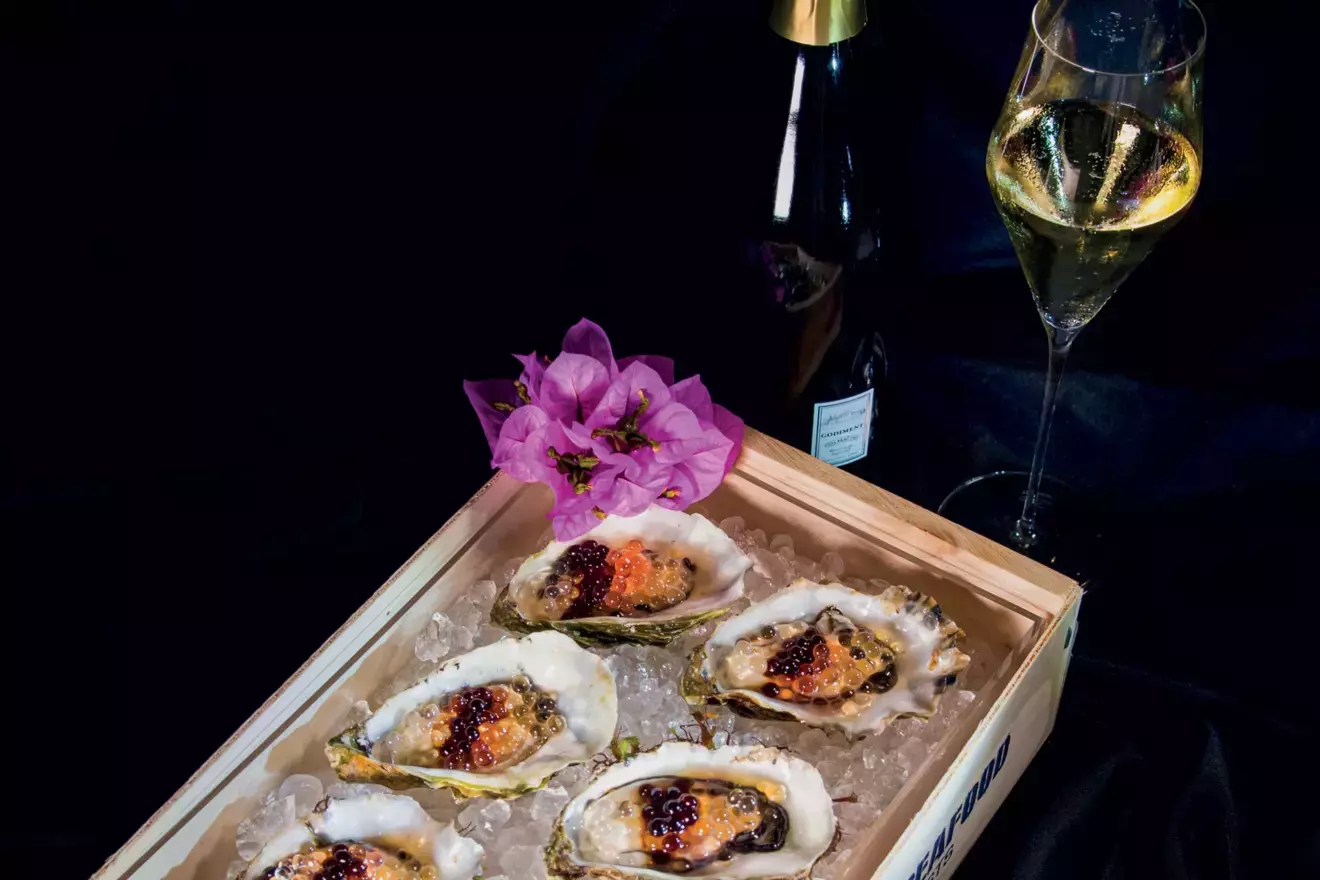
The town of Ston sits at the base of the Pelješac peninsula, connected by a stretch of medieval walls to its smaller neighbor Mali Ston, where the sheltered bay has been producing oysters since Roman times. The conditions here are close to ideal: clean water, consistent salinity, and the natural nutrients that give the local European flat oysters their celebrated sweetness.
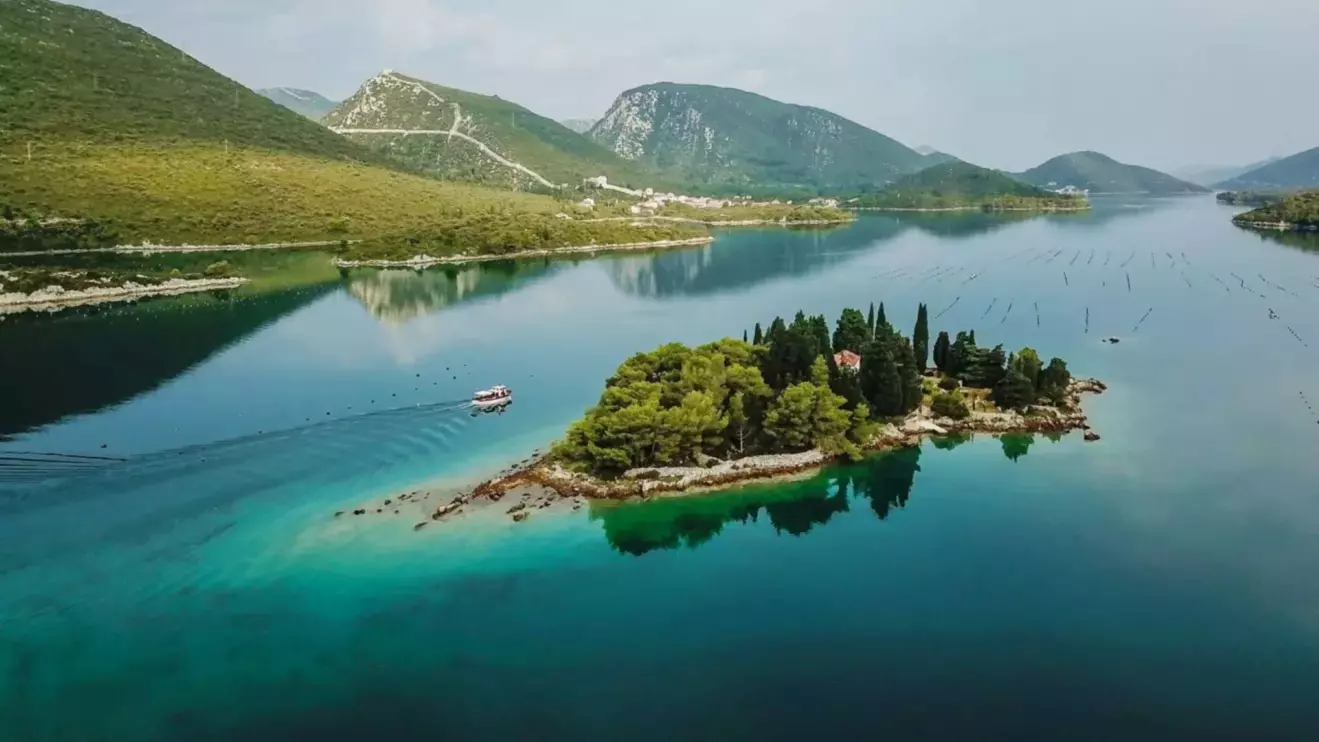
Ston itself adds further reason to stop: its medieval walls, among the longest preserved fortifications in Europe, run across the hillside above the town, and the salt pans that have supplied the Adriatic coast for centuries remain in active use today.
In Mali Ston, family-run restaurants serve oysters straight from the water with nothing more than a squeeze of lemon, and several operators offer small-boat tours of the oyster beds for those who want to understand the process before sitting down to eat.
Truffle hunting in Istria
Istria's white truffle season runs from September through December, with black truffles found from November through February, though organized hunts in the forests around Motovun and the Mirna River valley run year-round. Following a hunter and their dog through the oak woodland, then eating the morning's find shaved over pasta in a farmhouse kitchen, is one of the more singular food experiences the region offers.
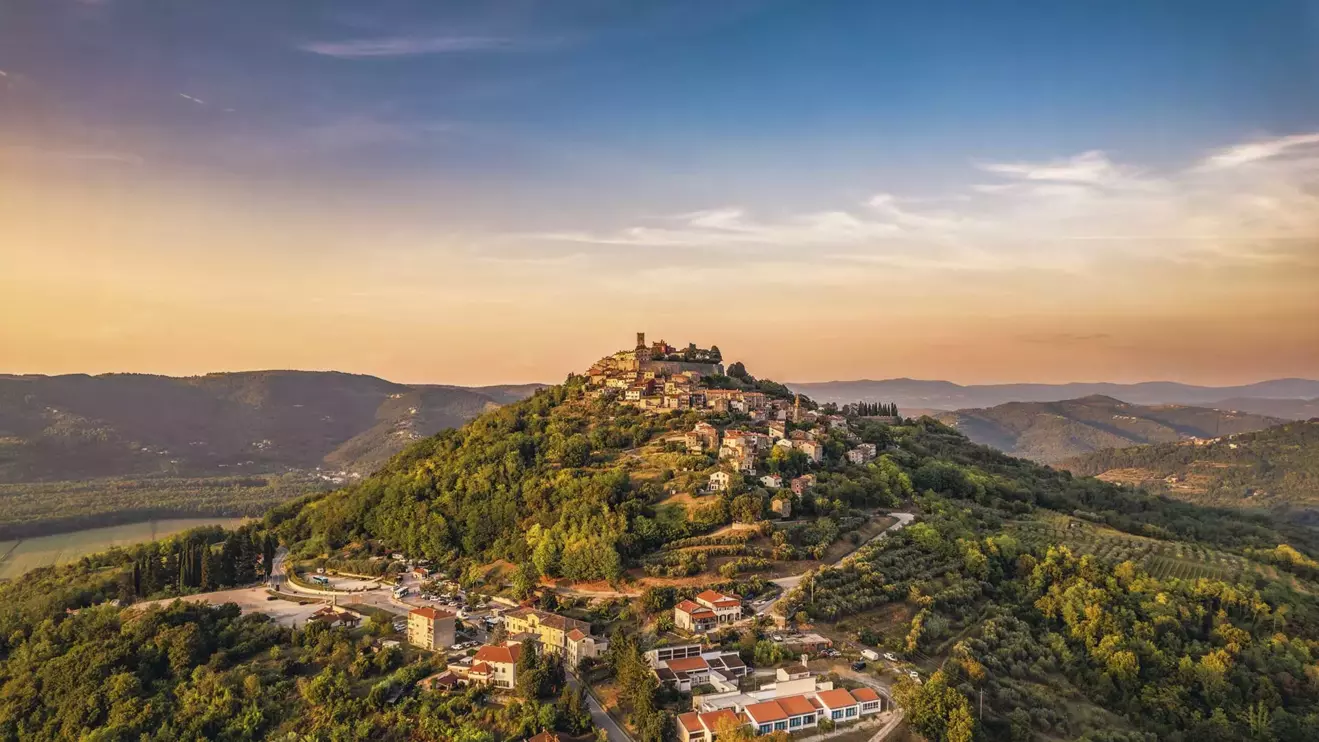
For those arriving by yacht, Rovinj, Poreč, or Pula are the natural starting points, with the truffle heartland accessible by a short drive inland and most hunters available for collection directly from the marina.
Olive oil tastings
Croatia's olive oil production, particularly in Istria, has risen significantly in quality over the past two decades. Istrian oils now regularly feature among the top-ranked extra virgin olive oils in international competitions, with a flavor profile that is characteristically peppery and bitter, markers of high polyphenol content and careful early-harvest picking.
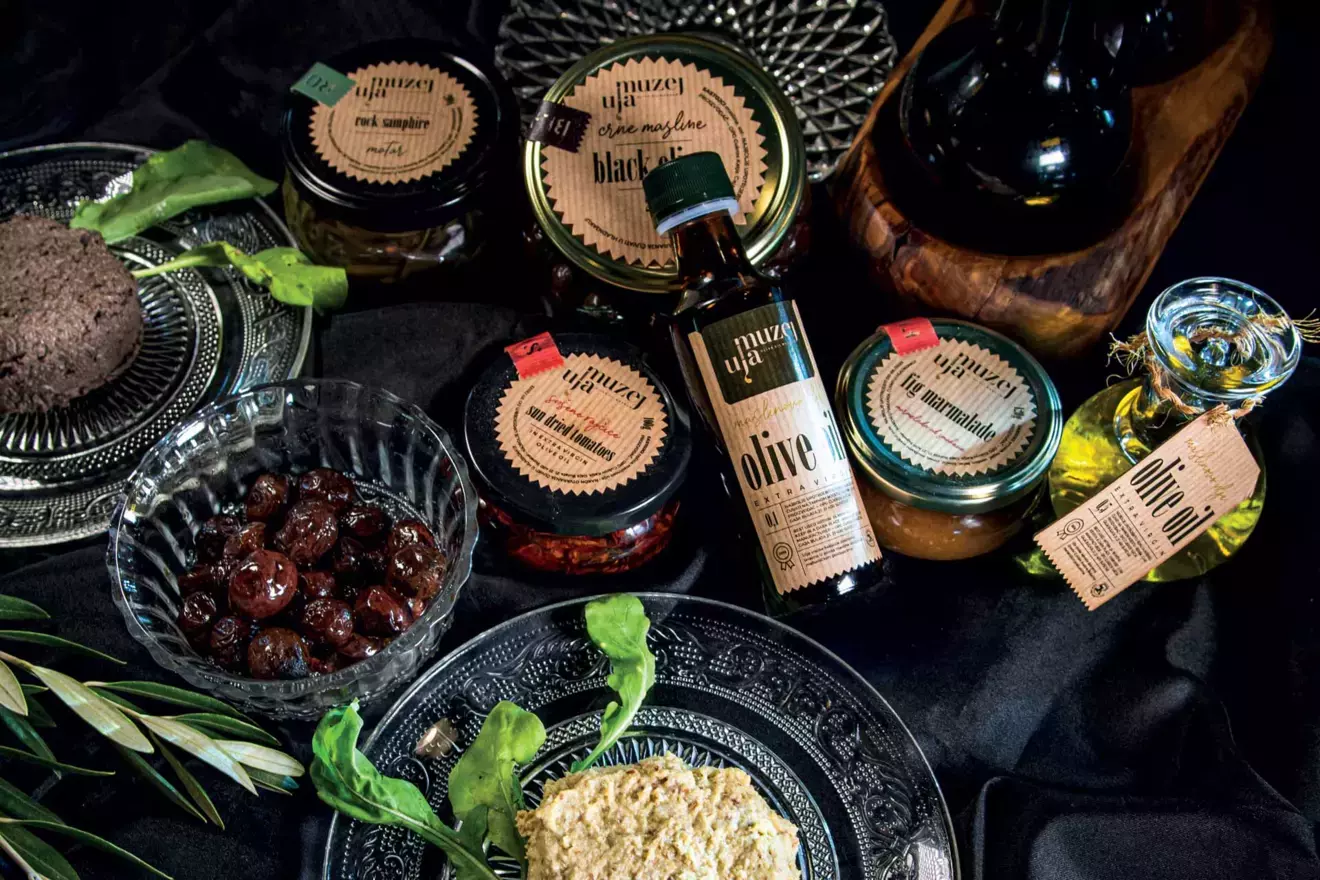
On the islands, ancient olive trees produce oils of distinctive character. A visit to a family-run mill during the October-November harvest period, when the air is thick with the fragrance of fresh-pressed oil, is an experience that stays with you.
Traditional konoba experiences
Croatia's Michelin-starred restaurants represent one end of the culinary spectrum. At the other end sit the konobas: family-run taverns of varying ambition that at their best offer a more direct connection to local tradition than any tasting menu can. The best ones are rarely in any guidebook. Ask your captain or the harbourmaster where they eat when they want a good, simple meal, and follow that recommendation.
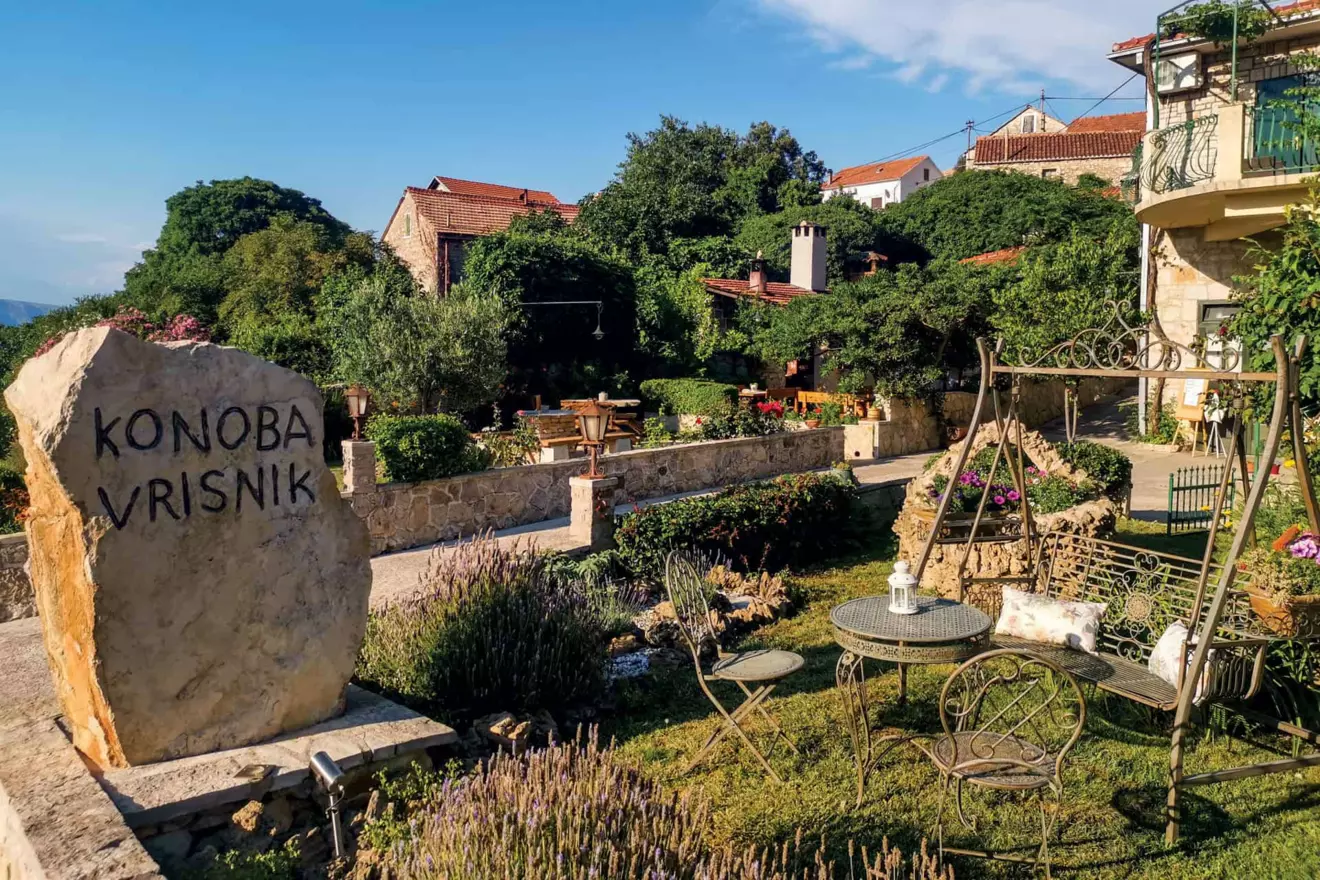
You will typically find yourself in a whitewashed room with mismatched furniture, a handwritten menu, and a carafe of house wine that turns out to be exactly right. Order the grilled fish or the lamb slow-cooked under the peka, and trust that simplicity, done well, is its own kind of luxury.
Michelin restaurants accessible by yacht
Croatia's Michelin-starred restaurants are concentrated along the Adriatic coast, and several of the most celebrated are within easy reach of a yacht moored in the adjacent marina or anchorage. Reservations at these restaurants should be secured months in advance, particularly for summer months, when demand significantly exceeds supply.
Restaurant 360, Dubrovnik
Restaurant 360 sits within Dubrovnik's medieval city walls, with views across the old harbor and the open Adriatic. The restaurant holds one Michelin star and has built a reputation on cooking that draws on the Dalmatian coast and hinterland: Adriatic seafood, local lamb, seasonal vegetables, executed with precision and a clear sense of place.
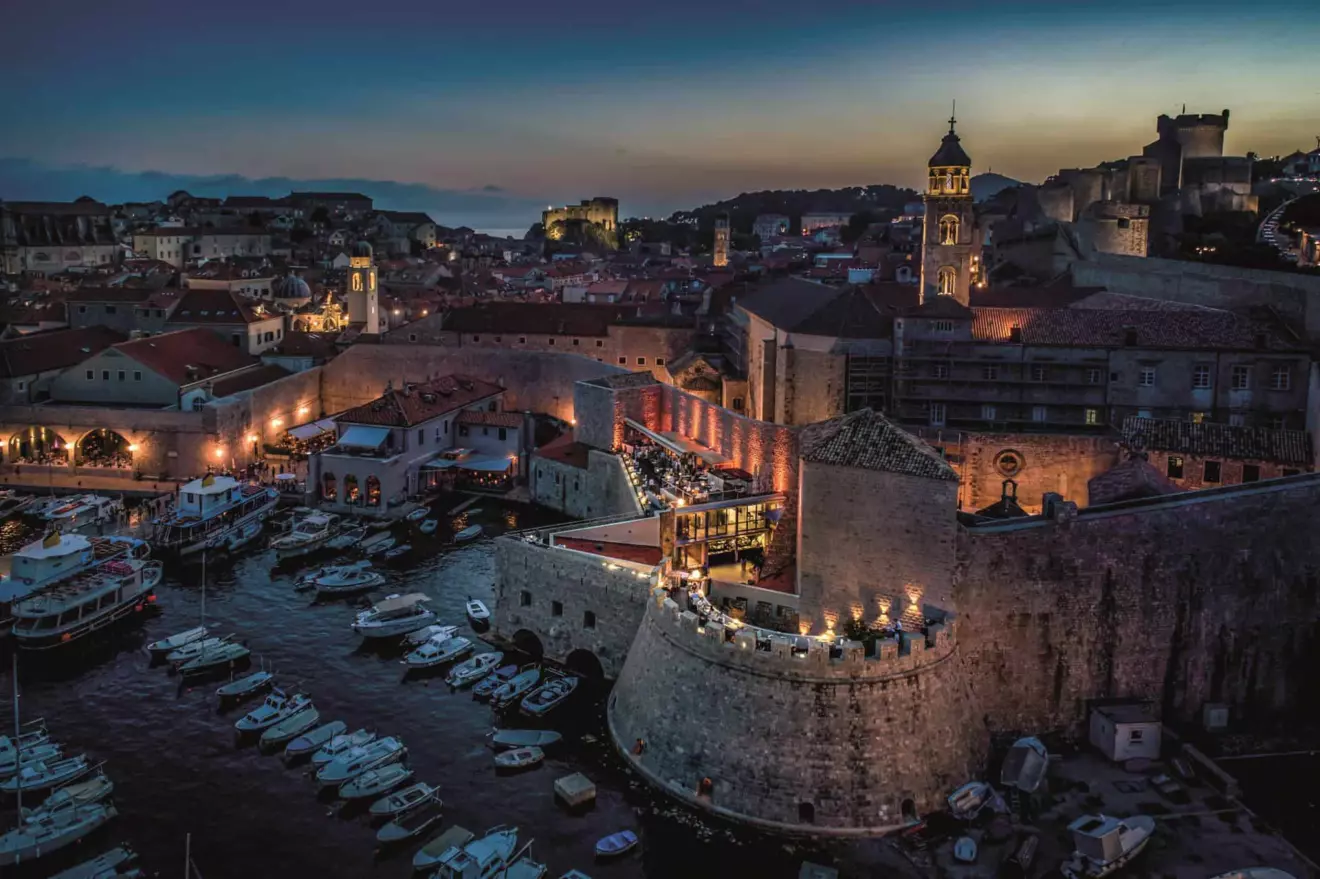
For those arriving by yacht, Gruž harbor is the most practical mooring option, with the old town a short transfer away. Advance booking is essential, particularly in high season when the restaurant is among the hardest tables to secure on the coast.
Pelegrini, Šibenik
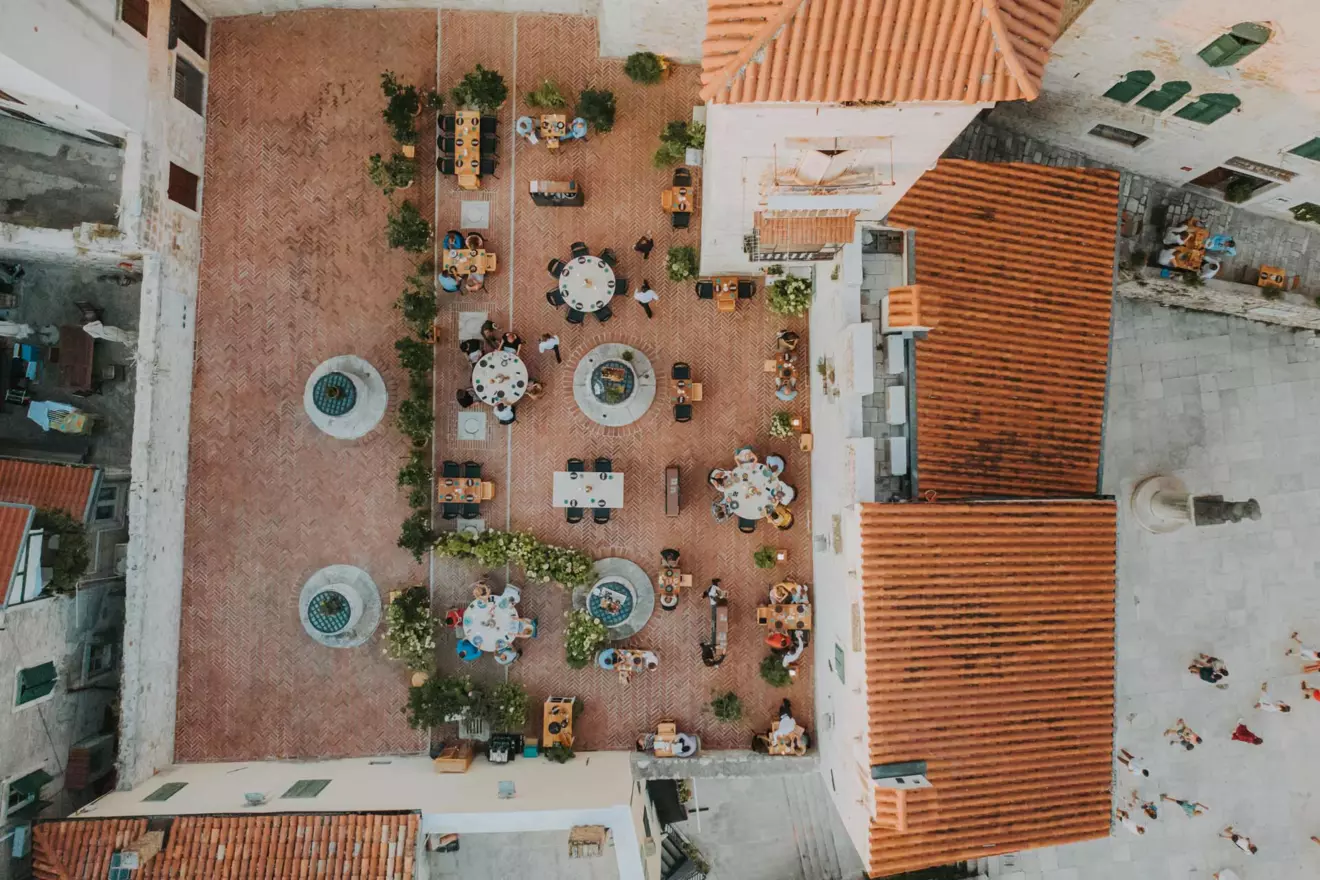
Pelegrini occupies Villa Pelegrini-Tambača, a Renaissance palazzo in the heart of Šibenik's old town, directly opposite the UNESCO-listed Cathedral of St. James. Chef Rudolf Štefan holds one Michelin star and has built the restaurant's reputation on an intimate knowledge of the surrounding region: seafood from the Kornati archipelago, lamb from the Dalmatian hinterland, wild herbs and vegetables from the local countryside, presented through two tasting menus that reinterpret traditional Dalmatian cuisine with precision and restraint. Šibenik's marina is a short walk from the restaurant, making it one of the more naturally accessible starred tables on the coast.
Michelin restaurants in Rovinj
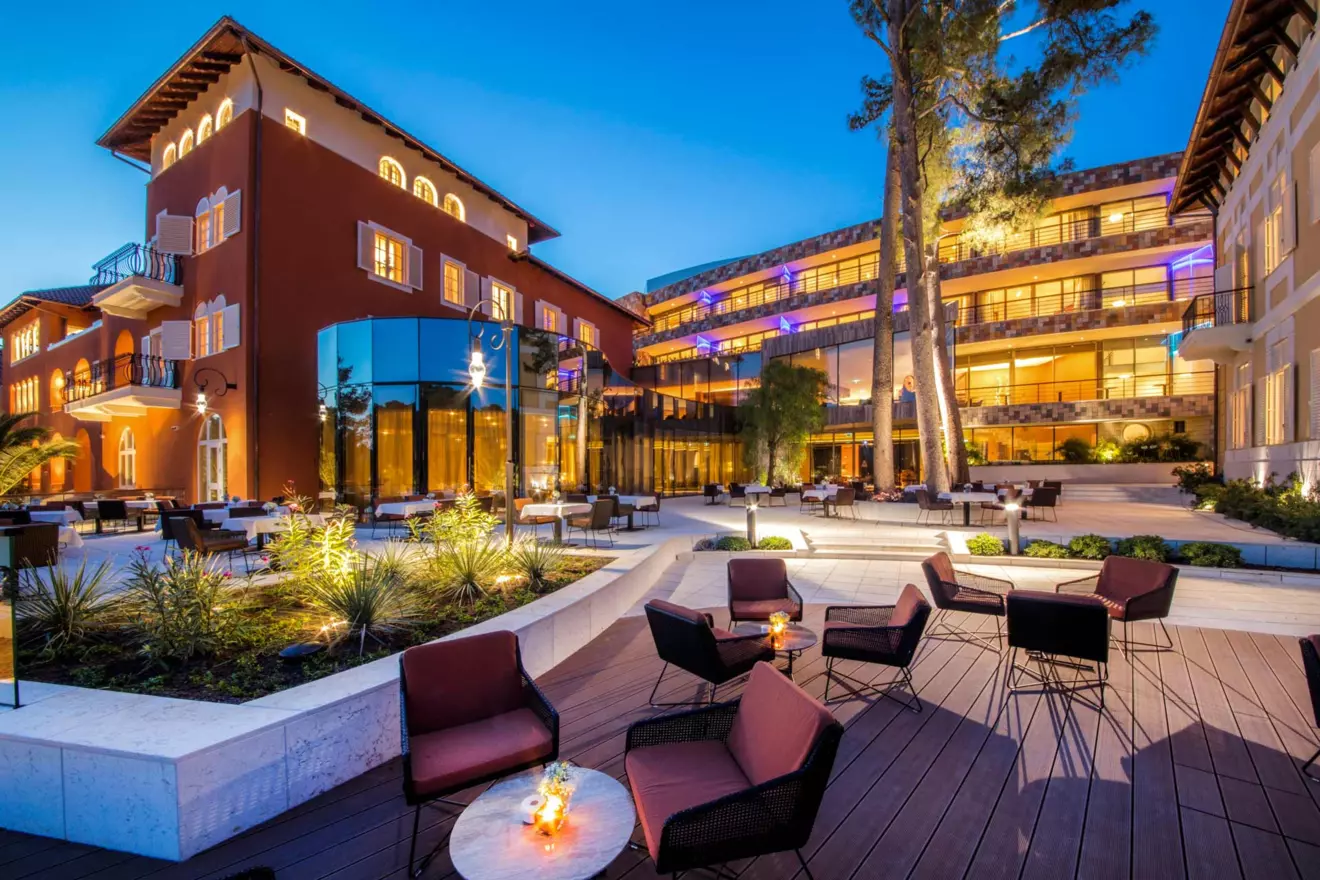
Rovinj has emerged as Croatia's most concentrated fine dining destination, with three Michelin-starred restaurants within walking distance of the marina. Agli Amici holds two stars, the only restaurant in Croatia to do so, with a menu built around two tasting journeys, one focused on Istrian seafood and the other on the land, overseen by chef Emanuele Scarello in collaboration with head chef Simone De Lucca.

Monte, the first Croatian restaurant to receive a Michelin star back in 2017, continues to deliver cooking rooted in Istrian ingredients with precision and restraint. Cap Aureo, perched on the fifth floor of the Grand Park Hotel with panoramic views across the marina, earned its first Michelin star with a plant-forward tasting menu that rotates with the seasons. All three are within easy reach of Rovinj marina.
Complete list with mooring info
As of the most recent Michelin guide, Croatia has 13 starred restaurants. The following are those most naturally accessible by yacht, with mooring details for each. In Rovinj, Agli Amici (two stars), Monte (one star), and Cap Aureo (one star) are all within walking distance of the marina. Pelegrini in Šibenik (one star) is a five-minute walk from the city marina. LD Restaurant on Korčula (one star) is a three-minute walk from Korčula town marina. Krug in Split (one star) is accessible from the ACI marina.
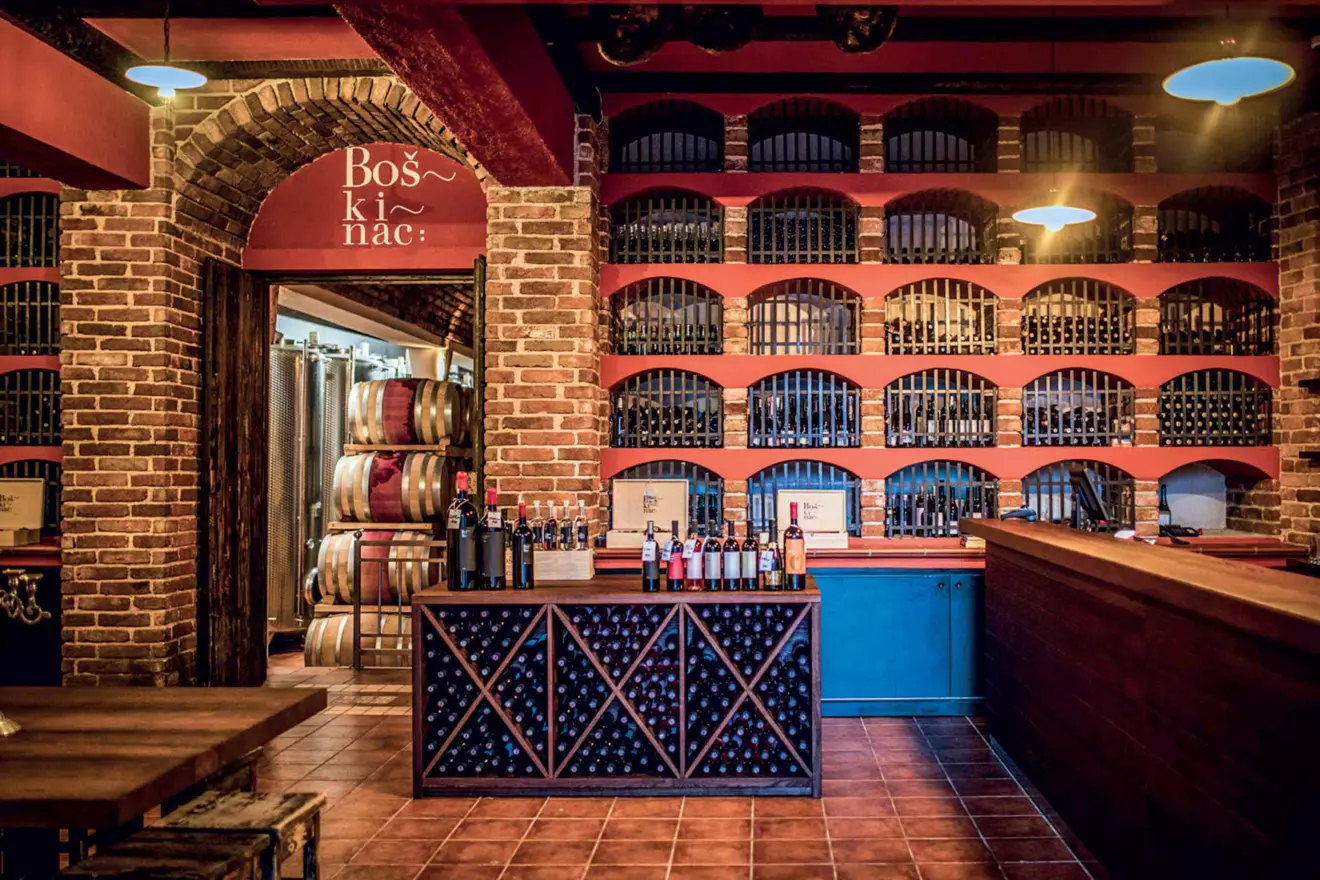
Boškinac on the island of Pag (one star) is reachable by tender. Alfred Keller on Mali Lošinj (one star) is accessible from the Čikat bay anchorage by a short tender ride. Restaurant 360 in Dubrovnik (one star) is accessible from Gruž harbor by a short transfer to the old town. Nebo in Rijeka (one star) is accessible from Rijeka marina.
Sample wine & gastro itinerary
The following sample itinerary is designed to give a sense of how a wine and gastronomy-focused charter can be structured along the Dalmatian coast, and can be adapted to the specific preferences of your group, the size of your yacht, and the season of travel.
Day 1: Split to Šolta
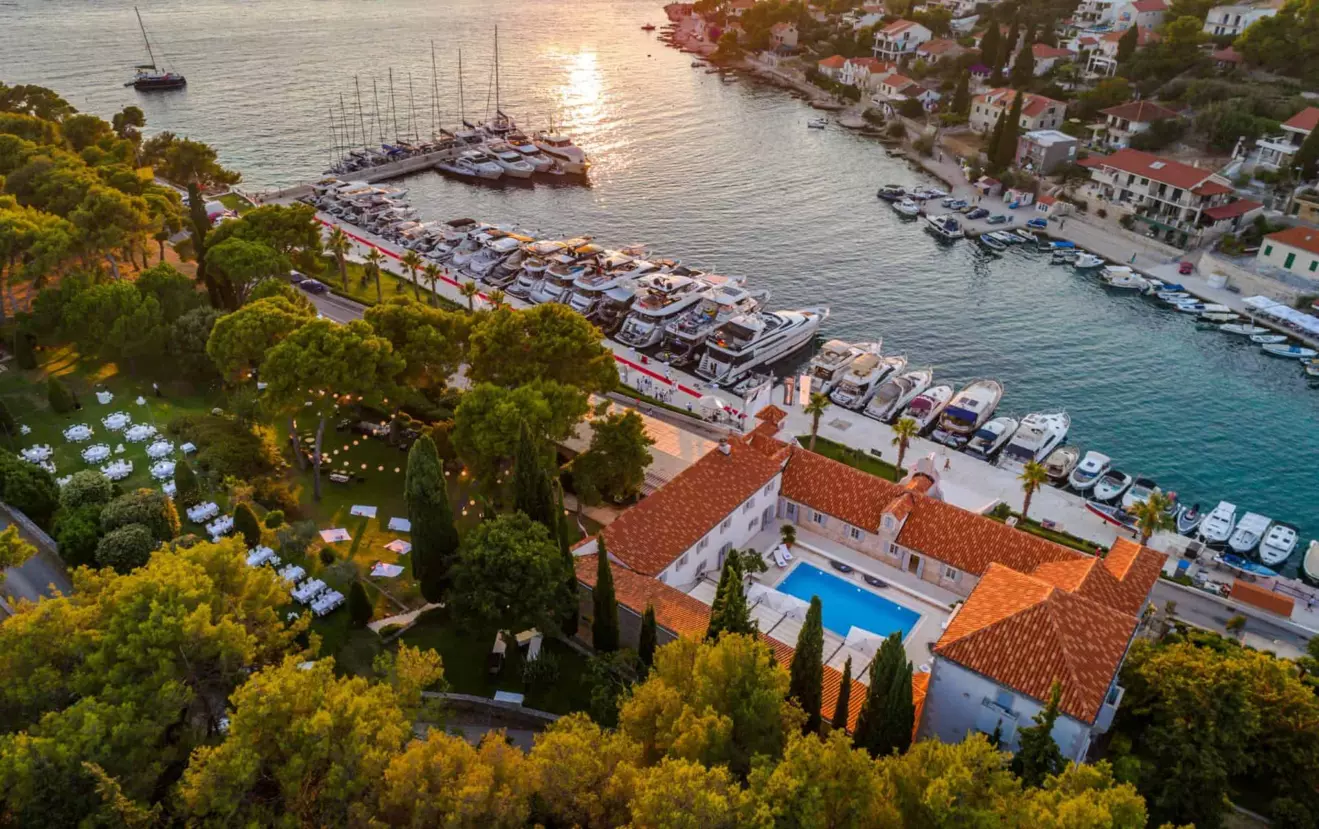
Depart Split mid-morning for the short crossing to Šolta, one of Dalmatia's least visited islands despite its proximity to the city. A visit to Martinis Marchi makes for a natural first stop: a 300-year-old baroque castle set above its own private marina in Maslinica bay, with a restaurant built around local island ingredients.
Day 2: Šolta to Hvar
Arrive in Hvar town harbor by early afternoon. The afternoon is well spent with a visit to Tonči Marjan, one of the island's most respected winemakers, before dinner at Gariful or Laganini, both well-regarded for their handling of local seafood and Dalmatian ingredients. Overnight on the town quay or at anchor in Palmižana bay on the Pakleni islands.
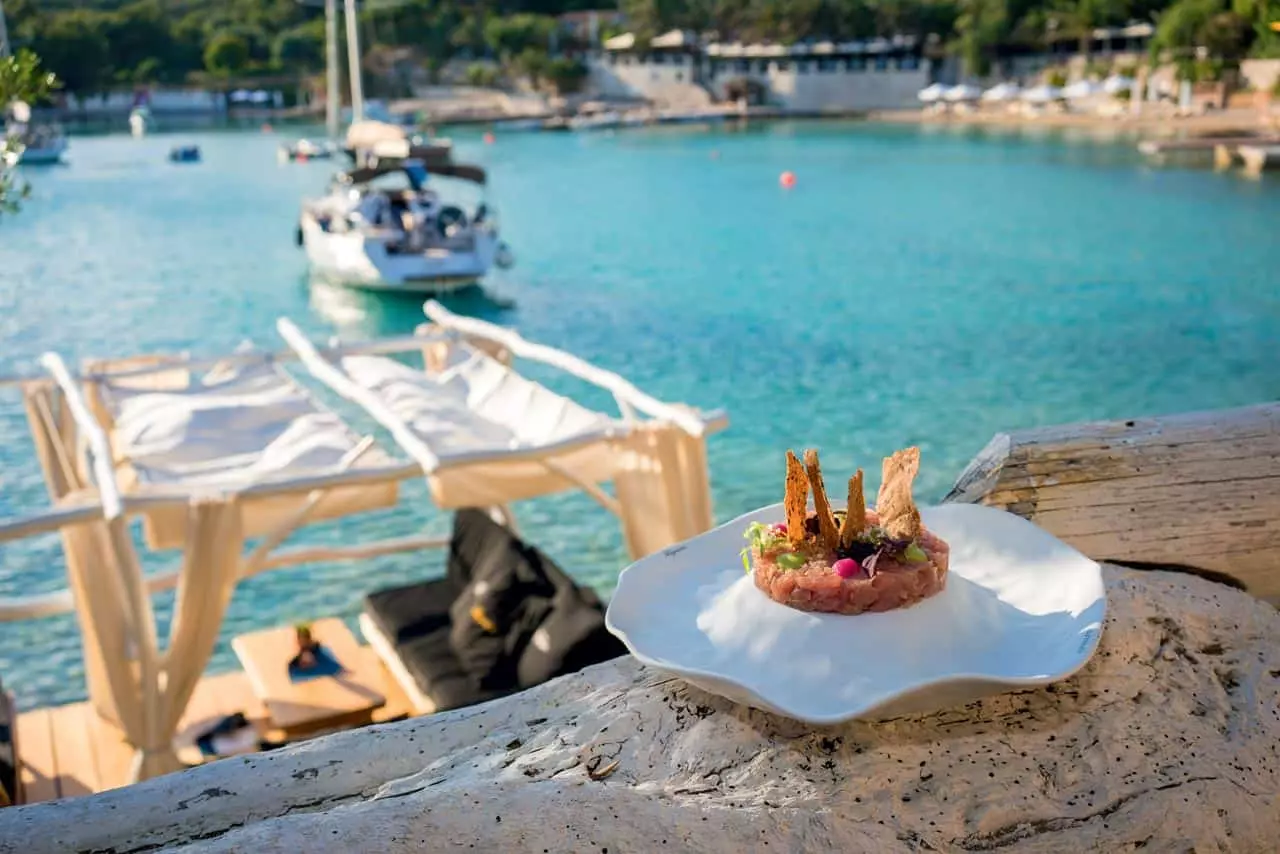
Day 3: Hvar to Korčula
Arrive in Korčula town by early afternoon, mooring beneath the medieval walls. The afternoon is spent in Lumbarda with a tasting of Grk, a white variety grown almost exclusively on the eastern tip of Korčula and rarely found anywhere else. Evening dinner at LD Restaurant, the island's Michelin-starred table, or at Konoba Mate in Pupnat, one of the most respected traditional restaurants on the island.
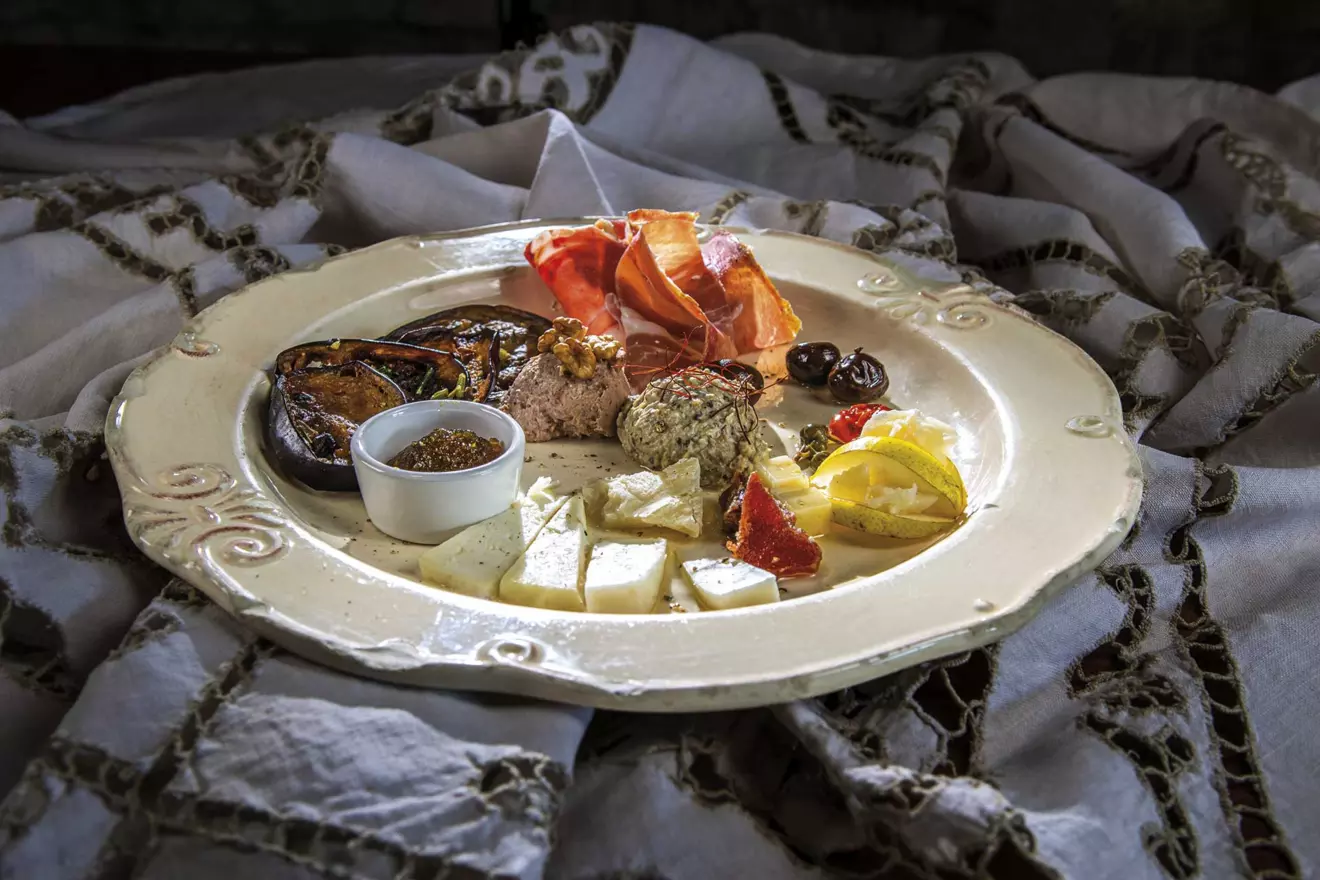
Day 4: Korčula to Pelješac
A short tender crossing to Orebić on the Pelješac peninsula for a full day on the peninsula. The morning begins at Saints Hills, one of Pelješac's most acclaimed estates, before moving on to the steep, south-facing terraces of Dingač and Postup where several producers welcome visitors directly at the cellar. Lunch in Mali Ston, where the family-run restaurants above the oyster beds serve the local oysters straight from the water, before returning to the yacht for the evening.
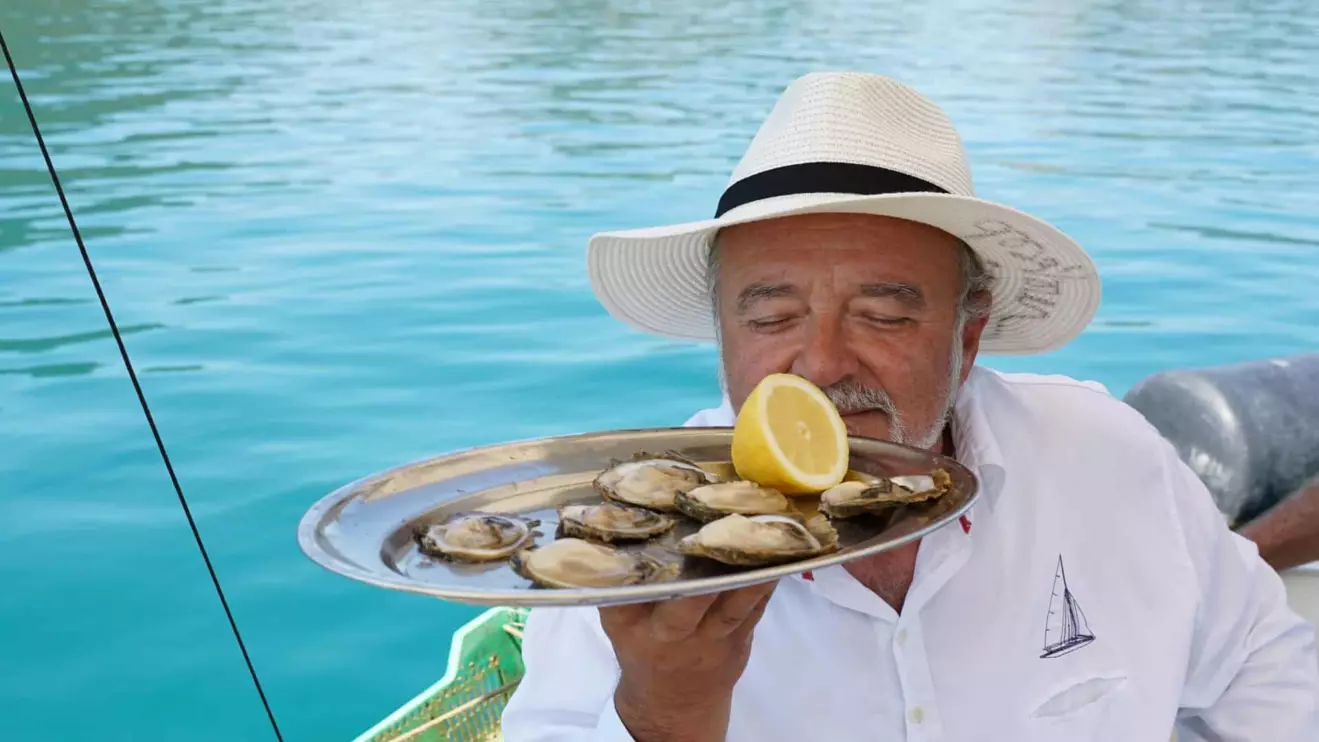
Day 5: Korčula to Vis
Morning departure for Vis, arriving in Komiža by noon. The island is among the most unspoiled in the Adriatic, with a fishing culture that remains largely intact and a local wine tradition built around the indigenous Vugava grape. Eating options range from Konoba Senko on Mala Travna bay, accessible only by boat and known for its grilled fish and informal atmosphere, to Fields of Grace Vineyards Estate, which pairs island wines with southern Chinese and Southeast Asian cuisine, or Villa Kaliopa in Vis town, set within a Renaissance garden where the menu draws entirely on island ingredients.
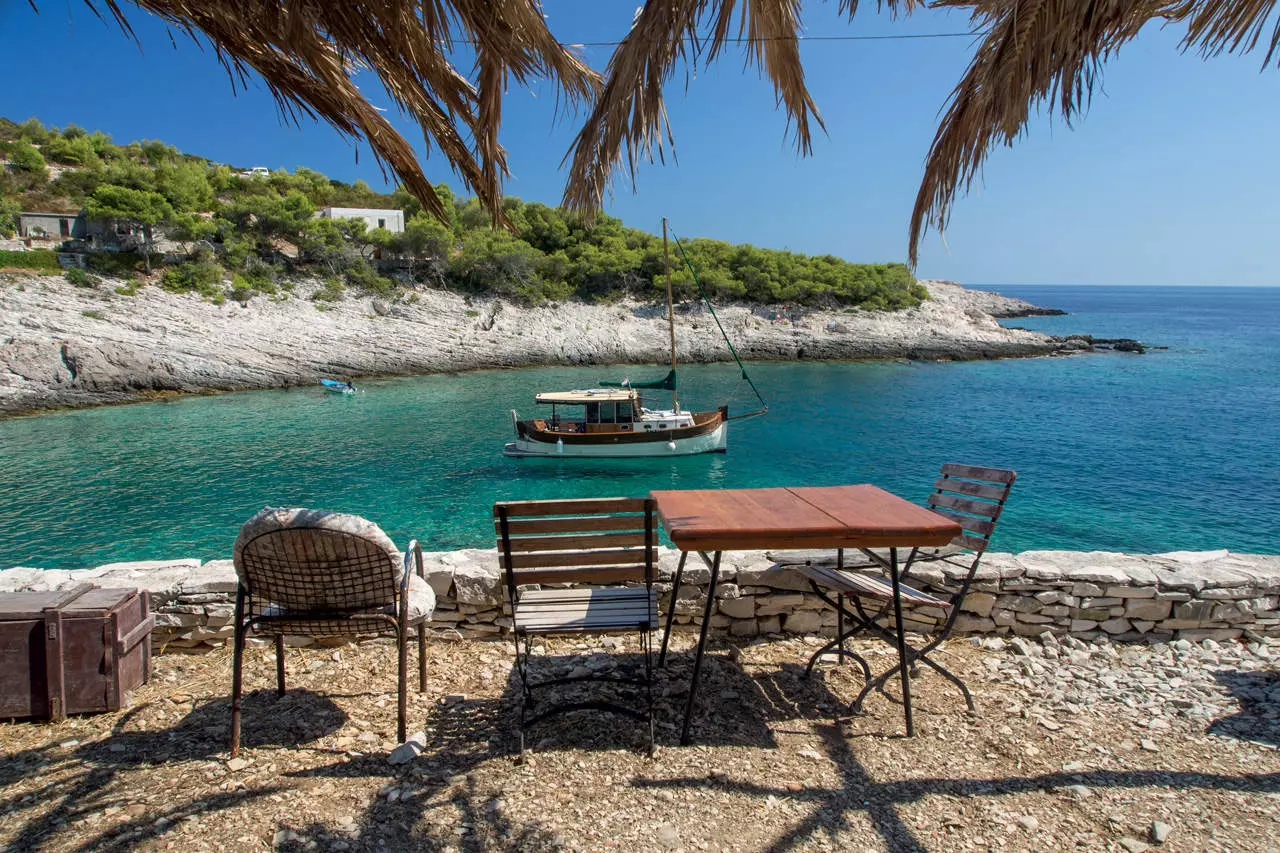
Day 6: Vis to Brač
Depart Vis for Brač, stopping at Bol for a visit to Stina winery, whose vineyards above the town produce Plavac Mali with direct views over the Adriatic. Swimming at Zlatni Rat before settling into Milna marina for the night. Dinner options include Lemongarden Restaurant in Sutivan, known for its seafood and terrace overlooking the sea, or Tavern Kopačina in Donji Humac, one of the island's most respected konobas and a natural choice for Brač lamb.
Day 7: Brač to Split
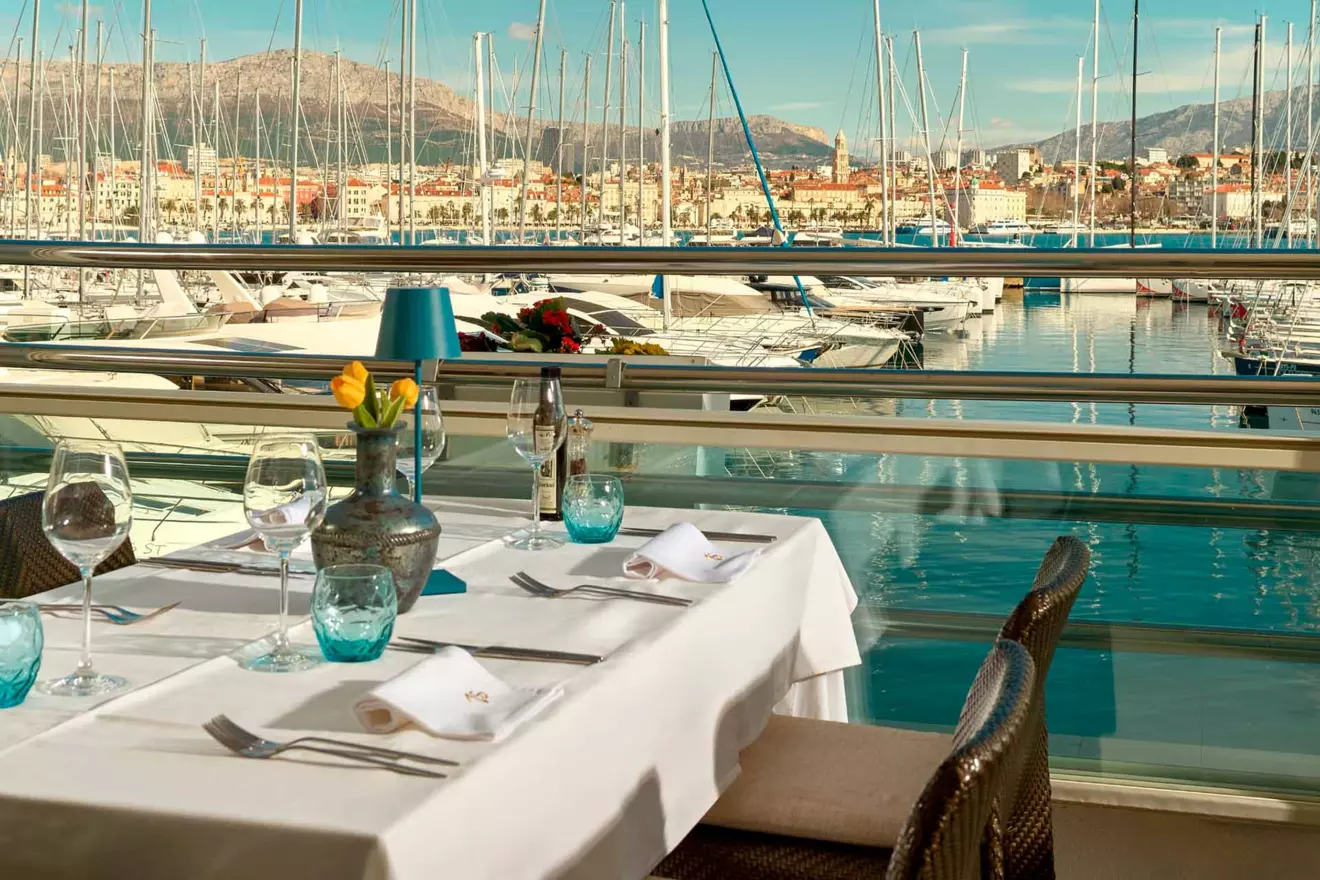
The week ends where it began, but Split rewards a second look. A short final passage back to the city, with time to explore the Diocletian's Palace market for local produce before sitting down at Krug, the city's Michelin-starred table, or at Zrno Soli or Mokosh for those who prefer something less formal but equally considered.
Planning your gastronomy charter
A wine and gastronomy charter in Croatia benefits from some advance planning. The best winery visits, restaurant reservations, and producer introductions are easier to secure with a few weeks or months of lead time, and the experience is richer for it.
Best seasons for food experiences
The Croatian charter season runs from late April through October, with the best months for a food and wine itinerary falling in June, September, and October, when temperatures are comfortable, the agricultural calendar is at its peak, and restaurant availability is at its most generous. July and August offer the most reliable weather and a coast at full energy, though starred restaurants fill quickly and are worth booking early.

September and October are, by general consensus, the finest months for a food-focused charter: the harvest is underway in vineyards and olive groves, the sea remains warm, and the pace of the coast shifts into something quieter and more considered.
Working with your chef
Allow the chef the creative freedom to respond to what is available at each port. The best meals are often not the ones planned in advance but the ones that emerge from an unexpected find at the morning market: a particularly fine piece of fish, a seasonal vegetable at its peak, a wheel of cheese from a producer the chef has never encountered before. Give your chef the mandate to follow those opportunities, and then sit back and enjoy the results.
Booking restaurants in advance
Croatia's Michelin-starred restaurants fill quickly, particularly in summer, and the most sought-after tables are worth securing before departure rather than on arrival. The good news is that most charter brokers will handle this as a matter of course when putting together the itinerary, leaving you to focus on what actually matters once you are on the water.

Konobas and family-run restaurants work slightly differently. Most operate on a walk-in basis, and your captain or crew will usually know which ones are worth the detour and when to arrive. This is one of the quieter advantages of a crewed charter: local knowledge that extends beyond anchorages and weather windows to the restaurants that never appear in any guide but consistently deliver the most memorable meals.
The best charters along this coast balance intention with flexibility: a handful of reservations secured in advance, a chef briefed on what to look for at each market, and enough open space in the schedule to follow whatever the coast decides to offer that day.
Photos Yachts Croatia archive